Plan and listen to Holy Myrrhbearers Cathedral with Audiala.
Audio guide in your pocket, itinerary in your browser. Built for the way you actually visit.
Introduction
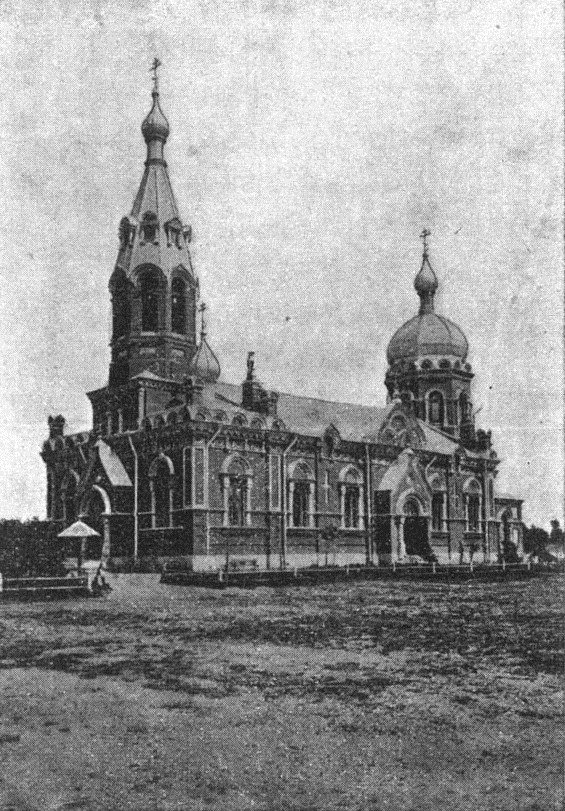
The Holy Myrrhbearers Cathedral (Russian: Собор Святых Жен-Мироносиц) in Baku, Azerbaijan, stands as a remarkable symbol of the city’s rich religious and cultural tapestry. Built in 1909 during Baku’s dynamic oil boom, the cathedral’s history is intertwined with both local and imperial legacies, serving as a spiritual center for the Russian Orthodox community and reflecting the multicultural ethos of Baku. This guide provides a comprehensive overview of the cathedral’s origins, architectural features, historical challenges, modern revival, visitor information, and practical tips for exploring one of Baku’s most treasured historical sites (Ancient Origins; OrexCA.com; ATI.az).

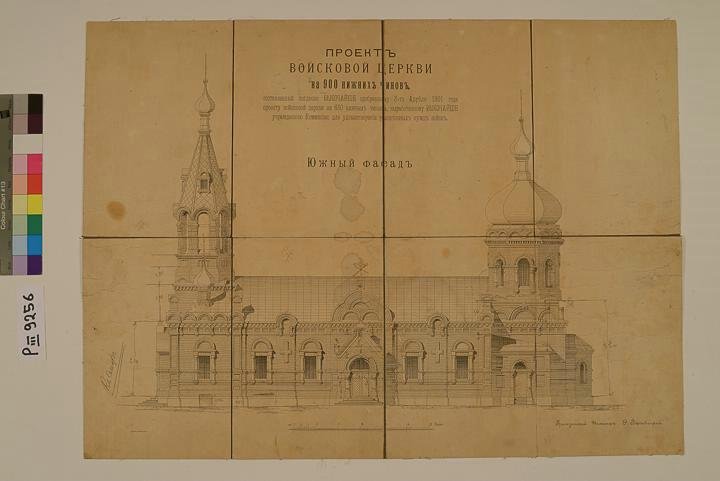
Origins and Construction
The Holy Myrrhbearers Cathedral was erected in 1909, a testament to Baku’s rapid development and its diverse population during the early 20th century. Designed by architect Fyodor Mikhailovich Verzhbitsky, the project was realized through the combined support of the Russian Empire’s War Ministry and notable local philanthropists, especially Haji Zeynalabdin Taghiyev (OrexCA.com). The cathedral originally served the spiritual needs of the Russian Orthodox military regiments stationed in Baku, while also standing as a beacon of the city’s religious tolerance.
Architectural Significance
The cathedral is a prime example of Russian Revival architecture beyond Russia’s borders. Its cross-in-square plan and prominent domes, topped with gilded Orthodox crosses, are defining features. The richly decorated interiors boast a marble iconostasis, intricate frescoes, and sacred relics—including those of St. Bartholomew, Baku’s patron saint (ATI.az; Caliber.az). The church’s architecture and ornamentation reflect a harmonious blend of Russian Orthodox tradition and local influences, making it a notable landmark on Baku’s skyline.
Role in Culture and Religious Life
From its inception, the cathedral has been at the heart of Orthodox Christian life in Baku. It continues to host regular liturgies, religious festivals, and community gatherings. The presence of St. Bartholomew’s relics has transformed the cathedral into a pilgrimage site, further solidifying its importance for both locals and visitors (Fact Investigation Platform).
The cathedral’s resilience through periods of closure and suppression—particularly during the Soviet era, when it was repurposed for secular uses—demonstrates its enduring significance within Baku’s religious landscape (Ancient Origins).
Historical Challenges and Restoration
Following the Bolshevik Revolution in 1920, the cathedral was closed, its priest executed, and the building converted to various secular uses. The structure suffered further damage during the 1990 “Black January” events, when Soviet military actions led to destruction of the bell tower and interior (OrexCA.com).
Restoration began in the early 1990s, spearheaded by the Russian Orthodox Church and local philanthropists such as Aydin Gurbanov. The cathedral was reconsecrated in 2001 and received relics of St. Bartholomew in 2003, marking a new era in its spiritual and cultural role (Fact Investigation Platform).
Visiting Information
Hours and Admission
- Open: Daily, 9:00 AM to 6:00 PM (extended hours on Sundays and religious holidays)
- Closed: Major Orthodox and national holidays (confirm in advance)
- Admission: Free; donations encouraged (Holidify)
Guided Tours
- Guided tours are available by prior arrangement and provide insight into the cathedral’s history, architecture, and significance. Contact the cathedral’s visitor center or reputable local tour operators for scheduling.
Accessibility
- The cathedral offers wheelchair access at the main entrance and assistance for visitors with limited mobility. For special requirements, contact the cathedral in advance.
Photography
- Photography is permitted in exterior areas. Inside, non-flash photography is generally allowed outside of services; however, flash and tripods are not permitted to protect the integrity of the space and respect worshippers.
Directions and Nearby Attractions
- Location: Central Baku, Yasamal district; easily reached by public transport, taxi, or on foot.
- Nearby: Maiden Tower, Old City (Icherisheher), Baku Boulevard, House-Museum of Niyazi, Nizami Cinema Center, Heydar Aliyev Palace, Taza Pir Mosque (Holidify).
Interfaith and Community Role
The Holy Myrrhbearers Cathedral is a testament to Baku’s multicultural and interfaith harmony. Notably, it hosted Pope John Paul II’s visit in 2002, highlighting Azerbaijan’s commitment to religious coexistence (Ancient Origins). The Azerbaijani government actively supports the preservation of religious heritage for all communities (Azerbaijan Travel). Annual commemorations for St. Bartholomew further reinforce the cathedral’s role as a living heritage site (Caliber.az).
Practical Visitor Tips and Etiquette
- Dress Modestly: Men should wear long trousers and avoid sleeveless shirts; women should cover shoulders and knees, and use a headscarf inside (often provided).
- Behavior: Maintain quiet and reverence, especially during services. Mobile phones should be silenced. Eating or drinking inside the sanctuary is prohibited.
- Services: Visitors are welcome to attend liturgies, typically held on Sundays and religious feast days. Standing is customary; seating is reserved for the elderly or infirm.
- Photography: Always confirm current rules with staff before taking photographs inside.
- Accessibility: Ramps and accessible restrooms are available; some historic areas may have uneven flooring.
- Language: Azerbaijani and Russian are commonly spoken; English may be limited.
- Souvenirs: A small shop offers religious icons, candles, and literature; purchases support the cathedral’s upkeep.
FAQ
Q: What are the visiting hours for the Holy Myrrhbearers Cathedral?
A: Open daily from 9:00 AM to 6:00 PM; confirm in advance for holiday changes.
Q: Is there an entrance fee?
A: No, admission is free; donations are welcome.
Q: Can I take photos inside?
A: Non-flash photography is allowed outside service times; flash and tripods are not permitted.
Q: Are guided tours available?
A: Yes, by prior arrangement via the cathedral or local tour operators.
Q: Is the cathedral wheelchair accessible?
A: Yes, with ramps and accessible facilities; some areas may require assistance.
Q: What should I wear?
A: Modest attire; women should cover their heads inside.
Listen to the full story in the app
The whole Holy Myrrhbearers Cathedral,
told well.
Audio guides for 1,100+ cities across 96 countries. History, stories, and local insight — offline ready.
Verified, and shown.
Researched and written by the Audiala editorial team from historical records, architectural archives, and local expertise.
Researched from Wikidata, Wikipedia & official sources · fact-checked · How we make our guides →