Introduction
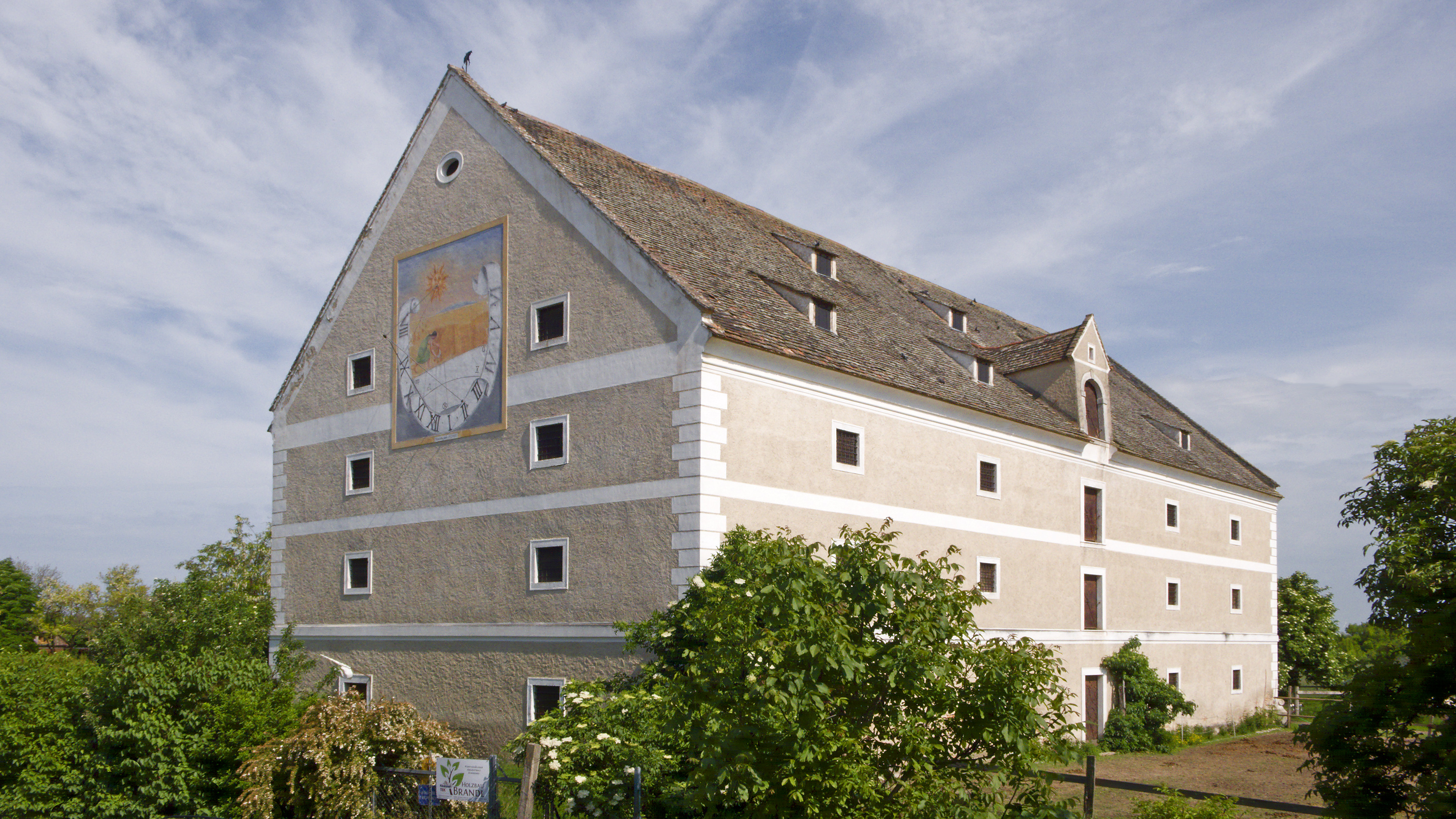
Discover Schüttkasten Essling, a remarkable historic granary in Vienna’s 22nd district (Donaustadt) that encapsulates Austria’s agricultural, military, and cultural heritage. Dating back to the early 18th century, this fortified building served as a vital granary for the Imperial and Royal Estate of Essling and played a strategic role during the Napoleonic Wars, notably the Battle of Aspern-Essling in 1809. Today, Schüttkasten Essling stands as both a museum and a cultural venue, offering visitors a unique window into Vienna's layered history (Austria-Forum; DBZ Online).
This comprehensive guide covers visiting hours, tickets, accessibility, directions, historical context, and tips for planning your visit. Whether you are a history enthusiast or a traveler seeking off-the-beaten-path experiences, Schüttkasten Essling offers an enriching journey through time.
Schüttkasten Essling is one of Vienna's oldest surviving granaries, dating from at least 1725. Originally designed for the secure storage of grain—a critical resource for the Habsburg-era estate—the granary's thick masonry walls and iron-barred windows reflect both economic importance and defensive requirements in an era of frequent conflict. Essling itself was once a rural village in the fertile Marchfeld region, and the granary was integral to the operations of Schloss Essling and its estate (Austria-Forum; Geldmarie).
Architectural Features
The granary is a multi-story, rectangular building with walls up to 1.5 meters thick, designed to protect its valuable contents from fire, theft, and the elements. Small, iron-barred windows and heavy iron doors underscore its defensive qualities. The exterior features a historic sundial, and the interior retains exposed wooden beams and stone floors that speak to its utilitarian Baroque origins. The building’s robust architecture allowed it to withstand sieges and has preserved battle scars from its military past (aspern.at; schüttkasten-essling.at).
The Napoleonic Wars and the Battle of Aspern-Essling
During the pivotal Battle of Aspern-Essling (May 21–22, 1809), Schüttkasten Essling became a focal point of military action. Its fortress-like design enabled French troops to withstand repeated Austrian assaults, with up to 300 sharpshooters stationed within and bullet holes still visible on the iron doors. This battle marked the first major defeat for Napoleon, and the granary remains a tangible link to this turning point in European history (DBZ Online; tourmycountry.com).
Preservation and Adaptive Reuse
By the late 20th century, Schüttkasten Essling had fallen into disuse. In the 1990s, architect Burkhard Rukschcio led a careful restoration, stabilizing the structure and preserving its historic features. Today, the granary is designated as a protected monument and serves both as a museum and a venue for cultural events (schüttkasten-essling.at).
Museum and Cultural Programming
The centerpiece of the museum is a 16-square-meter diorama depicting the 1809 battle, featuring over 8,000 hand-painted miniature figures. Exhibits include Napoleonic-era uniforms, documents, and artifacts, while the building itself—with its preserved battle damage—serves as a living exhibit. The museum also hosts special events, reenactments, and lectures, deepening public engagement with Vienna’s history (aspern.at; tourmycountry.com).
Visitor Information
Visiting Hours and Tickets
- Regular Hours: Tuesday to Sunday, 10:00 AM – 5:00 PM (closed Mondays and public holidays).
- Admission: Adults €8, seniors/students €5, children under 12 free. Some cultural events may have separate ticketing.
- Guided Tours: Available by appointment and during special events.
Note: Access outside regular hours is limited. For the most current information and special openings, check Sondermuseum Aspern Essling 1809 or the Donaustadt district cultural calendar.
Accessibility
- Wheelchair accessible via ramps; accessible restrooms available.
- Some limitations may exist due to the historic structure—call ahead for specific needs.
Directions
- Public Transport: Take U2 subway to Aspernstraße, then bus 26A to Essling village stop; short walk to the granary.
- By Car: Limited parking available nearby; check for local restrictions.
Nearby Attractions
- Schloss Essling: The original estate associated with the granary.
- Lobau/Donau-Auen National Park: Ideal for nature walks.
- Napoleon-Rundweg: Themed walking trails commemorating the Napoleonic Wars.
- Local eateries: Sample Viennese cuisine at traditional taverns and bakeries.
Special Events and Tours
- Seasonal events include Napoleonic reenactments, art exhibitions, and lectures.
- Guided and group tours can be arranged; check the museum website or local tourism boards for schedules.
Visuals and Media
- High-resolution images of the granary’s interior, exterior, and battle diorama.
- Virtual tours and interactive maps are available on some event and tourism sites.
- Suggested image alt text: “Schüttkasten Essling historic granary facade,” “Battle of Aspern-Essling diorama,” “Vienna historical sites.”
Frequently Asked Questions
Q: What are the regular visiting hours?
A: Tuesday to Sunday, 10:00 AM to 5:00 PM. Closed on Mondays and holidays.
Q: Are tickets required?
A: Yes, adults €8, seniors/students €5, children under 12 free. Some events may have different pricing.
Q: Is the granary wheelchair accessible?
A: Yes, with ramps and accessible restrooms, though some limitations apply.
Q: Are tours available?
A: Yes, guided tours are available by appointment and during special events.
Q: How do I get there by public transport?
A: U2 to Aspernstraße, then bus 26A to Essling village stop.
Q: Can I visit at other times?
A: Special access may be possible during events or by arrangement. Check Sondermuseum Aspern Essling 1809 for updates.
Summary and Visitor Recommendations
Schüttkasten Essling is a singular testament to Vienna’s agricultural and military history. Its preserved architecture, pivotal role in the Battle of Aspern-Essling, and adaptive reuse as a museum and cultural site make it a must-see for those exploring Vienna’s lesser-known heritage. Plan your visit around published opening times or special events, use public transport for convenience, and consider pairing your visit with nearby historical or natural attractions. For the latest information, consult official channels and consider downloading the Audiala app for personalized guides.
Listen to the full story in the app
Your Personal Curator, in Your Pocket.
Audio guides for 1,100+ cities across 96 countries. History, stories, and local insight — offline ready.
Audiala App
Available on iOS & Android
Join 50k+ Curators
Sources
- verified
- verified
- verified
- verified
- verified
- verified
- verified
Last reviewed: