Introduction
Karlskirche (Saint Charles Borromeo Church) is one of Vienna’s most remarkable historical sites, showcasing the grandeur of Baroque architecture alongside deep imperial and cultural symbolism. Commissioned by Emperor Charles VI in 1713 as a vow during a devastating plague, and designed by Johann Bernhard Fischer von Erlach and his son Joseph Emanuel, Karlskirche stands as a testament to Vienna’s resilience, faith, and artistic innovation. Not only is it a center of religious and cultural life, but it also serves as a living museum, hosting concerts, exhibitions, and community events.
This guide provides comprehensive information on Karlskirche’s visiting hours, tickets, accessibility, and visitor tips, as well as an exploration of its architectural features, historical significance, and nearby attractions. Whether you are a history enthusiast, architecture admirer, or simply a curious traveler, Karlskirche is an essential stop on your journey through Vienna.
For the latest updates and details, consult the Karlskirche Official Website, German History Docs, and Vienna Tourist Information.
Historical Background
Foundation and Symbolism
Karlskirche was established in response to the plague of 1713. Emperor Charles VI made a vow to build a church dedicated to Saint Charles Borromeo, patron saint of plague sufferers, if the city was spared further devastation (German History Docs). The church’s construction began in 1716, with Johann Bernhard Fischer von Erlach winning the architectural competition. After his death, his son Joseph Emanuel continued the work, completing the church in 1737 (All About Vienna).
The church blends Baroque magnificence with references to ancient Rome and Byzantium. The grand portico recalls the Pantheon, while the twin spiral columns pay homage to Trajan’s Column and Solomon’s Temple, symbolizing imperial power and peace (Historic Hotels of Europe).
Architectural Style
Karlskirche’s dynamic design features a 72-meter-high copper-clad dome, an imposing Romanesque portico, and twin columns with bas-reliefs depicting scenes from Saint Charles Borromeo’s life. The interior is adorned with polychrome marble, gilded stucco, and a monumental fresco by Johann Michael Rottmayr.
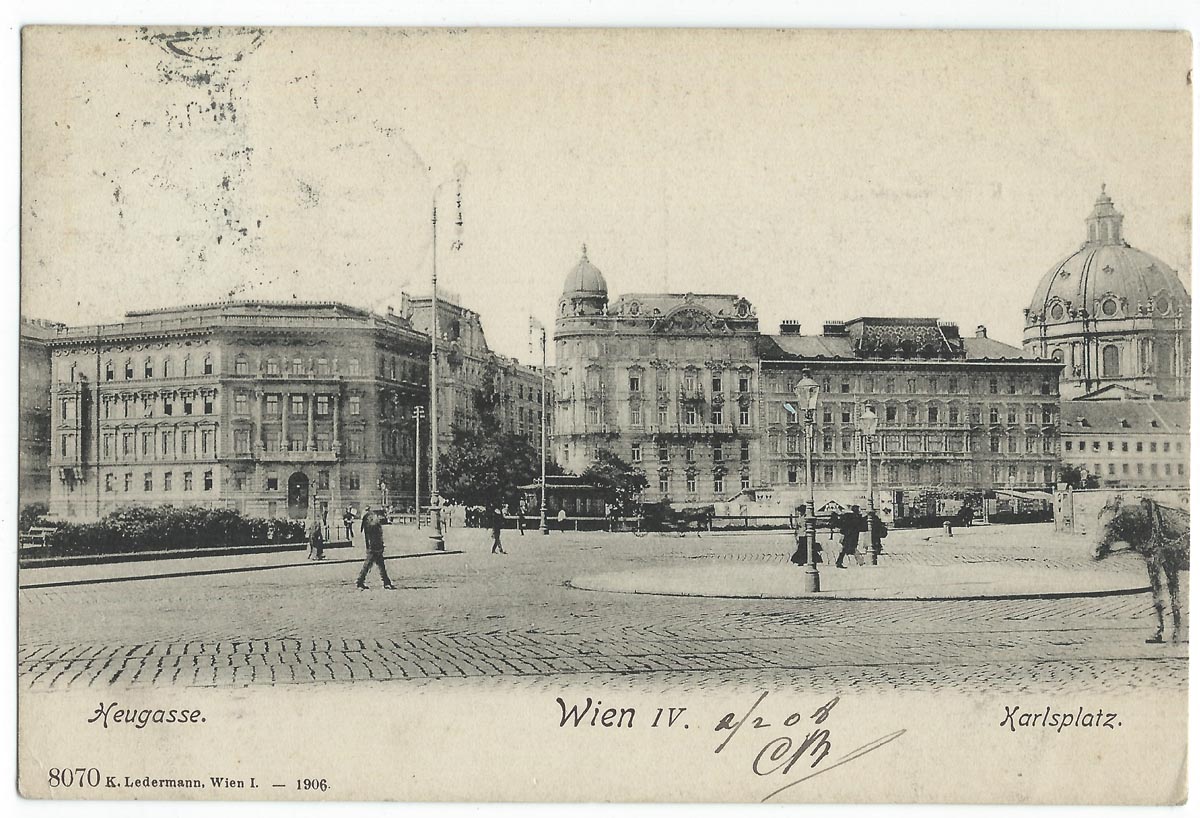
From its inception, the church has served as a symbol of resilience, unity, and imperial devotion. Positioned on Karlsplatz, it was once directly visible from the Hofburg Palace, underscoring its importance as the imperial patron parish church (Wikipedia).
Visiting Karlskirche: Practical Information
Location & Accessibility
- Address: Karlsplatz, 1040 Vienna
- Transport: Easily accessible via U1, U2, and U4 subway lines at Karlsplatz station; several tram and bus routes stop nearby.
- Parking: Limited street parking; public transport is recommended (Vienna City Card).
Visiting Hours
- Monday to Saturday: 9:00 – 18:00
- Sundays & Public Holidays: 11:00 – 19:00
- Last Entry: 30 minutes before closing
(Karlskirche Official Website)
Tickets & Admission
- Adults: €9.50
- Children: Free
- Ticket Includes: Access to the nave, panoramic lift to the dome, and museum area
- Purchase: On-site or online
Guided Tours & Audio Guides
- Guided tours (various languages) for groups can be booked via the official website.
- Individual visitors can rent audio guides for a small fee.
- Tours cover history, architecture, symbolism, and restoration.
Accessibility
- Wheelchair-accessible entrance and restrooms
- Panoramic lift for dome access (final stage includes stairs)
- Multilingual information panels and audio guides
Dress Code & Visitor Etiquette
- Modest attire required (shoulders and knees covered)
- Remove hats inside
- Photography allowed without flash; tripods restricted during services/events
- Maintain silence in sacred areas
Architectural Highlights
Exterior
- Dome: 72 meters high, inspired by St. Peter’s Basilica in Rome, dominant on Vienna’s skyline
- Portico: Roman-style with six Corinthian columns, balancing grandeur and ornamentation
- Twin Columns: Modeled after Trajan’s Column, adorned with bas-reliefs of Saint Charles Borromeo’s life
- Towers: Baroque towers and statues create dramatic visual movement
- Reflecting Pool: Enhances views and offers a tranquil gathering space
Interior
- Nave: Centralized plan with soaring spatial arrangement
- Dome Frescoes: By Johann Michael Rottmayr, depicting the intercession of Saint Charles Borromeo
- Marble & Stucco: Opulent decoration with polychrome marble and gilded details
- Altars & Chapels: High altar designed by Fischer von Erlach, side chapels with paintings and relics
Dome Experience
- Panoramic lift provides access to close-up fresco views and sweeping city vistas
- Some stairs required for the final ascent
Cultural & Social Impact
- Symbol of Renewal: Built as a votive church after the plague, representing hope and resilience (Vienna Tourist Information)
- Urban Landmark: Visible across Vienna; the green dome and columns are instantly recognizable (EAA)
- Concert Venue: Hosts classical concerts, particularly with the 1756 Orchestra, performing Mozart and Vivaldi (Music of Vienna)
- Active Parish: Regular mass, weddings, and sacraments maintain its spiritual role
- Education & Art: Studied by art historians; panoramic lift offers unique views of Baroque art (Vienna Unwrapped)
- Tourism: Major attraction supporting local businesses and Vienna’s cultural economy
- Community Hub: Karlsplatz hosts open-air events, markets, and is a popular gathering spot
- Preservation: Ongoing restoration projects ensure continued accessibility and conservation (EAA)
Nearby Attractions & Tips
- Vienna State Opera
- Naschmarkt (food market)
- Albertina Museum
- Musikverein (concert hall)
- Karlsplatz Park & Resselpark
Tips for a Memorable Visit:
- Arrive early on weekdays to avoid crowds
- Purchase tickets online to skip queues
- Check the event calendar for concerts and special events
- Bring binoculars for detailed views of the dome frescoes
- Combine your visit with other historic sites in the area
Frequently Asked Questions (FAQ)
What are Karlskirche’s visiting hours?
Monday to Saturday: 9:00–18:00; Sundays and public holidays: 11:00–19:00
How much are tickets?
Adults: €9.50; children: free; includes nave, dome lift, and museum
Is the church accessible for wheelchair users?
Yes, with a wheelchair-friendly entrance and panoramic lift access
Are guided tours available?
Yes, for groups (book in advance); audio guides available for individuals
Can I take photos inside?
Photography is allowed without flash; no tripods during services/events
Listen to the full story in the app
Your Personal Curator, in Your Pocket.
Audio guides for 1,100+ cities across 96 countries. History, stories, and local insight — offline ready.
Audiala App
Available on iOS & Android
Join 50k+ Curators
Sources
- verified
- verified
- verified
- verified
- verified
- verified
- verified
Last reviewed: