Introduction
Palais Lobkowitz is an architectural and cultural jewel of Vienna, celebrated for its Baroque grandeur, historical significance, and vibrant role as the home of the Theatermuseum. Located at Lobkowitzplatz 2 in Vienna’s historic first district, the palace traces its roots to the late 17th century, symbolizing the city’s evolution from a military stronghold to a flourishing center of aristocracy and the arts following the Second Ottoman Siege of 1683. Its connection to luminaries like Beethoven, as well as its enduring legacy as a cultural hub, makes it an essential stop for visitors interested in Vienna’s rich heritage (Vienna Tourist Guide; Visiting Vienna).
Today, Palais Lobkowitz houses the Austrian Theatermuseum, one of the world's foremost collections dedicated to the performing arts, boasting over two million objects. This guide provides a detailed overview of the palace’s history, architectural highlights, visiting hours, ticket information, current exhibitions, nearby attractions, and practical tips for planning a memorable visit.
Photo Gallery
Explore Palais Lobkowitz, Vienna in Pictures

Allegory of Painting and Sculpture, oil on canvas (marouflage), approximately 200 x 300 cm, located on the ceiling of the Festsaal in Palais Dietrichstein-Lobkowitz, Vienna.

Bernardo Bellotto's painting of Lobkowitz Square in Vienna showcasing Palais Lobkowitz from 1685-87, the site of the former Dorotheerkirche, the adjacent Dorotheum building, Capuchin Monastery garden wall, and the unobstructed view of St. Stephen’s Cathedral in the background.

Painting of Lobkowitz Square in Vienna showing the Palais Lobkowitz built 1685-87, the Dorotheum replacing the Dorotheerkirche, Capuchin Monastery garden wall, and view of St. Stephen’s Cathedral in the background.

Historic engraving depicting Palais Gallas (today Palais Lobkowitz) in Vienna, created around 1740 by Johann Adam Delsenbach after designs by Johann Bernhard Fischer von Erlach.

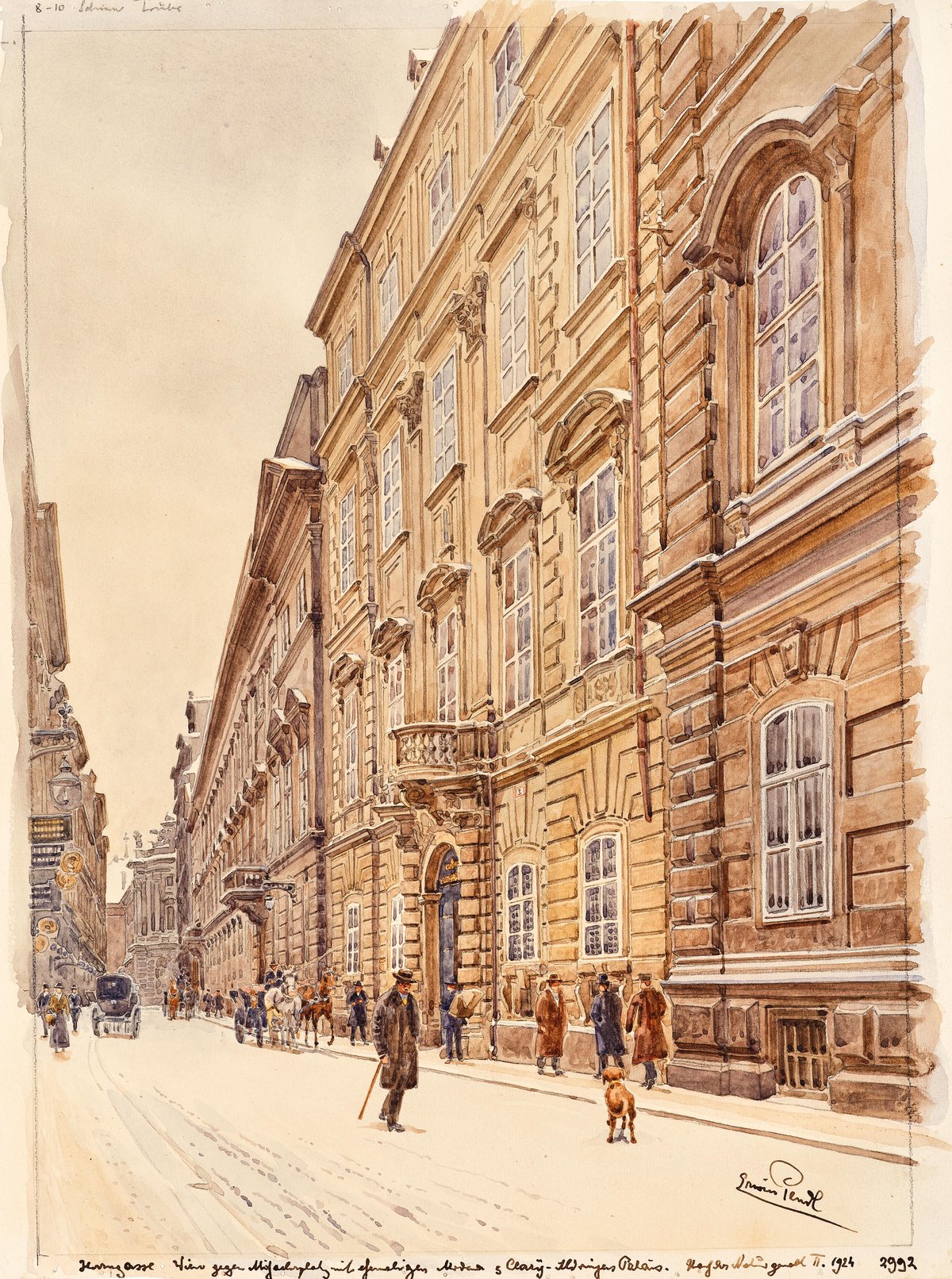
Watercolor painting of Palais Lobkowitz and Augustinerstraße in Vienna, created in 1893 by J. Schabratzky, showcasing 19th-century Viennese architecture and street scene.

Historical Kupferstich engraving depicting Palais Clam-Gallas, currently known as Palais Lobkowitz, located in Vienna

Interior view of the grand staircase at Palais Lobkowitz, a historic palace located in Vienna, showcasing elegant architectural details.

Front view of the historic Palais Lobkowitz located in Vienna with classical architecture

Photograph of the historic Palais Lobkowitz in Vienna showcasing its classic architectural design and facade under a bright blue sky.

View of the Hercules Fountain in front of Palais Lobkowitz in Vienna, showcasing historic baroque architecture and sculpture.

The Lobkowitz Palace showcasing historic architecture with detailed facade and windows under blue sky

Interior view of the Lobkowitz Palace staircase featuring ornate railings, stone steps, and a vintage chandelier lighting the historic space.
Origins and Construction
Constructed between 1689 and 1694, Palais Lobkowitz was commissioned in the post-siege revitalization of Vienna. The palace was designed by Giovanni Pietro Tencalla, with later enhancements by Johann Bernhard Fischer von Erlach, a master of Austrian Baroque architecture. The site, once a pig market, was transformed into an elegant residence, reflecting Vienna's shift toward aristocratic and cultural prominence (Vienna Tourist Guide; Touristlink).
The Lobkowitz Family and Cultural Flourishing
In the mid-18th century, the palace was acquired by the Lobkowitz family, who were distinguished patrons of music and the arts. Under Prince Franz Joseph Maximilian von Lobkowitz, the palace became renowned for its musical events, notably the premiere of Beethoven’s Symphony No. 3 (“Eroica”) in the opulent Eroica Hall, a highlight of Viennese musical history (Theatermuseum; Visit a Museum).
Diplomatic and Modern Roles
After the Lobkowitz family moved their primary residence to Bohemia, the palace served various diplomatic functions, notably as the French Embassy and later the Czechoslovakian legation. During the 20th century, it was repurposed as the “House of Fashion” during the Nazi era and later hosted the French Cultural Institute. In 1991, following extensive restoration, Palais Lobkowitz became home to the Theatermuseum, ensuring the preservation and celebration of its rich legacy (Museos – Theatermuseum Wien; Vienna Info – Theatermuseum).
Architectural Highlights
Exterior
Palais Lobkowitz features a restrained yet imposing Baroque façade, characterized by harmonious symmetry and understated ornamentation. Key exterior details include Fischer von Erlach’s central risalit and martial reliefs above the main entrance, subtly referencing the palace’s artistic associations (Visiting Vienna). The building forms a prominent part of the cityscape in Vienna’s Innere Stadt.
Courtyard
While lacking the expansive gardens of other imperial residences, the palace has a beautifully maintained central courtyard, offering a tranquil retreat and contributing to the palace’s sense of exclusivity (Evendo).
Interior
Grand Staircase and Eroica Hall
Upon entry, visitors encounter a grand Baroque staircase, leading to the palace’s most celebrated space: the Eroica Hall. This hall is adorned with frescoes, gilded stucco, chandeliers, and large windows, providing both visual splendor and superb acoustics—ideal for concerts and cultural events (Urban Travel Blog; Last Minute Japan).
State Rooms
Other rooms retain original or restored ceiling frescoes, stucco ornamentation, and period-appropriate furnishings, creating a richly immersive historical environment (My Guide Vienna).
Museum Integration
The Theatermuseum’s exhibitions are thoughtfully integrated into the palace’s historic interiors, maintaining architectural integrity while providing state-of-the-art display spaces for costumes, stage models, and theatrical memorabilia.
Preservation
Palais Lobkowitz is noted for its architectural authenticity, with restoration efforts focused on preserving original Baroque elements and decorative schemes (Wikipedia).
Visitor Information
Location and Accessibility
- Address: Lobkowitzplatz 2, 1010 Vienna, Austria
- Public Transport: Stephansplatz (U1, U3), Karlsplatz (U1, U2, U4), trams (1, 2, D, 62, 71), and buses (2A, 1A) (viennapass.de)
- Barrier-Free Access: The palace has wheelchair access, elevators, and ramps. Assistance is available upon request (theatermuseum.at).
Opening Hours
- General: Daily from 10:00 AM to 6:00 PM (closed on Tuesdays)
- Last Admission: 30 minutes before closing
- Check: Official website for seasonal changes (theatermuseum.at)
Tickets and Guided Tours
- Standard Admission: Adults €16.00; children under 19 are free
- Discounts: Free entry with Vienna Pass, Vienna Flexi Pass, or Kulturpass; reduced rates for students, seniors, and Vienna City Card holders
- Group Visits: Registration required for groups over 10
- Purchase: Online via official website, at the entrance, or through authorized vendors
- Audio Guides: Available in multiple languages
- Guided Tours: Scheduled in German and English, with special tours during major exhibitions (myguidevienna.com; getyourguide.com)
Facilities and Amenities
- Museum Shop: Offers books, souvenirs, and tickets for KHM Museum Association events (viennapass.de)
- Café: Quiet courtyard café for refreshments
- Restrooms and Cloakroom: Available for visitors
- Library: Public reading room on the first floor (registration required)
- Accessibility: Wheelchair rental (advance notice), portable ramps, staff assistance, and seeing-eye dogs welcome
Travel Tips and Nearby Attractions
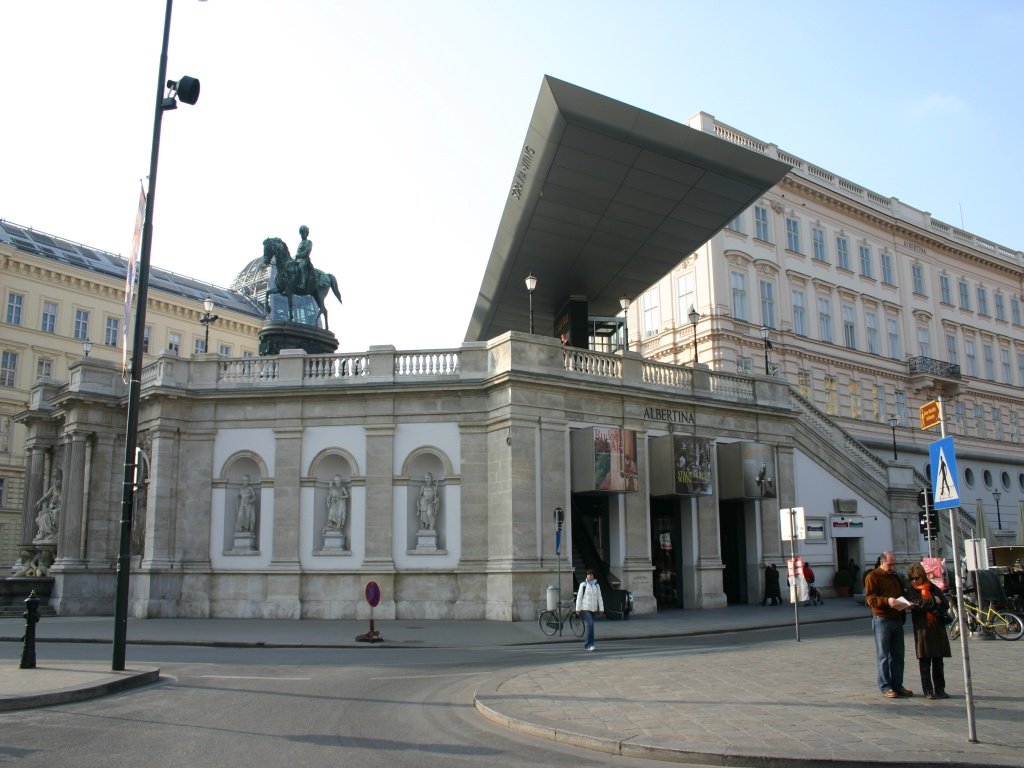
- Nearby Sites: Kunsthistorisches Museum, Hofburg Palace, Vienna State Opera, Albertina Museum, and St. Stephen’s Cathedral are all within easy walking distance.
- Planning: Combine your visit with these landmarks for a full day of cultural exploration.
- Map and Directions: Google Maps Location
Theatermuseum: Collections and Exhibitions
Permanent Exhibitions
The Theatermuseum houses an extraordinary collection, including:
- Over 1,000 stage models
- 600 costumes and props
- 100,000+ drawings and graphics
- 700,000+ theater photographs
These items represent spoken and musical theater, dance, film, puppetry, and more (Vienna Info – Theatermuseum).
Special Exhibitions and Events
- Gustav Klimt’s “Nuda Veritas”: On display since December 2024, this iconic painting is a highlight for art lovers.
- Johann Strauss Exhibition (Dec 2024–Aug 2025): A major anniversary exhibition celebrates Strauss’s 200th birthday, with interactive displays and dance workshops (Theatermuseum – Johann Strauss Exhibition).
- Eroica Hall Concerts: Regular performances and events in the historic hall (Theatermuseum – Official Site).
Family and Educational Programs
- Workshops and Tours: Special programs for children, including interactive workshops and birthday activities (Museos – Theatermuseum Wien).
- Educational Exhibits: Playful and informative introductions to theater for younger audiences
FAQs
Q: What are Palais Lobkowitz’s opening hours?
A: Daily from 10:00 AM to 6:00 PM, closed on Tuesdays.
Q: How do I purchase tickets?
A: Tickets are available online, at the museum entrance, or via authorized vendors.
Q: Is the palace wheelchair accessible?
A: Yes, barrier-free access with elevators, ramps, and staff assistance.
Q: Are guided tours available in English?
A: Yes, on select dates, particularly during special exhibitions.
Q: Can families and children participate in activities?
A: Yes, the museum offers family workshops and children’s programs.
Q: Is photography allowed?
A: Non-flash photography is permitted in most areas; restrictions may apply for certain exhibitions.
Listen to the full story in the app
Your Personal Curator, in Your Pocket.
Audio guides for 1,100+ cities across 96 countries. History, stories, and local insight — offline ready.
Audiala App
Available on iOS & Android
Join 50k+ Curators
Sources
- verified
- verified
- verified
- verified
- verified
- verified
- verified
Last reviewed: