Introduction: The Significance of the Österreichisches Staatsarchiv
In the heart of Vienna, the Österreichisches Staatsarchiv (Austrian State Archives) stands as Austria’s central institution for preserving the nation’s historical, legal, and cultural memory. Established under Emperor Maximilian I in 1502 and reorganized by Empress Maria Theresia in 1749, the archive safeguards more than a millennium of invaluable documents spanning from the medieval era through the Habsburg dynasty to the modern Republic. Housed in architecturally significant locations—most notably Minoritenplatz and the main complex in Vienna’s 3rd district—the archives attract scholars, genealogists, and cultural tourists alike. This comprehensive guide provides up-to-date information on visiting hours, ticketing, accessibility, highlights, and nearby attractions, ensuring an enriching experience for all visitors. For further background, consult the State Archives and Austria Forum.
Photo Gallery
Explore Österreichisches Staatsarchiv in Pictures

Detailed Coat of Arms belonging to Christoph Philipp Ruland von Reineck, who served as Margravial Baden Court Councillor and Government Councillor.

Detailed 1619 cityscape of Hall in Tirol highlighting Burg Hasegg and the Münzmuseum, based on the original held in the Staatsarchiv Wien.

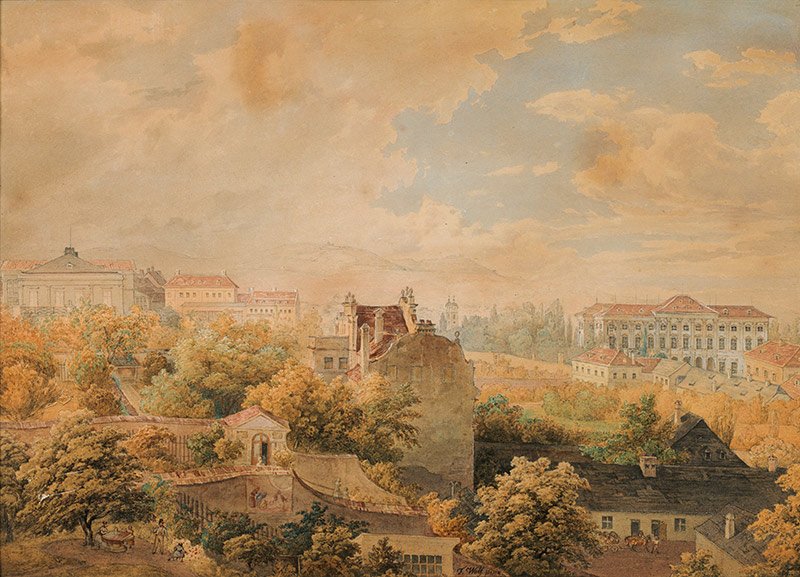
A historical unidentified building depicted in an archival image from the Austrian State Archives, published by Elisabeth Karte.

Close-up image of an orange and black sealing stamp of the K. und K. Kriegs-Archiv, embossed and measuring 4 cm, originating from Wien.

Black and white image of the K. und K. Kriegsarchiv sealing stamp from Wien, measuring 5 cm in size

Steinbeisbahn narrow-gauge railway train climbing the track near Ostrelj station, surrounded by picturesque mountainous landscape and greenery.
Origins and Development
The roots of the Österreichisches Staatsarchiv date to 1502, when Emperor Maximilian I established a systematic collection of state documents. The modern institution took shape in 1749 with the creation of the "Geheimes Hausarchiv" under Maria Theresia, centralizing Habsburg and state documents in Vienna (Austria Forum). The Haus-, Hof- und Staatsarchiv (HHStA) was founded at Minoritenplatz, consolidating records from regional centers and solidifying Vienna as the administrative heart of the monarchy.
20th Century to Present
Following the fall of the Austro-Hungarian Empire in 1918, the HHStA transitioned to public access under the First Republic. The archive survived Nazi annexation and postwar upheaval, ultimately becoming the central archival authority for the modern Austrian state (Austria Forum). Today, the Österreichisches Staatsarchiv comprises several specialized departments and supports contemporary research while preserving Austria’s enduring legacy (BMI.gv.at).
Archive Structure & Holdings
Main Departments
- Haus-, Hof- und Staatsarchiv (HHStA): Habsburg-era and Holy Roman Empire records up to 1918.
- Allgemeines Verwaltungs-, Finanz- und Hofkammerarchiv: Administrative, financial, and court archives.
- Kriegsarchiv: Military records.
- Archiv der Republik: Materials from 1918 to present, documenting the Republic era.
Collection Highlights
The archives preserve:
- Over 350,000 linear meters of documents.
- More than 800,000 library volumes.
- 600,000+ maps and plans (notably in the Kriegsarchiv).
- Landmark documents such as the Pragmatic Sanction (1713) and the Final Act of the Congress of Vienna (1815).
- Manuscripts, charters, diplomatic papers, and private collections spanning over 1,000 years (State Archives).
Visiting Information
Location & Access
- Main Address: Nottendorfer Gasse 2–4, 1030 Vienna (EHRI Project)
- Historic Haus-, Hof- und Staatsarchiv: Minoritenplatz 1, 1010 Vienna—close to the Hofburg and other major sites.
- Getting There: Easily reachable via U3 (Erdberg station for the main building; Herrengasse for Minoritenplatz), tram, and bus lines.
Opening Hours
- Main Building (Nottendorfer Gasse): Monday–Friday, 9:00 AM–4:30 PM (last entry at 4:00 PM).
- Haus-, Hof- und Staatsarchiv (Minoritenplatz):
- Monday–Wednesday: 9:00–16:00
- Thursday: 9:00–18:00
- Friday: 9:00–13:00
- Closed weekends and Austrian public holidays.
- Always confirm up-to-date hours on the official website.
Tickets & Entry
- Admission: Free for research and general visitors.
- Reading Room Access: Requires advance reservation via the State Archives Reservation system.
- Special Events/Exhibitions: May require tickets or registration.
Guided Tours & Events
- Occasional guided tours (especially of the HHStA and conservation workshops) are available—book in advance.
- Special exhibitions and educational programs (such as “Kinderuni”) are held periodically (official website).
Accessibility & Facilities
- Both main buildings are wheelchair accessible, with elevators and accessible restrooms.
- Reading rooms offer desks, power outlets, Wi-Fi, and on-hand staff assistance.
- Lockers are provided for personal belongings; bags and coats are not allowed in reading rooms.
Photography Policy
- Non-flash photography is permitted in reading rooms for personal research.
- Commercial use or reproduction requires prior authorization.
- Always check with staff regarding current photography guidelines (State Archives).
Collection Highlights
Visitors can encounter:
- The Golden Bull of 1356 and the Pragmatic Sanction (1713)
- Personal correspondence of the Habsburgs
- Military maps and battle plans
- Rare manuscripts and seals
- Antique artifacts, paintings, and sculptures from Austria’s imperial past (Triphobo)
Rotating exhibitions frequently showcase these treasures—see the official exhibition calendar for current displays.
Travel Tips & Nearby Attractions
- Combine your visit with nearby Vienna historical sites:
- Hofburg Palace
- St. Stephen’s Cathedral
- Austrian National Library
- Belvedere Palace
- MuseumsQuartier
- Stadtpark (Vienna Info)
- Food: No cafés onsite; several options are nearby.
- Best Times: Weekdays outside public holidays are quieter.
- Duration: Plan 1–2 hours for exhibitions, longer for research visits.
Frequently Asked Questions (FAQ)
Q: What are the Österreichisches Staatsarchiv visiting hours?
A: Main building: Monday–Friday, 9:00 AM–4:30 PM; HHStA (Minoritenplatz): see specific hours above. Always check the official website for updates.
Q: Do I need tickets?
A: Admission is free; reading room access and special events may require advance reservation.
Q: Is the archive accessible for visitors with disabilities?
A: Yes, fully wheelchair accessible with necessary facilities.
Q: Can I take photographs?
A: Non-flash photography for personal use is generally allowed; confirm with staff.
Q: Are guided tours available?
A: Yes, but advance booking is recommended.
Q: How do I make a reservation?
A: Use the State Archives Reservation system.
Listen to the full story in the app
Your Personal Curator, in Your Pocket.
Audio guides for 1,100+ cities across 96 countries. History, stories, and local insight — offline ready.
Audiala App
Available on iOS & Android
Join 50k+ Curators
Sources
- verified
- verified
- verified
- verified
- verified
Last reviewed: