Introduction
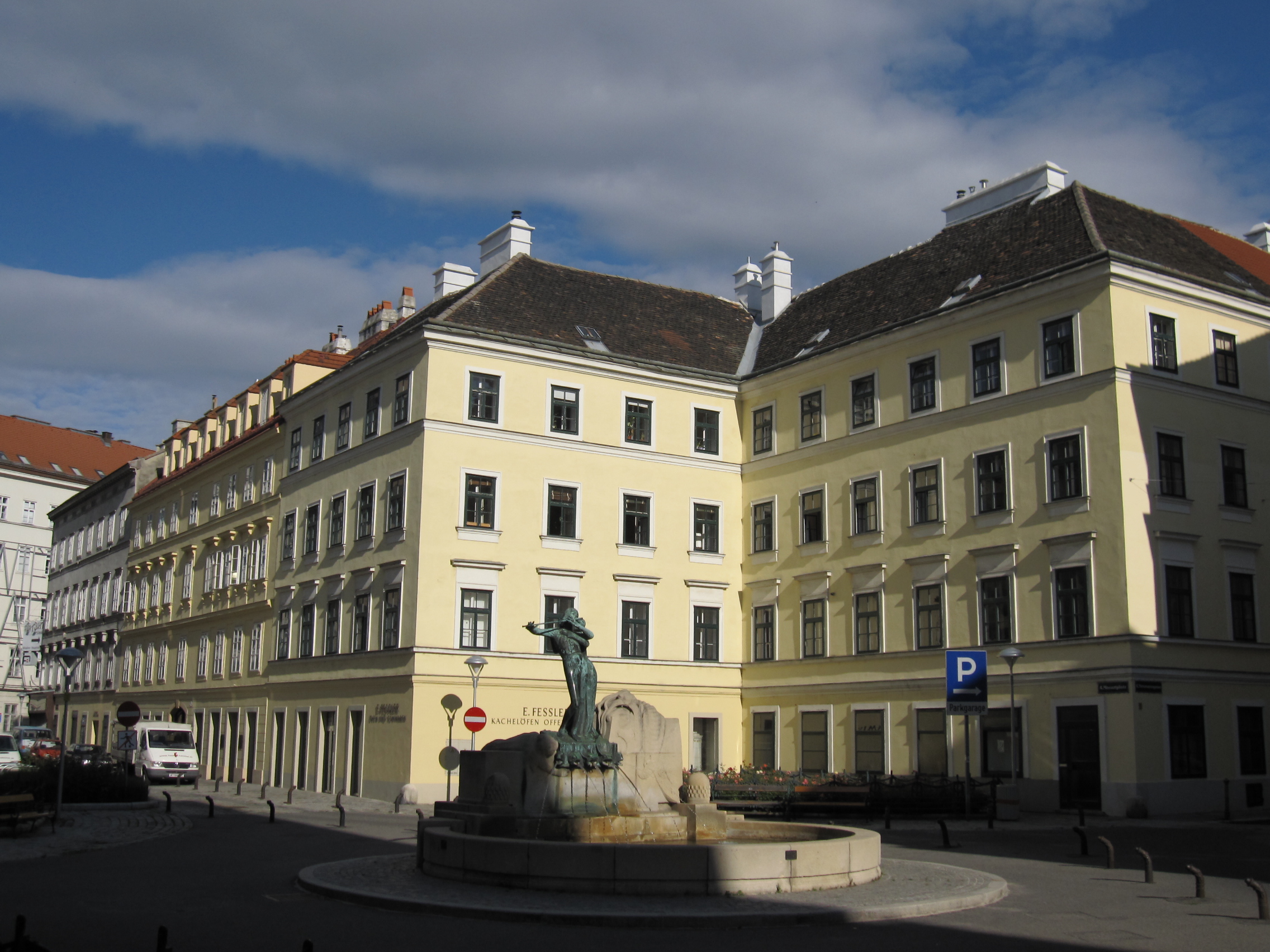
The Mozart-Brunnen, known as the Magic Flute Fountain (Zauberflötebrunnen), is a treasured cultural and historical landmark located in Vienna, Austria. Situated in the heart of Mozartplatz on Mozartgasse, this fountain is a testament to Vienna’s rich artistic heritage and its enduring love for the legendary composer Wolfgang Amadeus Mozart. Erected in 1905, the Mozart-Brunnen commemorates the profound influence of Mozart on Vienna’s cultural landscape. This comprehensive guide aims to delve into the history, artistic and cultural significance, visitor information, and nearby attractions associated with the Mozart-Brunnen, providing a complete resource for anyone planning to visit this iconic monument. Whether you are a classical music aficionado, an admirer of Jugendstil architecture, or simply exploring Vienna’s historical sites, the Mozart-Brunnen offers a unique and enriching experience. (Visiting Vienna)
History of Mozart-Brunnen
The Mozart-Brunnen was erected in 1905 to honor the legendary composer Wolfgang Amadeus Mozart. The unveiling ceremony took place on October 8, 1905, attended by Vienna’s then-mayor Karl Lueger, a controversial figure due to his antisemitic views (Visiting Vienna). The square and street were named in 1862, long before the fountain was established, highlighting the city’s longstanding recognition of Mozart’s influence.
Artistic Significance
As a product of early 20th-century Viennese art, the Mozart-Brunnen falls into the Jugendstil (Art Nouveau) period. The design was a collaborative effort between sculptor Carl Wollek and architect Otto Schönthal, a student and colleague of Otto Wagner, a pioneer of modern architecture. Wollek sculpted the figures of Tamino and Pamina, the lovers from Mozart’s opera "The Magic Flute" (Visiting Vienna).
Cultural Significance
The fountain commemorates the 1791 premiere of "The Magic Flute" in Vienna, which Mozart himself conducted. It depicts a scene from the opera where Tamino and Pamina draw on the protective power of the magic flute to survive the "Trial by Water." This artistic representation underscores Vienna’s deep-rooted admiration for Mozart and his works. At the unveiling, a choir performed "O Schutzgeist alles Schönen" from "The Magic Flute," further cementing the fountain’s cultural significance (Visiting Vienna).
Location and Accessibility
Mozartplatz is conveniently located, connecting two of Vienna’s major streets: Favoritenstraße and Wiedner Hauptstraße. The closest subway station is Taubstummengasse on the U1 line, approximately a three-minute walk from the fountain. Tram lines 1 and 62 also stop at Paulanergasse, which is about a two to three-minute walk from Mozartplatz. The exact address is Mozartplatz, 1040 Vienna (Visiting Vienna).
Visitor Tips
- Best Time to Visit: The Mozart-Brunnen is accessible year-round, but visiting during the warmer months allows you to enjoy the surrounding area more comfortably. Early mornings or late afternoons are ideal to avoid the midday heat and crowds.
- Nearby Attractions: While the Mozart-Brunnen itself is a bit off the beaten path, it is close to several other Mozart-related sites. For instance, the Papagenotor side entrance to the Theater an der Wien, which honors Emanuel Schikaneder, the librettist of "The Magic Flute," is nearby (Visiting Vienna).
- Photography: The fountain offers excellent photo opportunities, especially for fans of Jugendstil architecture and Mozart’s works. The bronze figures of Tamino and Pamina make for a striking subject.
- Guided Tours: Consider joining a guided tour that includes the Mozart-Brunnen as part of a broader exploration of Mozart-related sites in Vienna. This can provide deeper insights into the historical and cultural context of the fountain.
- Visiting Hours and Tickets: The Mozart-Brunnen is an open public space and does not require tickets. It is accessible 24/7, allowing visitors to explore it at their convenience.
Additional Mozart-Related Sites in Vienna
Vienna is replete with sites dedicated to Mozart, reflecting the city’s enduring admiration for the composer. Some notable locations include:
- Mozarthaus Vienna: Located behind St. Stephen’s Cathedral, this museum was Mozart’s residence from 1784 to 1787. It houses a collection of memorabilia and offers insights into his life and work (In Mozart's Footsteps).
- Mozart Monument in Burggarten: Erected in 1896 and moved to its current location in 1953, this statue is one of Vienna’s iconic images. It is situated next to the Hofburg complex (In Mozart's Footsteps).
- St. Stephen’s Cathedral: This historic cathedral was the site of Mozart’s marriage to Constanze and his memorial service in December 1791 (In Mozart's Footsteps).
- Rauhensteingasse: The location of Mozart’s final apartment, where he died. Today, a modern department store occupies the address (In Mozart's Footsteps).
FAQ
- What are the visiting hours for Mozart-Brunnen?
- The Mozart-Brunnen is accessible 24/7 as it is an open public space.
- Do I need tickets to visit Mozart-Brunnen?
- No, visiting the Mozart-Brunnen is free of charge.
- How do I get to Mozart-Brunnen?
- The fountain is located at Mozartplatz, 1040 Vienna. The closest subway station is Taubstummengasse on the U1 line, and tram lines 1 and 62 stop at Paulanergasse.
- Are there guided tours available?
- Yes, consider joining a guided tour that includes the Mozart-Brunnen as part of a broader exploration of Mozart-related sites in Vienna.
Listen to the full story in the app
Your Personal Curator, in Your Pocket.
Audio guides for 1,100+ cities across 96 countries. History, stories, and local insight — offline ready.
Audiala App
Available on iOS & Android
Join 50k+ Curators
Sources
-
verified
Visiting Mozart-Brunnen
(2024). Visiting Vienna
-
verified
In Mozart's Footsteps
(2024)
-
verified
All About Vienna
(2024)
-
verified
Wander in Europe
(2024)
-
verified
Out of Office Blog
(2024)
Last reviewed: