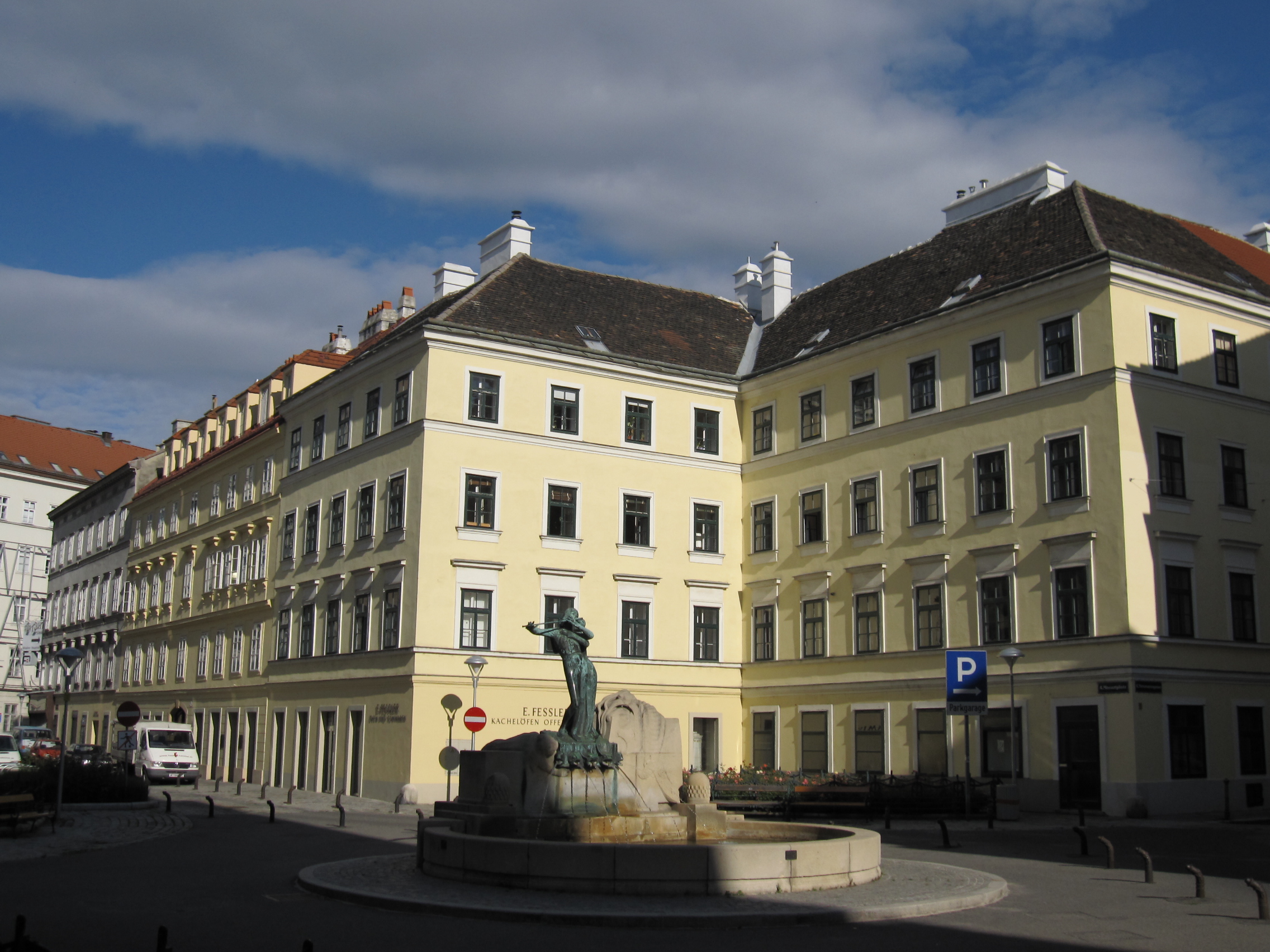
Introduction
The Mekhitarist Monastery Vienna is not only a remarkable religious site but also a vital cultural institution representing the Armenian diaspora in Europe. Nestled in Vienna’s 7th district, the monastery stands as a testament to centuries of Armenian Catholic heritage, scholarly achievement, and artistic tradition. Founded in the early 18th century and relocated to Vienna in the 19th century, it houses one of the most significant collections of Armenian manuscripts, rare books, and artifacts outside Armenia. Visitors can explore its historic church, library, museum, and gardens, all while gaining insight into the enduring legacy of Armenian culture in Austria.
This comprehensive guide provides up-to-date information for your visit, including opening hours, ticketing, guided tours, accessibility, and travel tips. Whether you are passionate about history, architecture, or cultural discovery, the Mekhitarist Monastery offers an enriching experience bridging Armenian and Viennese traditions (Wikipedia; Fotoeins Fotografie; veronikasadventure.com).
Located in Vienna’s St. Ulrich district, the Mekhitarist Monastery is a vibrant center of Armenian spiritual and intellectual life. Its origins can be traced back to the early 18th century, when Mekhitar of Sebaste founded the Mekhitarist Congregation to revitalize Armenian Catholic life under Ottoman rule. After several relocations—including Trieste and Venice—the congregation settled in Vienna in 1811, where it flourished under Habsburg patronage.
The monastery’s Maria Schutz Church, constructed in 1874, is a stunning example of architectural synthesis, while its extensive library and museum collections document the Armenian diaspora’s resilience and creativity. Today, the monastery remains active, hosting religious services, scholarly work, and cultural events, and attracting both local Armenians and international visitors.
Origins and Foundation of the Mekhitarist Congregation
The Mekhitarist Congregation was founded by Mekhitar of Sebaste in 1701 in Constantinople (now Istanbul) as a response to the challenges faced by Armenians under Ottoman rule. The congregation aimed to promote Armenian Catholicism, scholarship, and cultural revival. It soon relocated to Methoni, Greece, and later to the Venetian island of San Lazzaro in 1717, establishing an important monastic base (Wikipedia; Fotoeins Fotografie; University of Vienna ATLAS).
A schism in 1773 led a group of monks to Trieste, then part of the Habsburg Empire, where they were welcomed by Empress Maria Theresa. The Mekhitarists established a monastery, church, and school, and operated a printing press that would become central to the Armenian Renaissance.
The Move to Vienna and Establishment
The Napoleonic Wars forced the Mekhitarists to leave Trieste. In 1810, Emperor Francis I of Austria granted them asylum in Vienna, where they acquired and renovated a former Capuchin convent in the St. Ulrich district (Wikipedia). The property was expanded and rebuilt, with the present Maria Schutz Church completed in 1874 under the direction of architect Josef Kornhäusel. This church became a focal point for the Armenian Catholic community in Vienna (Peek.com).
Cultural and Scholarly Contributions
From the outset, the Mekhitarist Monastery served as a center for Armenian scholarship, culture, and publishing. Its printing press, active from 1811, produced Armenian and Armeno-Turkish books, periodicals, and religious texts, greatly impacting Armenian literary and intellectual life (University of Vienna ATLAS; Fotoeins Fotografie).
The monastery’s library and archives are among the world’s most important for Armenian studies, housing over 2,600 Armenian manuscripts, 150,000 books, and the largest collection of Armenian periodicals outside Armenia (University of Vienna Mekhitar Project). The Mekhitarists played a pivotal role in the development of Oriental and Turkish studies in Vienna, and their influence on Armenian education and language standardization is profound (University of Vienna ATLAS).
Practical Visitor Information
Visiting Hours and Tickets
- Opening Hours: Tuesday–Sunday, 10:00 AM–5:00 PM. Closed on Mondays and major public holidays.
- Admission: Admission is typically free; donations are appreciated. For special exhibitions or tours, fees may apply (usually €6–€10, with concessions for students and seniors).
- Advance Booking: Guided tours must be reserved in advance via the official monastery website or by phone.
Guided Tours and Special Events
- Guided Tours: Available in German and, by prior arrangement, in English or Armenian. Tours last 60–90 minutes and include the church, museum, library, and, occasionally, the gardens and printing press.
- Events: Lectures, exhibitions, and community celebrations are held throughout the year. Consult the monastery’s events page for details.
Accessibility and Visitor Tips
- The monastery is partially accessible for visitors with mobility challenges; contact the administration ahead of your visit regarding specific needs.
- Modest dress is required, especially in the church.
- Photography is generally permitted in the museum and gardens but may be restricted in the church and library. Always ask your guide for permission.
- The monastery shop offers Armenian books, icons, and Mechitharine herbal liqueur, produced by the monks since the 19th century.
Nearby Attractions
- MuseumsQuartier: Vienna’s modern art and culture hub, a short walk away.
- Mariahilfer Straße: The city’s main shopping street, nearby.
- St. Ulrich’s Church and Spittelberg Quarter: For those interested in Vienna’s diverse religious and architectural heritage (Vienna Church Tours).
Architectural and Artistic Heritage
The Mekhitarist Monastery is an architectural gem, harmonizing neoclassical and historicist styles. The Maria Schutz Church features a remarkable altar painting by the Schnorr von Carolsfeld family, depicting St. Mary’s protection of Armenia, while the side altar dedicated to Gregory the Illuminator is the work of Theophil Hansen. Renovations in 2011 preserved the church’s artistic integrity, and a khachkar (Armenian cross-stone) in the courtyard commemorates the victims of the Armenian Genocide (Wikipedia).
The monastery’s cloister and gardens offer a tranquil retreat in urban Vienna, and recent rehabilitation projects have improved accessibility and spatial unity, respecting the historical fabric while integrating contemporary elements (worldarchitecture.org).
Community Life and Economic Activities
The Mekhitarist Monastery is the spiritual and cultural center for Vienna’s Armenian community. Regular liturgies, concerts, and cultural events are open to the public. The monastery sustains itself through guided tours, property rentals, and the sale of Mechitharine liqueur (Wikipedia).
Frequently Asked Questions (FAQ)
Q: What are the Mekhitarist Monastery Vienna visiting hours?
A: Tuesday–Sunday, 10:00 AM–5:00 PM. Closed Mondays and holidays.
Q: Is there an entrance fee?
A: General admission is free; guided tours or exhibitions may require a fee.
Q: Are guided tours available in English?
A: Yes, by prior arrangement.
Q: Is the monastery wheelchair accessible?
A: It is partially accessible; contact the monastery for details.
Q: Can I attend religious services?
A: Yes, services are open to all.
Q: Are photography and video allowed?
A: Generally in the museum and gardens; restrictions apply in the church and library.
Visual Media and Maps


Listen to the full story in the app
Your Personal Curator, in Your Pocket.
Audio guides for 1,100+ cities across 96 countries. History, stories, and local insight — offline ready.
Audiala App
Available on iOS & Android
Join 50k+ Curators
Sources
- verified
- verified
- verified
- verified
- verified
- verified
- verified
- verified
Last reviewed: