Introduction to Judenplatz Vienna: History and Visitor Information
Located in the heart of Vienna’s historic first district, Judenplatz stands as a profound symbol of the city's medieval Jewish heritage and its enduring commitment to remembrance. Once the vibrant center of Vienna’s Jewish community from the 13th to early 15th centuries, Judenplatz was home to one of Central Europe’s largest medieval synagogues and a flourishing society known for religious scholarship, commerce, and communal life (spotlight.anumuseum.org.il; jguideeurope.org).
The square’s history was irrevocably changed during the Vienna Gesera of 1420–1421, when brutal persecution led to the destruction of the synagogue and the expulsion and execution of the Jewish population (jewishinvienna.com; executedtoday.com).
Archaeological excavations in the 1990s uncovered the synagogue’s foundations beneath Judenplatz, offering visitors a tangible connection to this lost community. Above ground, the Nameless Library Holocaust Memorial by Rachel Whiteread solemnly commemorates the 65,000 Austrian Jews murdered during the Holocaust, powerfully linking centuries of Jewish history in Vienna (Audiala; jguideeurope.org).
Today, Judenplatz invites visitors to engage with its layered history through its museum, archaeological site, and memorials, enhanced by guided tours and cultural programming. This guide provides practical information, historical context, and expert tips for making the most of your visit to one of Vienna’s most significant historical sites (vienna-tourist.com; jewishinvienna.com).
Photo Gallery
Explore Judenplatz in Pictures
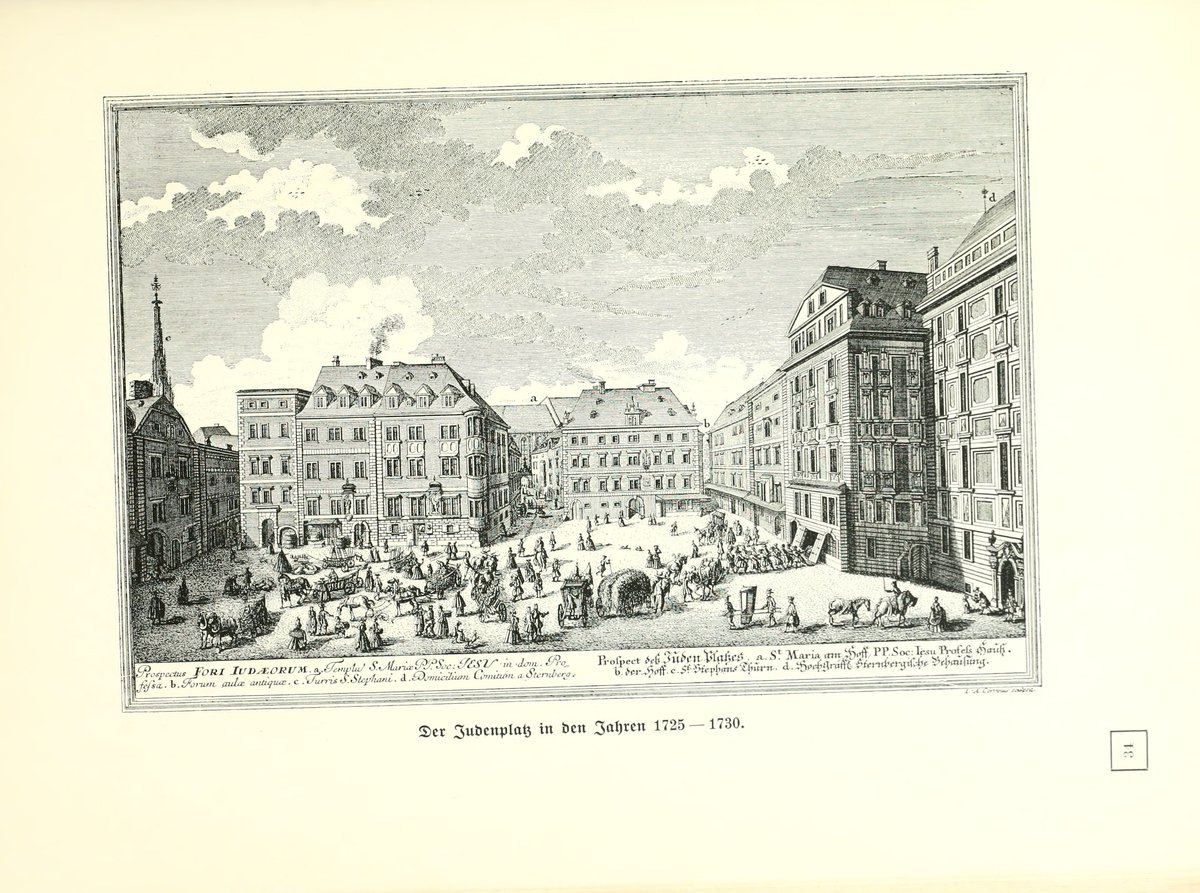
Alt Viennese Picture Book featuring seventy-two views from old engravings, introduced by Christine Touaillon.
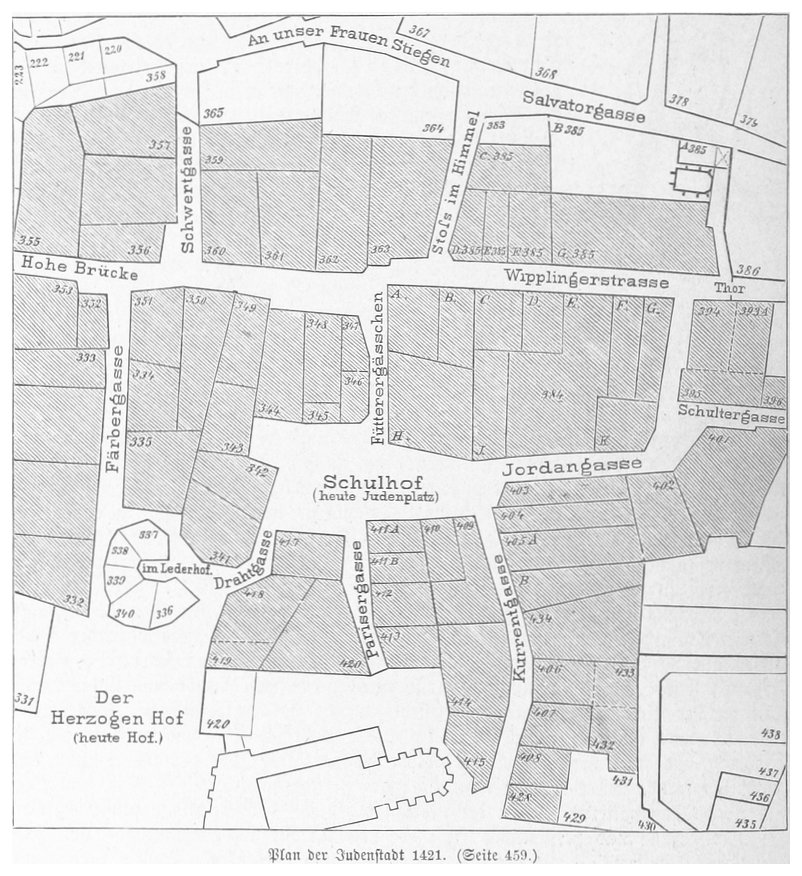
A detailed historical view of the city quarter inhabited by Viennese Jews in 1880, showcasing urban structures and streets from that period.
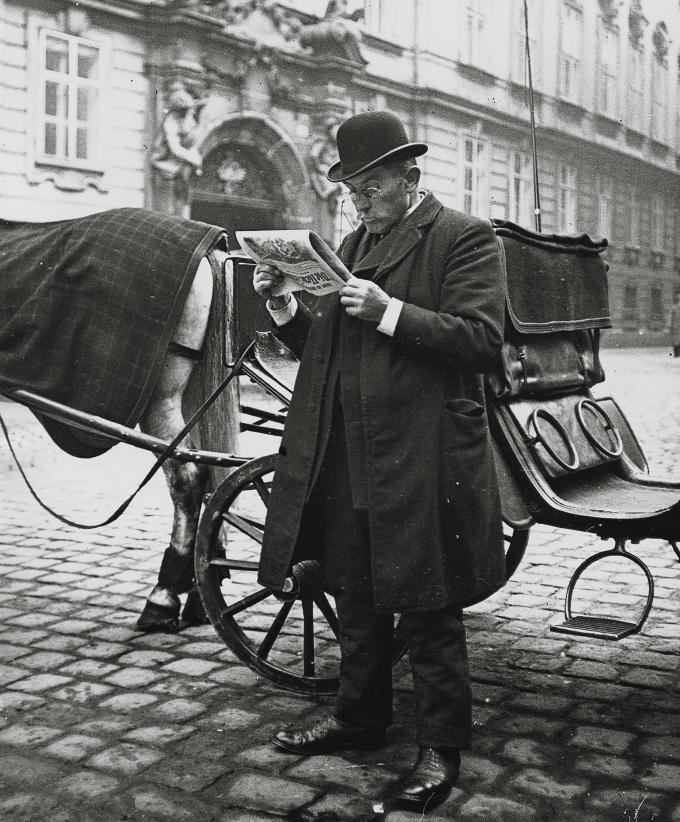
Historic photo of a coachman taking a break and reading a newspaper in front of the Bohemian Chancellery at Judenplatz in Vienna.
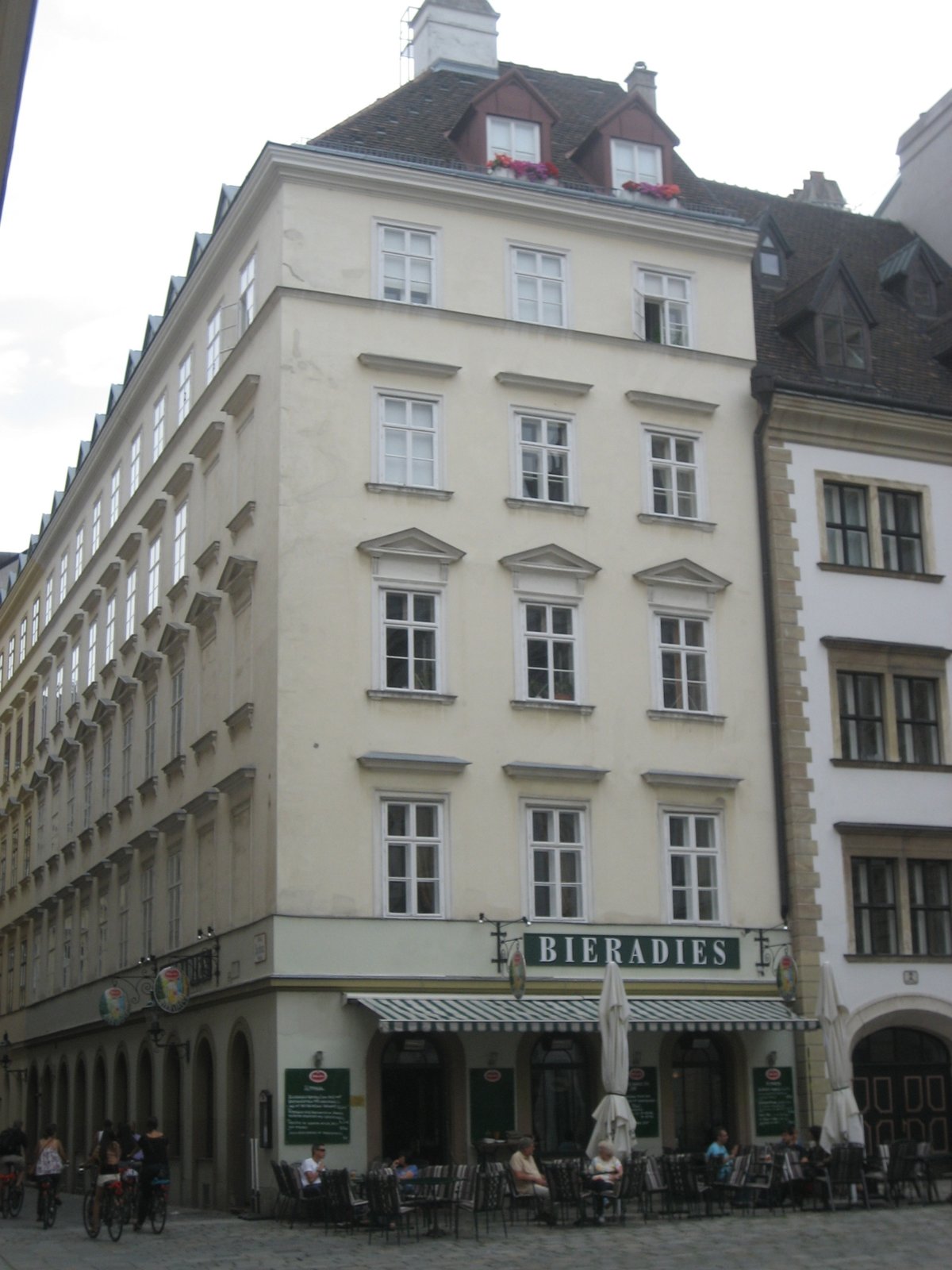
Photograph of the historic Haus Judenplatz 1 located in the 1st District (Innere Stadt) of Vienna, Austria, showcasing traditional architecture.
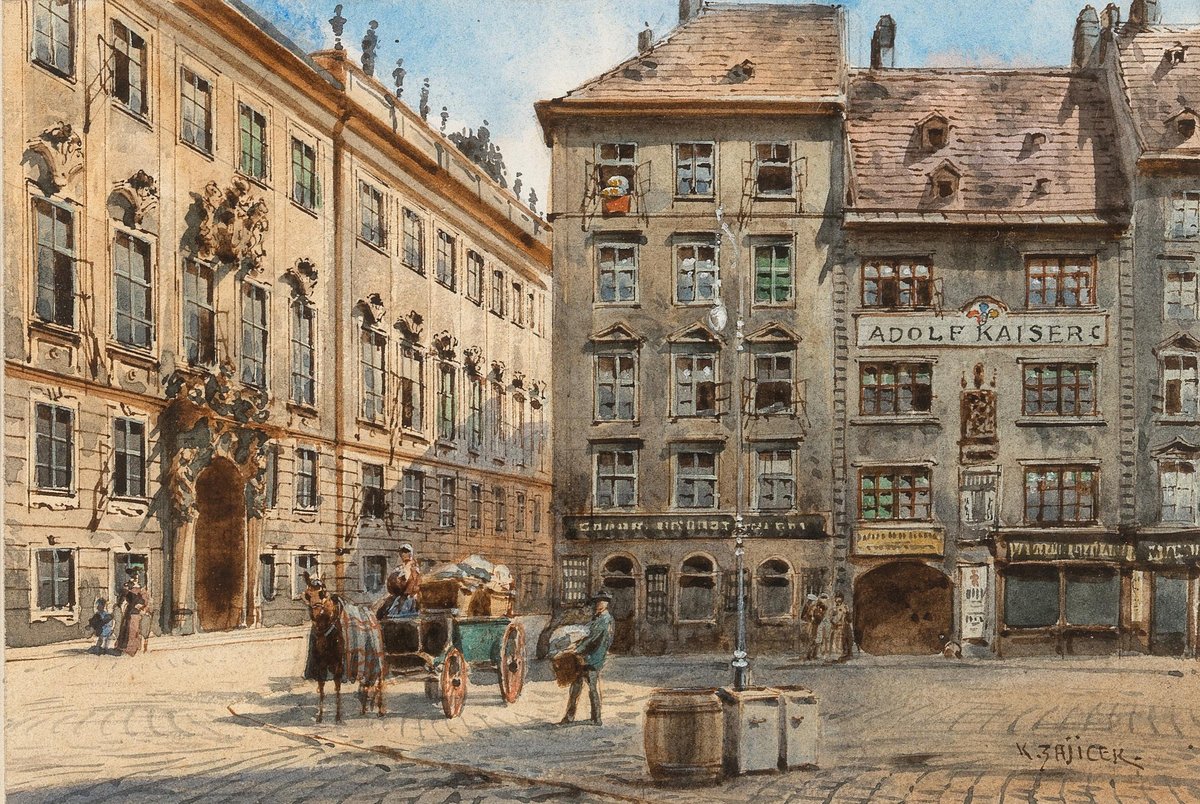
Watercolor painting by Karl Wenzel Zajicek of Judenplatz in Vienna featuring the Bohemian Hofkanzlei. The artwork is signed by K. Zajicek, painted on paper, measuring 11 x 16 cm.

An aerial photograph showcasing the cityscape of Vienna, highlighting historic buildings and the urban layout under a clear sky.
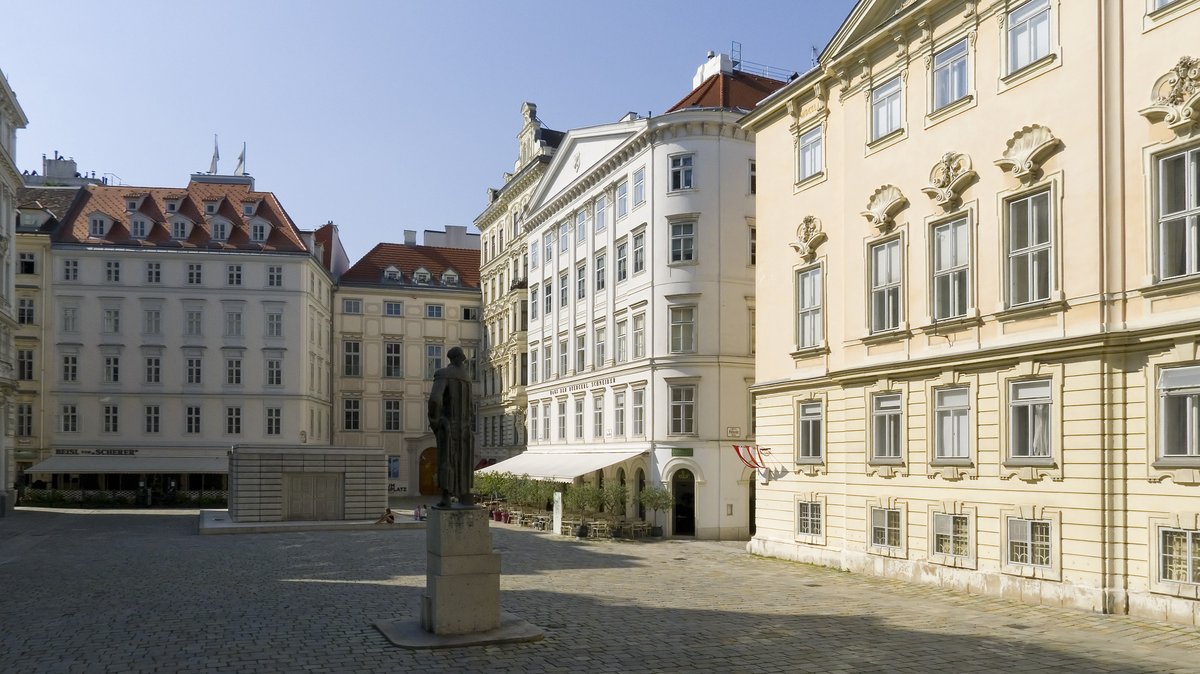
Judenplatz Square located in Vienna 1 district, featuring buildings numbered 3-4, view directed towards the northwest
Medieval Jewish Quarter: Origins and Growth
Jewish presence in Vienna dates back to at least 1194. By the mid-13th century, the Jewish community had established a thriving quarter centered around present-day Judenplatz (spotlight.anumuseum.org.il). The area was characterized by self-governance, economic vibrancy, and robust religious life, anchored by communal institutions such as yeshivot (schools), mikvaot (ritual baths), and a council (kahal) that managed internal affairs.
Jews contributed significantly to Vienna’s economy, working as traders, moneylenders, and artisans. The community’s autonomy was maintained through charters and negotiations with local authorities, even as it faced periodic restrictions.
The Medieval Synagogue: Architecture and Destruction
Architectural Development
The centerpiece of Judenplatz was its grand synagogue, whose remains were uncovered during archaeological excavations in the 1990s (spotlight.anumuseum.org.il). Built in the mid-13th century, the synagogue began as a freestanding, single-room structure and was expanded over the following century:
- Initial Construction: c. 1250s, approximately 210 m², featuring a stair foundation for the Aron Hakodesh (Torah Ark).
- Late 13th Century Expansion: Enlarged into a double-aisled hall with a central Bimah and evidence of active communal activity.
- 14th Century Extensions: Further expanded to nearly 465 m², including a yeshiva with colorful tile floors, reflecting the community’s growth.
Destruction and Aftermath
In 1421, during the Vienna Gesera, the synagogue was destroyed. Its stones were later reused for new university buildings, erasing much of its visible legacy. However, its foundations remain preserved and can be visited today as part of the Museum Judenplatz.
Communal Institutions and Daily Life
Judenplatz’s Jewish community was renowned for its religious scholarship and vibrant daily life. The yeshiva attracted scholars from across Europe, and figures such as Rabbi Yom Tov of Vienna shaped its intellectual legacy. Mikvaot and ritual observance played central roles in community life, and the kahal managed everything from education to welfare.
Economically, Jews engaged in moneylending, trade, and crafts, significantly influencing Vienna’s development despite facing legal and social challenges.
The Vienna Gesera (1420–1421): Persecution and Aftermath
The Vienna Gesera was a catastrophic event that ended centuries of Jewish life in medieval Vienna. Triggered by false accusations, economic motivations, and heightened religious tensions, the Gesera led to mass arrests, forced conversions, executions, and the destruction of Judenplatz’s Jewish institutions (executedtoday.com). Survivors were expelled, and the community’s property was confiscated, leaving an indelible scar on Vienna’s history (jewishinvienna.com).
Archaeology and Modern Commemoration
Archaeological Discoveries
Excavations in the 1990s revealed the synagogue’s foundations, Bimah, Torah Ark, and ritual objects, all now displayed in the Museum Judenplatz (Jewish in Vienna; Vienna Tourist). These discoveries provide a direct link to Vienna’s medieval Jewish community and daily life.
The Holocaust Memorial: Nameless Library
The centerpiece of modern Judenplatz is the Holocaust Memorial, or Nameless Library, designed by Rachel Whiteread and unveiled in 2000 (Audiala). This stark concrete cube, cast to resemble outward-facing books, symbolizes lost stories and the cultural destruction of the Holocaust. Names of concentration camps are inscribed at its base, further grounding the memorial in history (Vienna.net). Placed above the medieval synagogue ruins, the memorial creates a powerful dialogue between past and present (Jewish in Vienna).
Visitor Information: Opening Hours, Tickets, Accessibility
Museum Judenplatz Opening Hours:
- Tuesday–Sunday: 10:00–18:00
- Closed Mondays and public holidays
Shoah Memorial:
- Accessible 24/7 in the public square
Tickets:
- Adults: €8
- Reduced (students, seniors): €5
- Children under 6: Free
- Tickets available online (Museum Judenplatz official site) or at the entrance
Accessibility:
- Museum Judenplatz is wheelchair accessible; the medieval synagogue excavation has limited accessibility.
Public Transport:
- U3 subway to Stephansplatz or Herrengasse; multiple tram and bus lines nearby
Guided Tours, Events, and Nearby Attractions
- Guided Tours: Regular tours focus on Jewish history, synagogue archaeology, and the Holocaust Memorial. Booking in advance is recommended.
- Special Exhibitions: Temporary exhibitions explore themes of memory, Jewish culture, and identity.
- Nearby Attractions: St. Stephen’s Cathedral, Hofburg Palace, Vienna Jewish Museum, and MuseumsQuartier are all within walking distance.
Frequently Asked Questions (FAQ)
Q: What are the Judenplatz opening hours?
A: Museum Judenplatz is open Tuesday to Sunday, 10:00–18:00; closed Mondays.
Q: How much are tickets?
A: Adult tickets are €8; reduced rates for students and seniors. Tickets cover both Judenplatz and Dorotheergasse sites.
Q: Is Judenplatz wheelchair accessible?
A: The museum is wheelchair accessible, but the synagogue excavation has limited access.
Q: Are guided tours available?
A: Yes, regular tours are offered; advance booking is advised.
Q: Can I visit the Holocaust Memorial without a ticket?
A: Yes, the Shoah Memorial is outdoors and free to visit at any time.
Listen to the full story in the app
Your Personal Curator, in Your Pocket.
Audio guides for 1,100+ cities across 96 countries. History, stories, and local insight — offline ready.
Audiala App
Available on iOS & Android
Join 50k+ Curators
Sources
- verified
- verified
- verified
- verified
- verified
- verified
- verified
- verified
Last reviewed: