Introduction
Situated in Vienna’s historic heart, the site of the former Hotel Metropole offers a compelling journey through the city’s architectural elegance, rich cultural tapestry, and turbulent 20th-century history. Constructed between 1871 and 1873 for the Vienna World Exhibition, the Hotel Metropole was renowned for its neo-Renaissance grandeur—its Corinthian columns, glass-roofed courtyard, and elegant interiors drew international dignitaries, artists, and writers, including Mark Twain (Twain’s Geography; Exploring the Hotel Metropole in Vienna).
However, the site’s legacy is also defined by its transformation after the 1938 Anschluss. The Gestapo seized the hotel, making it their largest regional headquarters outside Berlin, where thousands—primarily Jews, political dissidents, and resistance members—were interrogated and deported. Today, the Memorial at Morzinplatz stands at this location, serving as a vital place of remembrance and reflection (The Vienna Review; Visiting the Memorial at Morzinplatz).
This guide provides practical information on visiting hours, ticketing, accessibility, travel tips, and cultural context, making it an essential resource for anyone seeking to understand Vienna’s complex past.
Photo Gallery
Explore Hotel Metropole, Vienna in Pictures

Historical advertisement showcasing the Gebrüder Schaumann company, known for manufacturing rugs and blankets, displayed in Vienna in the year 1873.

Historical image of DDSG ship Ebersdorf on the Danube canal in Vienna, positioned in front of the Hotel Metropole around the year 1880

Historic albumen print photograph of the exterior facade of Hotel Metropole in Vienna, taken by Josef Löwy around 1873 to 1878. The image shows the architectural detail of the hotel located at Franz Josef-Quai, Vienna.

Historical view of Franz-Josefs-Kai street around 1876 featuring the Hotel Metropol at Morzinplatz, later the largest Gestapo center in the Third Reich from 1938 to 1945.

Historical advertisement for the Hotel Metropole in Vienna, showcasing the hotel's logo and elegant early 20th century design style from the year 1912.

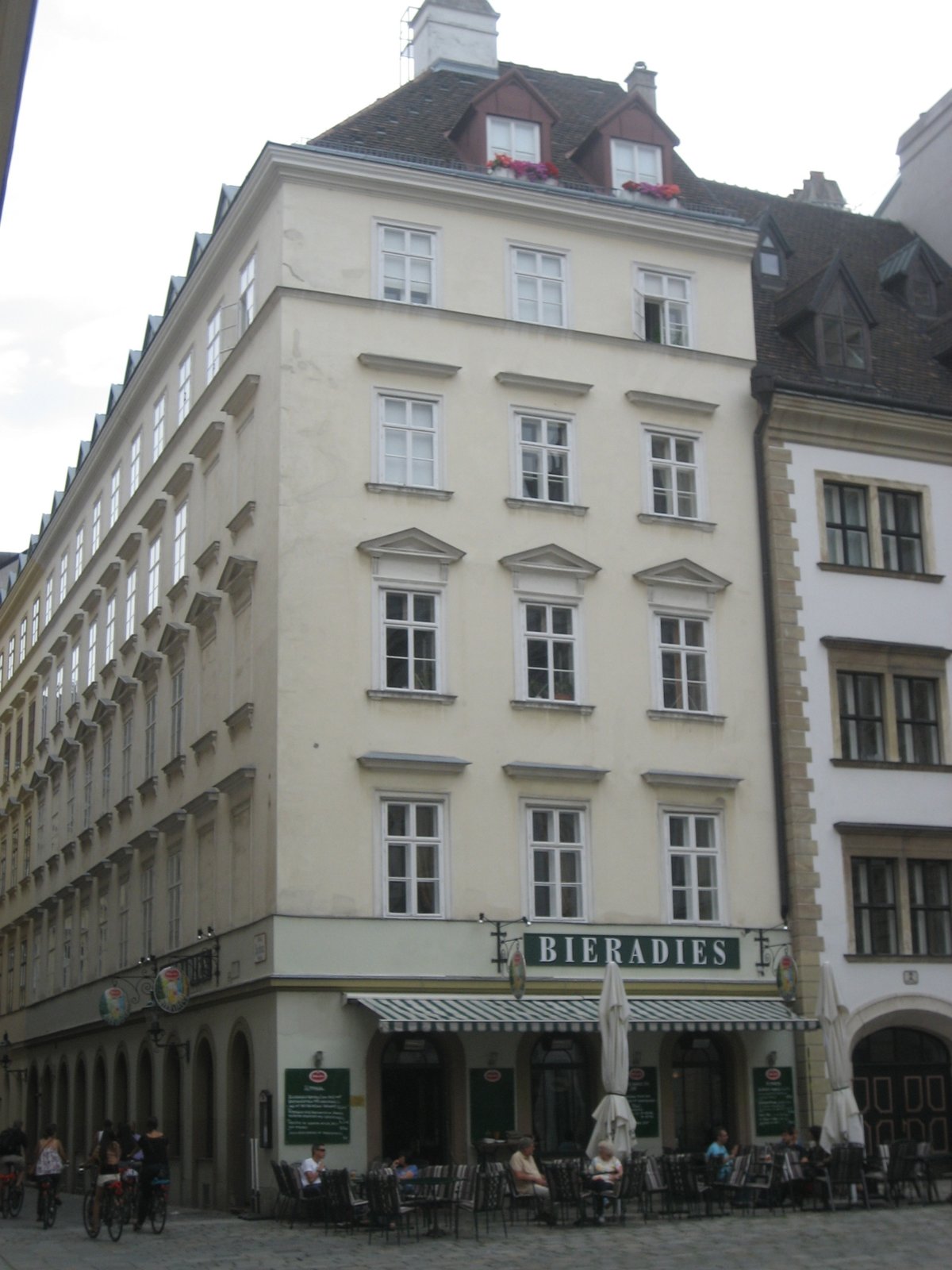
Exterior view of Hotel Metropol Vienna showcasing its architectural design and entrance

Exterior facade of Hotel Metropole in Vienna showcasing its modern architectural design

Elegant festive hall of Hotel Métropole located at Franz-Josefs-Kai 31-33 in Vienna, featuring ornate design and historic charm.

Interior view of the festive hall of Hotel Métropole located at Franz-Josefs-Kai 31-33, 1010 Vienna, showcasing ornate architectural details and elegant seating arrangements in 1911.

Historic view from the terrace of Hotel Métropole located in the 1010 district of Vienna in the year 1912.

Historical view from the terrace of the Hotel Métropole in Vienna's 1010 district showcasing the urban landscape in 1912.

Black and white historical photograph depicting the Franz-Josefs-Kai street along the Danube Canal in Vienna, Austria, taken circa 1870-1880.
Origins and Architectural Grandeur (1873–1938)
Located on Morzinplatz by the Danube Canal, the Hotel Metropole was designed by Carl Schumann and Ludwig Tischler. With its four-story neo-Renaissance façade, Corinthian columns, caryatids, and luxurious interiors, it epitomized the opulence of the Austro-Hungarian Empire (Twain’s Geography). The glass-roofed inner courtyard and lavish dining room hosted Vienna’s elite and international visitors.
The hotel was affectionately dubbed the “Jewish Sacher” due to its Jewish ownership and its popularity with Vienna’s Jewish community, reflecting the city’s cosmopolitan atmosphere before World War II.
Nazi Occupation and Transformation (1938–1945)
After Austria’s annexation by Nazi Germany in 1938, the Gestapo confiscated the Hotel Metropole, converting it into their Vienna headquarters. This once-glamorous building became a site of terror, with approximately 900 Gestapo personnel operating there and an estimated 50,000 individuals interrogated, tortured, or deported. The hotel’s destruction in WWII and its eventual demolition in 1948 erased the physical structure, but its memory endures as a symbol of Vienna’s darkest chapter (The Vienna Review; Twain’s Geography).
The Hotel Metropole as a Cultural Landmark
Literary Connections and Notable Guests
Mark Twain was among the hotel’s most famous guests, staying there from 1897–1899. His time in Vienna inspired later works and contributed to the city’s intellectual life (Twain’s Geography). The hotel features in Stefan Zweig’s novella "Schachnovelle" ("The Royal Game"), where it is depicted as the Gestapo’s headquarters—a powerful literary reference to the horrors of totalitarianism.
Other works, such as Robert Seethaler’s "Der Trafikant" and Fritz Lehner’s "Hotel Metropol" trilogy, chronicle the building’s transformation from luxury hotel to a symbol of oppression.
The Memorial at Morzinplatz
Design, Symbolism, and Inscription
The main memorial, designed by Leopold Grausam and inaugurated in 1985, is a bronze and granite installation. Granite from the Mauthausen concentration camp was chosen to connect the site to broader Nazi atrocities (Susan Ives). The memorial features the red triangle (for political prisoners) and yellow star (for Jews), serving as stark reminders of those persecuted.
The central inscription, “Niemals Vergessen” (“Never Forget”), and the text from the original 1951 memorial stone emphasize remembrance and Austria’s resurrection but have been critiqued for underplaying Austria’s complicity in Nazi crimes (urbanlabsce.eu).
Memorial Rooms and Additional Plaques
Behind the main memorial, within the Leopold-Figl-Hof apartment complex, are memorial rooms honoring Gestapo victims. Additional plaques commemorate both the hotel’s Jewish ownership and other notable residents, including a plaque for Dr. José Rizal, the Philippine national hero who stayed at the hotel in 1887 (Vienna 101).
Visiting the Site: Hours, Tickets, and Accessibility
Visiting Hours and Tickets
- Memorial at Morzinplatz: Open-air and accessible 24/7, year-round. No tickets or entrance fees required.
- Memorial Rooms (Leopold-Figl-Hof): May have specific opening hours; check official Vienna tourism websites or the Documentation Centre of Austrian Resistance for current times.
- Nearby Documentation Centre of Austrian Resistance: Open Tuesday–Sunday, 10:00 AM–6:00 PM. Small entrance fee may apply (Visiting Vienna).
Accessibility
- The memorial and surrounding paths are wheelchair accessible.
- Assistance is available at nearby museums and memorial rooms upon request.
Guided Tours
- Several organizations offer guided walking tours focusing on Nazi history and Jewish heritage in Vienna, including the Hotel Metropole site (Lens of Jen).
- Tours can be booked through local operators or cultural organizations and often contextualize the hotel’s literary and historical significance.
Nearby Attractions and Travel Tips
- Nearby Sites: Jewish Museum Vienna, Documentation Centre of Austrian Resistance, Hofburg Palace, Danube Canal promenade, St. Stephen’s Cathedral.
- Public Transport: Schwedenplatz U-Bahn station (U1, U4) and tram lines 1 and 2 provide easy access (The Tour Guy).
- Travel Tips: Visit during weekday mornings for a quieter experience. Cafés and restrooms are available nearby at Schwedenplatz.
Cultural and Educational Insights
The site is a focal point for Holocaust and WWII education, regularly visited by school groups and local organizations. Information panels provide historical context in German and English. For deeper learning, the Documentation Centre of Austrian Resistance offers exhibitions and archives on Austria’s Nazi period.
Events and Commemorations
Annual commemorative ceremonies are held at Morzinplatz, especially on Holocaust Remembrance Day (January 27) and the anniversary of the Anschluss (March 12). These events feature speeches, music, and the laying of wreaths, with participation from Vienna’s Jewish, Roma, and Sinti communities.
Frequently Asked Questions (FAQ)
Q: What are the visiting hours for the memorial?
A: The open-air memorial at Morzinplatz is accessible 24/7, year-round.
Q: Is there an entrance fee?
A: No, the memorial is free to visit. The Documentation Centre may charge a small fee.
Q: Are guided tours available?
A: Yes, several local organizations offer tours that include the site.
Q: Is the site wheelchair accessible?
A: Yes, the memorial and nearby streets are accessible.
Q: Where is the memorial located?
A: Morzinplatz, Vienna’s 1st District, near Schwedenplatz U-Bahn.
Q: Are there visitor facilities?
A: No facilities at the memorial itself, but cafés and restrooms are nearby at Schwedenplatz.
Q: Can I take photographs?
A: Personal photography is permitted; please be respectful of the site’s significance.
Listen to the full story in the app
Your Personal Curator, in Your Pocket.
Audio guides for 1,100+ cities across 96 countries. History, stories, and local insight — offline ready.
Audiala App
Available on iOS & Android
Join 50k+ Curators
Sources
- verified
- verified
- verified
- verified
- verified
- verified
-
verified
Vienna 101: Trailing Philippine National Hero Dr
Jose Rizal in Vienna, 2025
- verified
Last reviewed: