Introduction
Nestled in Vienna’s historic Innere Stadt district, the Holy Trinity Greek Orthodox Church (Griechenkirche zur Heiligen Dreifaltigkeit) stands as a testament to the city’s multicultural heritage and the enduring presence of its Greek community. Celebrated for its striking Byzantine Revival architecture and vibrant religious life, the church is both a spiritual sanctuary and a cultural landmark. This guide offers detailed information on the church’s history, architecture, visiting hours, ticket policies, accessibility, and practical travel tips for a memorable experience in Vienna.
For official updates and further visitor information, refer to these resources:
(wienergriechen.univie.ac.at), (Vienna Tourism Board), (Wikipedia).
Photo Gallery
Explore Holy Trinity Greek Orthodox Church in Pictures

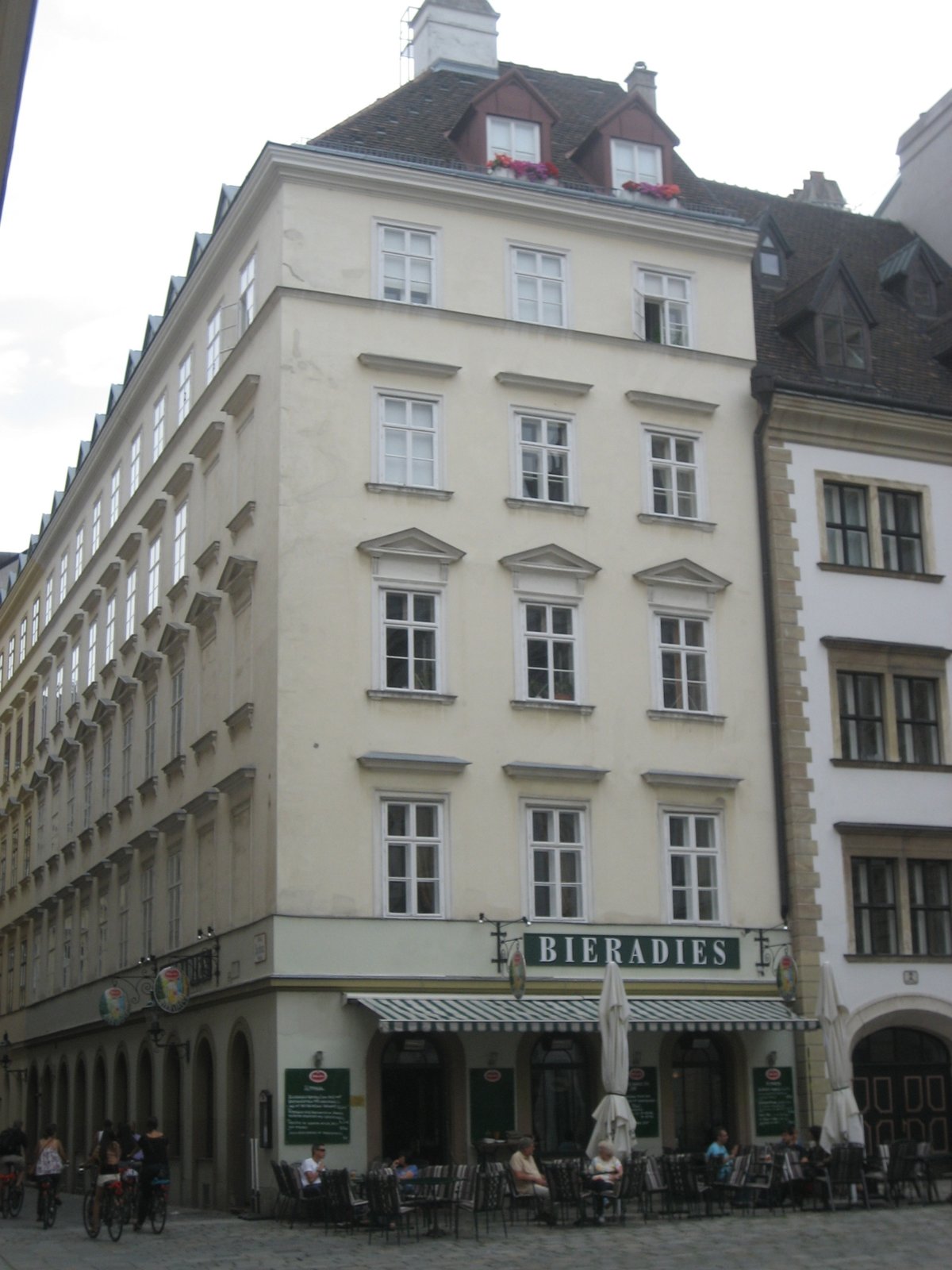
Watercolor over pencil artwork by Erwin Pendl depicting Griechenbeisl and the Greek Orthodox Church (Church of the Holy Trinity) in Vienna, approx. 42.8 x 30.2 cm.
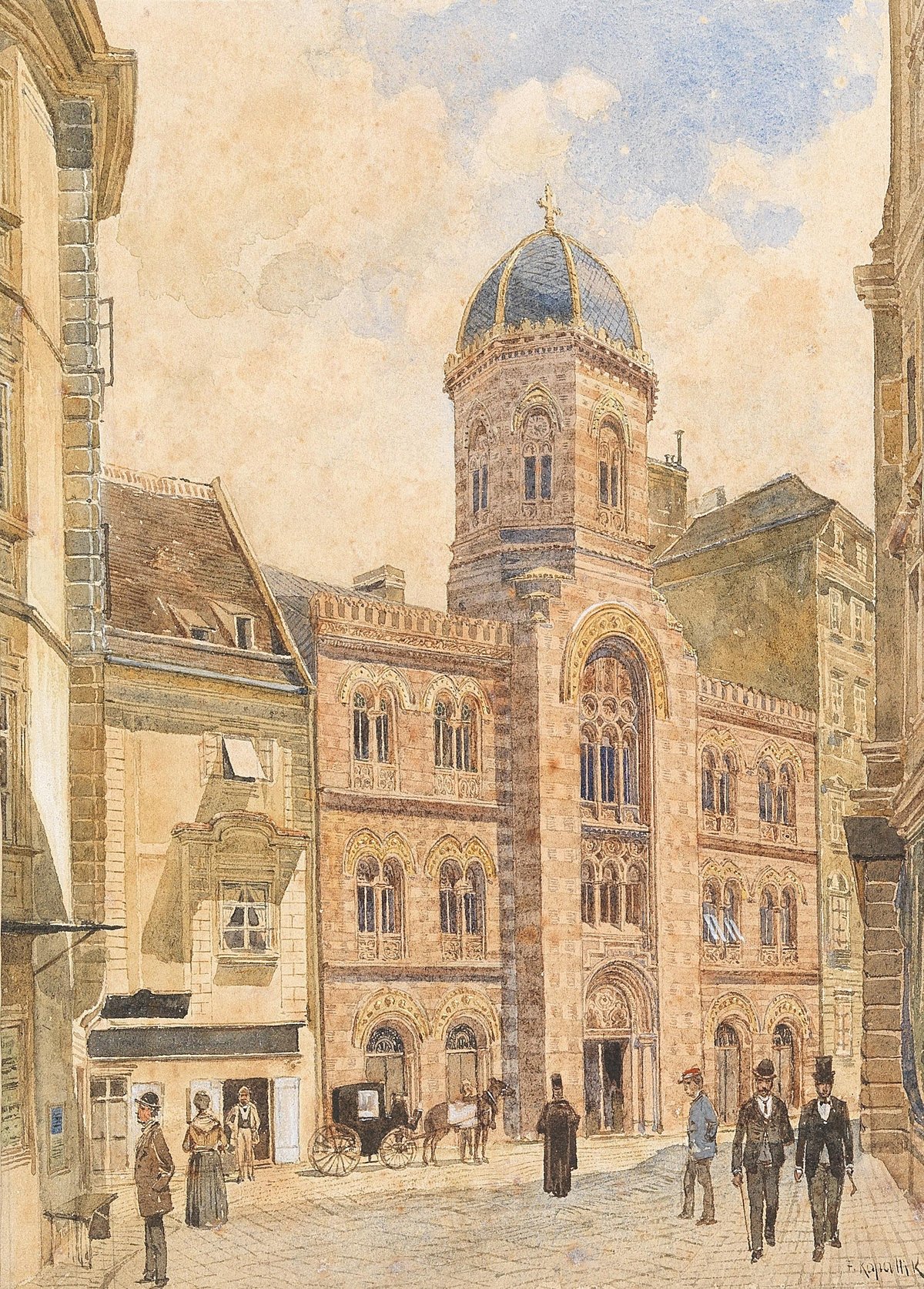
Watercolor painting of the Greek Orthodox Church at Fleischmarkt in Vienna by Franz Kopallik, measuring 28 x 20 cm, showcasing detailed architecture and religious heritage.

Painting of the Greek Church of the Holy Trinity located in Vienna, created in 1859 by artist Rudolf von Alt

Exterior view of Griechenkirche zur heiligen Dreifaltigkeit located at Fleischmarkt in Vienna, showcasing its architectural details

Photograph of the Holy Trinity Greek Orthodox Church located in Vienna, showcasing its architectural details and exterior in daylight.

Exterior view of the Holy Trinity Greek Orthodox Church in Vienna, showcasing its architectural design and cultural significance

Exterior view of the Holy Trinity Greek Orthodox Church in Vienna, featuring its distinctive blue dome topped with crosses, taken in August 2022

Exterior view of the Holy Trinity Greek Orthodox Church in Vienna showcasing its architectural design and religious significance.

Image showing the exterior of the Holy Trinity Greek Orthodox Church in Vienna, featuring its distinctive golden dome and traditional Orthodox church architectural elements

Historic photo of the Greek Orthodox Church of the Holy Trinity in Vienna, also known as Griechisch unirte Kirche, photographed by Hermann Heid between 1850 and 1920. Architectural work by Oberbaurath Ritter, shown as an albumen print on paper cardboard.

A vibrant street scene in Vienna showcasing historic architecture, clear tram tracks, and pedestrians on a sunny day
Historical Background
Origins and Legal Foundations
The roots of the Holy Trinity Greek Orthodox Church trace back to the influx of Greek merchants and settlers in Vienna after the Ottoman sieges of the late 17th century. By the 18th century, the Greek community had flourished, drawn by economic opportunity and religious tolerance within the Habsburg Empire (wienergriechen.univie.ac.at).
A crucial turning point came with Emperor Joseph II’s Patent of Toleration in 1781, which granted non-Catholic communities the right to worship openly, albeit with restrictions on external church design (tourmycountry.com). In 1787, the first Greek Orthodox church was established on Fleischmarkt, initially featuring a modest exterior in compliance with imperial regulations.
Architectural Development and Patronage
By the mid-19th century, religious restrictions had eased, allowing the church to undergo a transformative redesign between 1856 and 1858. Theophil Hansen, a renowned Danish-Austrian architect, led the project with financial backing from Simon Sinas, a prominent Greek-Austrian diplomat (Wikipedia; spottinghistory.com). Hansen’s vision embraced the Byzantine Revival style, incorporating two-tone brickwork, gilded arches, and elaborate frescoes by Carl Rahl and Ludwig Thiersch. This architectural synthesis of Eastern Orthodox and Austrian Baroque traditions created a new visual identity for the church and the Greek community.
Community and Cultural Significance
The church soon became the focal point for Vienna’s Greek quarter, known as the Fleischmarkt, and has since played a central role in both religious and cultural life. It is home to a Greek school (established 1801) and library, supporting education and cultural continuity (tourmycountry.com). Since 1963, the church has served as the seat of the Greek Orthodox Metropolis of Austria and as the Exarchate for Hungary and Central Europe (Wikipedia).
Architectural & Artistic Highlights
Exterior Features
The Holy Trinity Greek Orthodox Church is a rare Central European example of Byzantine Revival architecture. Its distinctive façade is marked by alternating red and yellow brickwork, gilded archways with intricate Orthodox iconography, and small domes and cupolas crowned with crosses (Triphobo). These elements distinguish it from Vienna’s Gothic and Baroque churches and reflect the spiritual and cultural heritage of the Greek community.
Interior Decoration
The sanctuary features a hand-carved, gilded iconostasis, marble columns, and ornate candlesticks. Walls and ceilings are adorned with vibrant frescoes and mosaics depicting biblical scenes and Orthodox saints, executed by Carl Rahl and Ludwig Thiersch (spottinghistory.com). The use of gold leaf, natural pigments, and detailed woodwork enhances the sacred and artistic atmosphere.
Religious and Cultural Life
Liturgical Traditions
The church remains an active place of worship, following the liturgical calendar of the Ecumenical Patriarchate. Services are conducted in Greek, with increasing use of German to accommodate a diverse congregation. Traditional Byzantine chants, incense, and processions are integral to the worship experience (myguidevienna.com).
Community Role
Beyond its religious function, the church is a center for intercultural dialogue, hosting festivals, concerts, and lectures that celebrate Greek heritage and promote mutual understanding within Vienna’s diverse society.
Visiting Information
Location and Getting There
- Address: Fleischmarkt 13, 1010 Vienna, Austria
- Public Transport: Easily accessible via U3 (Stubentor or Stephansplatz stations), U1/U4 (Schwedenplatz), and multiple tram lines.
Opening Hours
- General Visiting: Monday to Saturday, 10:00 AM to 5:00 PM.
(Some sources note 9:00 AM–5:00 PM; verify before visiting.) - Sundays: Open during service times.
- Closed: On major Greek and Austrian public holidays.
- Tip: Check the official website or local tourism boards for updates, especially in holiday seasons.
Tickets and Admission
- Entry: Free of charge.
- Donations: Appreciated for maintenance and cultural programs. Donation boxes are available near the entrance.
Accessibility
- Wheelchair Access: Ramps at the main entrance; accessible restrooms available.
- Advice: Contact the church in advance for specific accessibility needs.
Guided Tours
- Availability: Guided tours are offered on Saturdays at 11:00 AM (check current schedule) and by appointment.
Private or group tours may be arranged via the church or included in city walking tours. - Materials: Informational brochures are typically available on-site.
Photography and Etiquette
- Photography: Allowed for personal use; no flash.
Photography during services or ceremonies is discouraged. - Dress Code: Shoulders and knees covered; modest attire required.
- Behavior: Maintain silence and reverence during visits, especially during services.
Travel Tips & Nearby Attractions
- Best Time to Visit: Weekday mornings are quieter.
- Nearby Attractions:
- St. Stephen’s Cathedral
- Griechenbeisl (Vienna’s oldest inn)
- Nakos’ House (“Tolerance House”)
- Hofburg Palace
- Local cafés and shops in the Fleischmarkt district
- Combined Tours: Consider joining a walking tour for a comprehensive exploration of Vienna’s religious and historical sites.
Frequently Asked Questions (FAQ)
Q: What are the Holy Trinity Greek Orthodox Church visiting hours?
A: Typically Monday–Saturday, 10:00 AM–5:00 PM; Sundays during services. Check official sources for seasonal changes.
Q: Is there an entrance fee or are tickets required?
A: No, entry is free; donations are welcome.
Q: Are guided tours available?
A: Yes, on Saturdays at 11:00 AM and by appointment.
Q: Is the church wheelchair accessible?
A: Yes, with ramps and accessible restrooms.
Q: Is photography allowed inside?
A: Yes, but without flash and not during services.
Q: Can I attend a service?
A: Yes, services are open to all; conducted in Greek and sometimes German.
Listen to the full story in the app
Your Personal Curator, in Your Pocket.
Audio guides for 1,100+ cities across 96 countries. History, stories, and local insight — offline ready.
Audiala App
Available on iOS & Android
Join 50k+ Curators
Sources
- verified
- verified
- verified
- verified
- verified
Last reviewed: