Introduction
Hoher Markt, Vienna’s oldest square, sits at the heart of the city’s Innere Stadt, offering a journey through layers of history from Roman times to the present day. Once the site of the Roman camp Vindobona, the square has evolved from an ancient settlement to a medieval marketplace and judicial center, and now to a vibrant urban space surrounded by architectural, artistic, and archaeological landmarks. With free 24/7 access, proximity to major attractions like St. Stephen’s Cathedral and the Hofburg Palace, and a lively atmosphere, Hoher Markt is a must-visit destination for anyone eager to explore Vienna’s rich heritage.
For further details and planning, consult authoritative sources such as the Vienna Tourist Board, A View On Cities, and Happily on the Road.
Photo Gallery
Explore Hoher Markt in Pictures

Photograph of Vienna city in the early 20th century showing historic architecture and urban streets

Historic upper market square featuring the ex-voto monument dedicated to Emperor Leopold I, located in Vienna.

Detailed engraving depicting a fierce battle on the Hoher Market in the year 1872, showcasing soldiers in combat with historic weaponry and uniforms.

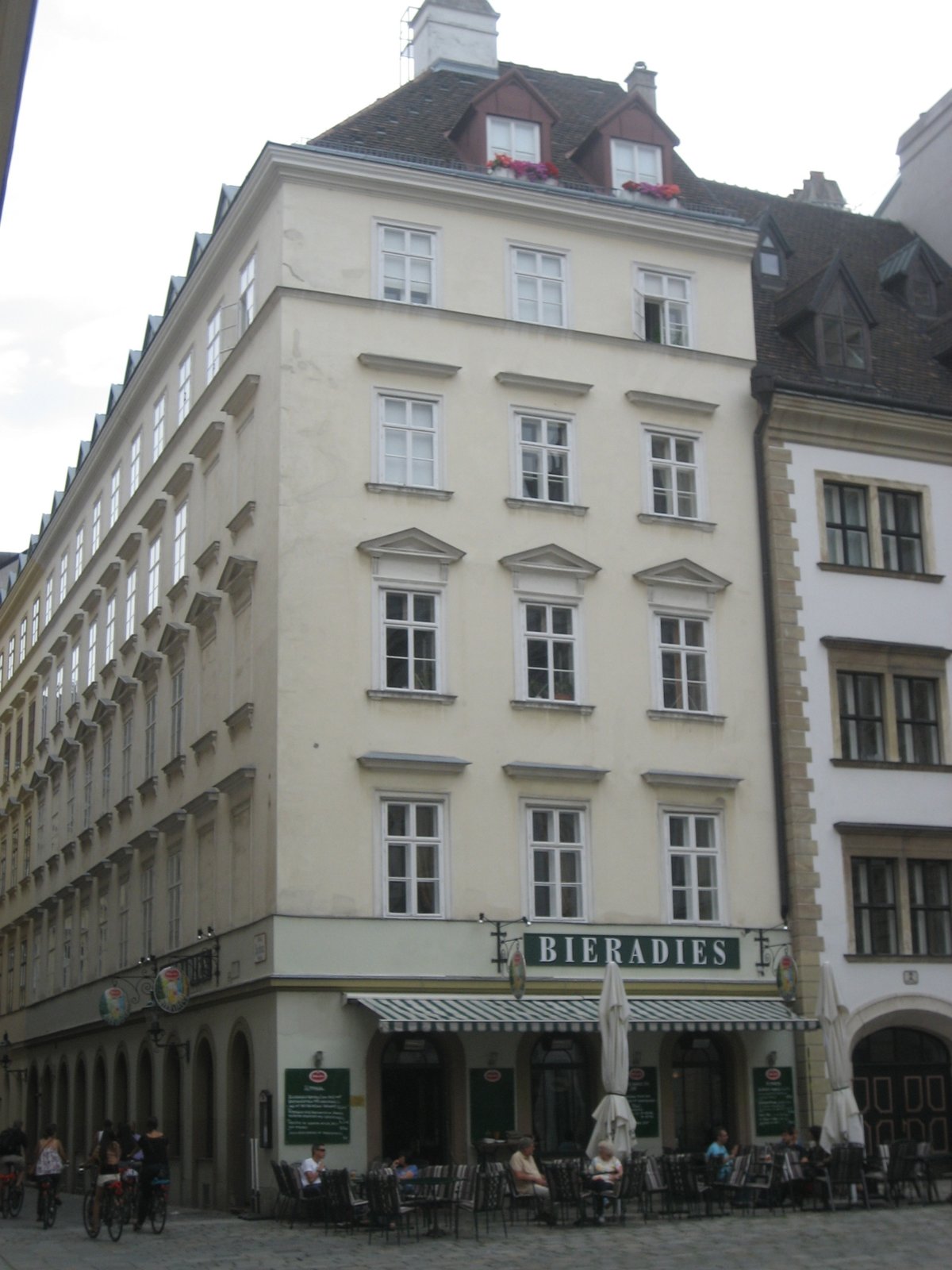
View of Hoher Markt historic square in Vienna 1, showing old buildings and street lamps towards west near number 10-11

Historical black and white panoramic photo showing the cityscape and surrounding landscapes of Vienna, Austria, taken in 1912 as part of the PhoGéo1 documentary series.
Roman Origins and Early Settlement
Hoher Markt is built atop the remains of Vindobona, the Roman legionary camp established in the 1st century AD. Archaeological digs have revealed the foundations of Roman officers’ residences (Tribunenhäuser), baths, and infrastructure, many of which are now displayed in the Römermuseum. Glass panels at street level allow glimpses of these ancient structures, providing tangible links to Vienna’s beginnings (vienna-unwrapped.com).
Medieval Civic and Commercial Center
By the 12th and 13th centuries, Hoher Markt had become Vienna’s civic and commercial nucleus, surrounded by guild houses and bustling market activity. The square was home to the city’s criminal court and the Schranne building, complete with a chapel and pillory, highlighting its judicial significance (de.wikipedia.org). Names of adjacent streets like Bauernmarkt and Fleischmarkt reflect historic market functions (Wien.gv.at).
Early Modern Era and Social Life
The Habsburg era saw Hoher Markt lined with grand residences such as Palais Arnstein and Palais Sina, becoming centers for intellectual and cultural gatherings. Baroque and neoclassical façades added to the square’s splendor (allaboutvienna.com).
Judicial and Punitive Functions
Historically, the square was a stage for public verdict readings and punishments, with the pillory rebuilt in the mid-15th century by Laurenz Spenning. It symbolized civic order and discipline.
19th–20th Century Urban Changes
With the decline of judicial functions in the 19th century, Hoher Markt shifted toward commerce and urban modernization. The installation of the Art Nouveau Ankeruhr in the early 20th century marked this transition.
WWII Destruction and Reconstruction
The square suffered significant destruction during World War II bombings, with only a handful of prewar buildings surviving. Reconstruction in the 1950s introduced modern architecture alongside surviving historic elements (de.wikipedia.org).
Contemporary Significance
Today, Hoher Markt forms part of Vienna’s UNESCO-listed historic center, blending archaeological sites, monuments, and lively urban life.
Key Attractions at Hoher Markt
Ankeruhr: Vienna’s Art Nouveau Marvel
The Ankeruhr is a stunning Art Nouveau clock built between 1911 and 1914. It stretches across two buildings and features a parade of twelve historical figures—such as Marcus Aurelius, Charlemagne, and Joseph Haydn—moving across the clock face over twelve hours. At noon, all figures process in a grand spectacle accompanied by music, drawing crowds daily. Arrive early for a good viewing spot.
Vermählungsbrunnen (Marriage Fountain): Baroque Splendor
Commissioned by Emperor Charles VI and completed in 1732, the Vermählungsbrunnen commemorates the biblical marriage of Mary and Joseph. Designed by Johann Emanuel Fischer von Erlach, the fountain’s dramatic sculptural ensemble is a testament to Vienna’s baroque artistry and Habsburg religious devotion (Visiting Vienna).
Roman Ruins and Römermuseum: Vienna’s Ancient Roots
Beneath Hoher Markt lie the remnants of Vindobona. The Römermuseum offers exhibits on Roman Vienna, including mosaics, coins, and models. Street-level glass panels also display some ruins.
- Museum Hours: Tuesday–Sunday, 10:00 AM–6:00 PM; closed Mondays.
- Tickets: Adults €6, discounts for students/seniors, free for children under 19.
Practical Visitor Information
Visiting Hours & Tickets
- Hoher Markt Square: Open 24/7, free of charge.
- Römermuseum: Tuesday–Sunday, 10:00 AM–6:00 PM. Admission €6 adults, discounts available.
- Ankeruhr: Best viewed at noon for the clock’s parade; free to watch.
- Vermählungsbrunnen: Outdoor and freely accessible.
Accessibility & Getting There
- Public Transport: Stephansplatz (U1, U3) is the nearest U-Bahn station; tram lines 1A, 3A stop at Hoher Markt (Vienna Public Transport).
- On Foot: Located in the pedestrian-friendly Innere Stadt.
- Wheelchair Access: Most of the square and attractions are accessible, though the Römermuseum’s archaeological layout may pose some challenges (Insight Cities).
Guided Tours & Tips
- Join guided walking tours for in-depth history and local stories; many include Hoher Markt.
- Download the ivie app for self-guided tours and accessibility updates.
- Visit around noon for the Ankeruhr performance.
- Wear comfortable shoes; expect cobblestone surfaces.
Dining, Shopping, and Nearby Attractions
- Dining: Cafés and restaurants around the square serve Viennese and international cuisine—reserve ahead during peak times.
- Shopping: Boutiques offer local crafts and sweets; prices are fixed.
- Nearby Attractions: St. Stephen’s Cathedral, Graben, Judenplatz, Hofburg Palace, and the Jewish Museum are all within walking distance.
Cultural Events & Seasonal Activities
Hoher Markt occasionally hosts open-air markets, art installations, and performances, particularly during summer and the holiday season. For current schedules, check the Vienna Tourist Board’s event calendar.
Frequently Asked Questions (FAQs)
Q: Is Hoher Markt open at night?
A: Yes, it is a public square accessible 24/7.
Q: Do I need tickets to visit Hoher Markt?
A: No ticket is needed for the square. The Römermuseum charges admission; the Ankeruhr parade is free.
Q: When can I see the Ankeruhr clock parade?
A: Daily at 12:00 PM noon.
Q: Is Hoher Markt wheelchair accessible?
A: Mostly, though some museum areas may be limited due to archaeological structures.
Q: Are there guided tours?
A: Yes, many city tours feature Hoher Markt; self-guided audio tours are also available.
Listen to the full story in the app
Your Personal Curator, in Your Pocket.
Audio guides for 1,100+ cities across 96 countries. History, stories, and local insight — offline ready.
Audiala App
Available on iOS & Android
Join 50k+ Curators
Sources
- verified
- verified
- verified
- verified
- verified
- verified
- verified
Last reviewed: