Introduction
Hermesvilla is one of Vienna’s most enchanting historical sites, nestled within the expansive Lainzer Tiergarten nature reserve. Commissioned in the 1880s by Emperor Franz Joseph I as a personal gift for his wife, Empress Elisabeth (“Sisi”), this romantic villa served as a secluded imperial retreat away from court life. Known as the “Palace of Dreams,” Hermesvilla is celebrated for its harmonious blend of late Romantic architecture, rich artistic heritage, and unique connection to the Habsburg dynasty. Today, as part of the Wien Museum network, Hermesvilla invites visitors to explore its opulent interiors, lush gardens, and immersive exhibitions—a must-see for anyone interested in Vienna’s imperial history, art, and scenic parklands (Wien Museum Hermesvilla; Vienna-Trips; Lonely Planet).
Photo Gallery
Explore Hermesvilla in Pictures
Imperial Origins and Construction
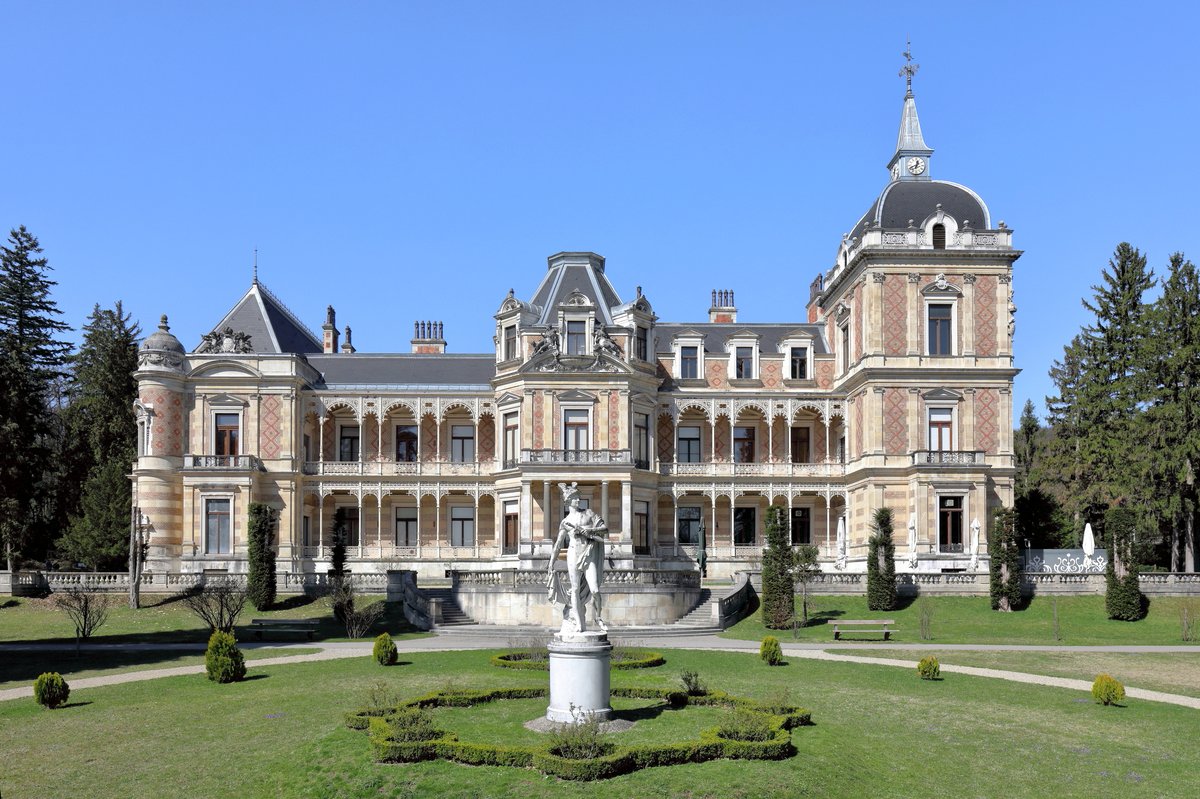
Hermesvilla was conceived by Emperor Franz Joseph I in 1881 as a romantic gesture to encourage Empress Elisabeth to spend more time in Vienna. Designed by renowned architect Karl von Hasenauer—also responsible for the Kunsthistorisches Museum—the villa’s construction spanned from 1882 to 1887. Its name derives from the marble statue of Hermes, the Greek messenger god, placed in the gardens as a symbol of communication and retreat (Vienna Unwrapped). The villa’s original name, “Villa Waldruh,” reflected its tranquil woodland setting.
Architecture and Artistic Highlights
Hermesvilla exemplifies late Romantic and historicist architectural styles. The two-story building features ornate façades, loggias, classical symmetry, and is set amidst landscaped gardens within the Lainzer Tiergarten.
Interior Decoration and Artists
The interiors are lavishly decorated, reflecting Empress Elisabeth’s tastes and interests. Notable highlights include:
- Empress Elisabeth’s Bedroom: Adorned with Hans Makart’s mural “Dream of a Night,” inspired by Shakespeare’s “A Midsummer Night’s Dream.” The room’s fabrics and gilded accents create a dreamy retreat (Vienna-Trips).
- Gymnastics Room: Elisabeth’s private gymnasium—rare for royal residences—showcases her pioneering dedication to physical fitness, with preserved equipment and artistic murals (Secret Vienna).
- Artistic Contributions: The villa features works by Hans Makart, Gustav Klimt, Franz Matsch, Hugo Charlemont, August Eisenmenger, and Victor Tilgner. Early works by Klimt and Matsch reveal the beginnings of Viennese Secessionist style (Wikipedia).
Historical Role and Restoration
Hermesvilla was intended as a personal sanctuary for Empress Elisabeth, reflecting her passion for literature, fitness, and the outdoors. It offered a rare respite from the formality of the Hofburg, and its private nature made it a symbol of the imperial couple’s relationship.
After the fall of the Austro-Hungarian Empire in 1918, Hermesvilla became state property. The villa suffered neglect and damage during WWII, but major restoration efforts in the 1960s and early 1970s, led by the City of Vienna and Mayor Bruno Marek, preserved its unique heritage. Since 1979, Hermesvilla has operated as a museum, hosting permanent and rotating exhibitions that highlight the Habsburg era and the personal stories of its most famous residents (Wien Museum Hermesvilla; Vienna-Trips).
Planning Your Visit: Hours, Tickets & Accessibility
Visiting Hours (2025)
- Season: Open mid-March (around Palm Sunday) to October 31st
- Days: Tuesday to Sunday, 10:00 AM – 6:00 PM (last entry 5:30 PM)
- Closed: Mondays and public holidays
- Check: For seasonal updates and special closures, visit the official Wien Museum Hermesvilla website
Tickets
- Adults: €8
- Seniors/Students: €6
- Children & Youth (<19): Free
- Family/Group Discounts: Available
- Purchase: On-site or online through the Wien Museum visitor information
- Guided Tours: Available in multiple languages; advance booking recommended
Accessibility
- Ground Floor: Wheelchair accessible via platform lift; accessible restrooms available
- Upper Floors: Access by stairs only; no elevator
- Strollers: Allowed on ground floor; upper floor access subject to space and staff discretion
- Assistance: Wheelchairs can be borrowed; staff assistance available upon request
Location, Directions & Facilities
Address
Hermesvilla, Lainzer Tiergarten, 1130 Vienna, Austria
Getting There
- Public Transport:
- U4 subway to Hietzing station, then bus 56B to Lainzer Tor; 10–20 minute walk to the villa
- Tram line 60 to Hermesstraße, then bus 60A to Lainzer Tor
- On Foot: All visitors must walk from the park entrance (cars and bikes not permitted in the Tiergarten)
- Parking: Available outside main Lainzer Tor entrance
Facilities
- Café-Restaurant Labstelle: Open during museum hours, offering meals, snacks, and drinks
- Cloakroom: Free cloakroom available on the ground floor
- Gardens: Landscaped grounds with the Hermes statue and historic stables
- Restrooms: Accessible facilities on the ground floor
Current Renovations
- Façade Renovations: Ongoing in 2025; all interior exhibitions and café remain open and accessible
What to See and Do
- Museum Exhibitions: Permanent and temporary displays on Empress Elisabeth, Emperor Franz Joseph, and the Habsburgs
- Art and Architecture: Marvel at original works by Makart, Klimt, and Matsch, and explore Sisi’s gymnasium
- Nature Trails: Enjoy the scenic woodland paths of Lainzer Tiergarten—ideal for hiking and wildlife spotting
- Special Events: Check the Wien Museum calendar for concerts, readings, and guided tours
- Photography: The villa’s exterior, gardens, and select interiors offer excellent photo opportunities
Nearby Attractions
- Lainzer Tiergarten: Vienna’s protected nature reserve, home to deer, wild boar, and rare plant species (Lainzer Tiergarten)
- Schönbrunn Palace: UNESCO-listed Baroque palace nearby, with gardens and the Vienna Zoo
- Klimt Villa: The former studio of Gustav Klimt, located a short drive away
Frequently Asked Questions (FAQ)
Q: Where can I buy Hermesvilla tickets?
A: Purchase tickets onsite or online via the Wien Museum website.
Q: What are Hermesvilla’s visiting hours?
A: Open Tuesday to Sunday, 10:00 AM–6:00 PM (March–October); closed Mondays.
Q: Is Hermesvilla wheelchair accessible?
A: The ground floor is accessible; upper floors by stairs only.
Q: Can I bring a stroller?
A: Strollers are allowed on the ground floor; upper floor access may be limited.
Q: Are pets allowed?
A: No, pets are not permitted in the Lainzer Tiergarten.
Q: Are guided tours available?
A: Yes, in several languages; advance booking is recommended.
Q: Can I take photos inside?
A: Photography is allowed in public areas and gardens; check for restrictions inside exhibitions.
Visitor Tips
- Best Times: Weekdays and early mornings are less crowded; spring and autumn offer pleasant weather
- Dress Appropriately: Wear comfortable shoes and bring weather-appropriate clothing for outdoor walks
- Wildlife Etiquette: Do not feed or approach animals; remain on marked trails
- Combine Visits: Plan for Schönbrunn Palace or Klimt Villa for a full day of Vienna culture and history
Listen to the full story in the app
Your Personal Curator, in Your Pocket.
Audio guides for 1,100+ cities across 96 countries. History, stories, and local insight — offline ready.
Audiala App
Available on iOS & Android
Join 50k+ Curators
Sources
- verified
- verified
- verified
- verified
- verified
- verified
- verified
Last reviewed: