Introduction
The Austrian Phonogrammarchiv, situated in Vienna’s historic center, is the world’s oldest sound archive, established in 1899 by the Austrian Academy of Sciences. Renowned for its pioneering role in the systematic collection, preservation, and study of sound recordings, the archive safeguards over a century of linguistic, musical, and cultural heritage. Its collections, recognized by UNESCO’s Memory of the World Register, offer rare insights into endangered languages, traditional music, oral histories, and scientific research from around the globe. This guide will provide an in-depth look at the Phonogrammarchiv’s history, significance, visiting logistics, special features, and practical tips, ensuring you make the most of your visit to this remarkable Viennese institution. For the latest updates, always consult the official Austrian Phonogrammarchiv website and UNESCO’s documentation on its Memory of the World inscription (UNESCO Austria).
History and Founding Vision
Founding and Early Mission (1899–1914)
The Phonogrammarchiv was established in 1899 under the auspices of the then-Imperial Academy of Sciences in Vienna, marking the birth of systematic audio archiving (Phonogrammarchiv History). Its founding vision was to capture and preserve the world’s linguistic, musical, and environmental diversity through sound—a radical concept at the dawn of recording technology. The earliest objectives included:
- Documenting European and global languages and dialects.
- Recording traditional and folk music.
- Creating “voice portraits” of historical figures.
The Phonogrammarchiv quickly expanded its scope to include zoological, medical, and environmental soundscapes, reflecting its scientific ambition to archive the breadth of sonic experience (SAL Event).
Technological Innovation and Field Research
The Phonogrammarchiv became a hub for technological advances in sound recording:
- Early 20th Century: Researchers used wax cylinder phonographs for fieldwork, resulting in thousands of unique audio documents by 1950.
- Notable Expeditions: Rudolf Pöch’s expeditions to Papua New Guinea and the Kalahari produced the earliest recordings of Tok Pisin and Khoisan languages. Rudolf Trebitsch’s work captured rare Celtic and Inuit dialects, among others.
- Wartime Contributions: During World War I, the archive recorded prisoners of war from diverse backgrounds, creating an irreplaceable resource for linguistic and cultural studies (OEAW Phonogrammarchiv).
Expansion, International Model, and Technological Milestones
The Phonogrammarchiv’s scientific approach set a global example, inspiring the creation of sound archives in Zurich, Berlin, and beyond (Habsburger.net). Key technological milestones include:
- 1951: Adoption of magnetic tape.
- 1958: Use of portable tape recorders for field research.
- 1985: Introduction of digital recording.
- 2002: Archival expansion to include video, applying the same rigorous standards (Phonogrammarchiv History).
International Influence and UNESCO Recognition
UNESCO Memory of the World
In 1999, the Phonogrammarchiv’s historical collections (1899–1950) were inscribed in the UNESCO Memory of the World Register, acknowledging their universal value. The archive has since published numerous editions of its collections, making rare recordings accessible to researchers and the public alike (UNESCO Austria). The Phonogrammarchiv has won the UNESCO Jikji Prize for excellence in document preservation (Phonogrammarchiv History).
Global Partnerships and Research
The archive supports international collaboration, training, and methodological innovation in sound preservation, and continues to serve as a model for audio-visual archives worldwide (Habsburger.net).
Archival Practices and Scholarly Impact
The Phonogrammarchiv’s approach to annotation and cataloguing has set international standards, enabling detailed, multi-disciplinary analysis of its holdings. Its digitization initiatives, such as the “Displaced Voices” project, have dramatically expanded online access to its collections (OEAW Phonogrammarchiv).
Practical Visitor Information
Location and Access
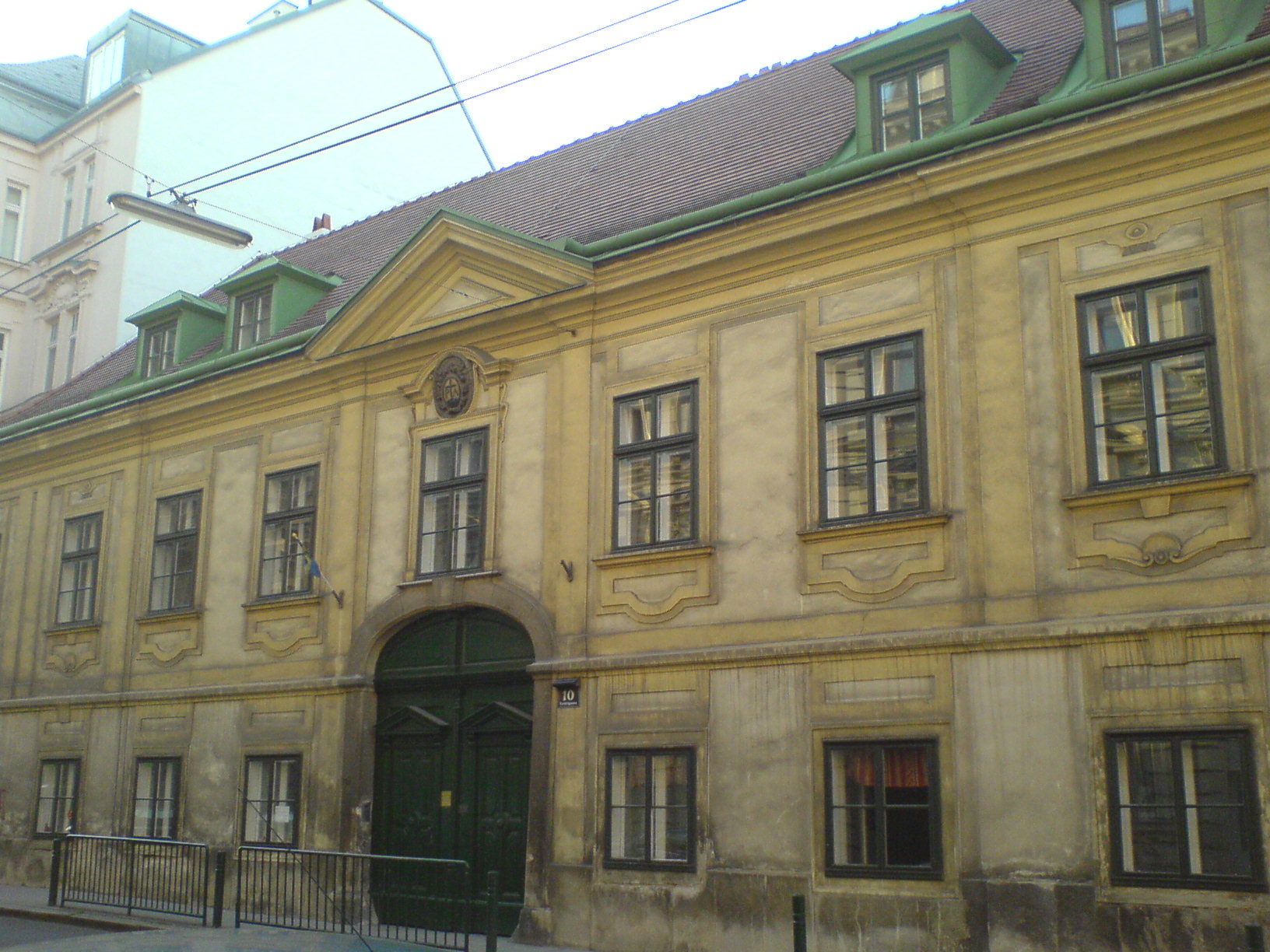
- Address: Wohllebengasse 12-14, 1040 Vienna, Austria
- Public Transport: U-Bahn (Karlsplatz station: U1, U2, U4 lines), trams 1 and 62 (Paulanergasse stop). Vienna’s public transport is efficient and eco-friendly (Vienna Transport Guide).
Hours and Tickets
- Opening Hours: Monday to Friday, 9:00 a.m. – 4:00 p.m. (Some sources cite 5:00 p.m.; confirm ahead of your visit.)
- Admission: Entry is generally free for individuals; group visits or special programs may incur a nominal fee.
- Advance Booking: All visits—including guided tours—must be booked in advance. Spontaneous visits are not possible.
- Contact: [email protected] | +43 1 51581-2510 | Official Website
Accessibility
The building is fully wheelchair accessible, with elevators, ramps, and accessible restrooms. Visitors with special needs should notify staff ahead of their visit (Accessibility in Vienna).
Guided Tours and Special Events
- Guided Tours: Available for groups (up to 15 people), in German or English. Tours cover the archive’s history, technology, and collections, and often include demonstrations of historic playback equipment. Book at least two weeks in advance.
- Special Events: The archive hosts occasional exhibitions, lectures, and listening sessions. Check the website for announcements.
Visitor Facilities
- Reception and information desk
- Reading and listening rooms with supervised access to digitized recordings
- Restrooms (including accessible facilities)
- Complimentary Wi-Fi
Nearby Attractions
- Belvedere Palace
- Vienna State Opera
- Austrian National Library
- St. Stephen’s Cathedral
- Vienna’s Museum Quarter
Combine your visit to the Phonogrammarchiv with nearby cultural landmarks for a complete Viennese experience.
Highlights and Unique Features
- Wax Cylinder Collection: Listen to some of the earliest audio recordings, including voices of historical figures.
- Endangered and Minority Languages: Experience recordings preserved nowhere else.
- Oral History and Music Projects: Explore testimonies from significant historical periods and diverse musical traditions.
- Interactive Catalog: Explore 85% of holdings via the Phonogrammarchiv Online Catalogue.
Frequently Asked Questions (FAQ)
Q: What are the Austrian Phonogrammarchiv’s visiting hours?
A: Monday to Friday, 9:00 a.m. to 4:00 p.m. (confirm for holidays or events).
Q: Is there an admission fee?
A: Admission is free for individuals; group visits may have a small fee.
Q: Are guided tours available?
A: Yes, by advance booking.
Q: Can I listen to original recordings?
A: Originals are handled by staff. Visitors can access digitized versions in listening rooms.
Q: Is the archive wheelchair accessible?
A: Yes, fully accessible.
Q: Can I take photos?
A: Photography is allowed only with staff permission and usually during tours.
Q: Are the collections available online?
A: Many recordings and catalog entries are available via the online catalogue.
Listen to the full story in the app
Your Personal Curator, in Your Pocket.
Audio guides for 1,100+ cities across 96 countries. History, stories, and local insight — offline ready.
Audiala App
Available on iOS & Android
Join 50k+ Curators
Sources
-
verified
Phonogrammarchiv History
Austrian Academy of Sciences
-
verified
SAL Event
Vienna Phonogrammarchiv
-
verified
UNESCO Austria
The Historical Collections (1899-1950) of the Vienna Phonogrammarchiv of the Austrian Academy of Sciences (OEAW)
-
verified
OEAW Phonogrammarchiv Publications
Audio and Video Publications
-
verified
Phonogrammarchiv Home
Austrian Academy of Sciences
-
verified
Habsburger.net
Phonogram Archives Austrian Academy of Sciences
-
verified
Sound Ethnographies
Lechleitner, F
-
verified
Vienna Public Transport Guide
ShunCulture
-
verified
The Vienna Blog
Practical Tips for Visiting Vienna
-
verified
Kindermuseum Schönbrunn
Accessibility in Vienna
Last reviewed: