account_balance
Imperial Cities
Vienna, Salzburg, and Graz show three versions of Austrian power: imperial, ecclesiastical, and mercantile. Palaces, arcaded courtyards, and café culture still shape how these cities look and move.
Austria is what happens when Alpine geography, Habsburg ambition, and an almost unreasonable respect for coffee all end up in the same country.
 Austria
EntrySchengen area; many non-EU travelers can stay 90 days in 180 visa-free
AAustria travel guide starts with a surprise: this small country shaped Europe through salt, empire, coffeehouses, and Alpine passes.
Austria works because the contrasts are tight, not sprawling. In Vienna, imperial facades, Secession geometry, and coffeehouse ritual still shape the day; three hours away, Salzburg turns Baroque streets and fortress walls into something sharper, more theatrical, and far less polite than the postcards suggest. Then the ground rises. Innsbruck sits where trade routes once crossed the Alps, and Hallstatt still lives with the salt wealth that made this landscape matter 3,000 years ago.
The country is easier to read when you stop calling it one thing. Western Austria is mountain weather, high passes, ski lifts, and summer huts serving Kaiserschmarrn at 1,800 meters. The east opens into vineyards, thermal towns, and Danube valleys where places like Melk and Baden bei Wien feel shaped by abbots, composers, and stubborn local habits rather than scenery alone. Graz adds a southern, more relaxed register, with Renaissance courtyards and a serious Styrian appetite for pumpkin seed oil, fried chicken, and long lunches.
Salt Kingdoms and Roman Noricum, c. 1200 BCE-400 CE
A mountain above Hallstatt kept a secret better than any palace archive. Deep in the salt, miners cut tunnels into rock crystal and left behind leather caps, wooden tools, even bodies so perfectly preserved that 19th-century workers thought the dead men had only just fallen. Before Austria had a name, it had salt, and salt meant money, trade, and the kind of power that leaves amber from the Baltic and bronze from the Mediterranean in Alpine graves.
Ce que l'on ignore souvent, c'est que Hallstatt was not some remote prehistoric backwater. Its chiefs were plugged into a European network long before Europe existed as an idea. A village by a lake in today’s Salzkammergut sent salt outward and drew prestige goods inward; that exchange made the Alps less a barrier than a toll gate.
Then Rome arrived, with the calm pragmatism of an empire that knew quality when it saw it. In 15 BCE, Noricum was absorbed with remarkably little bloodshed, because the Romans wanted what these lands could provide: iron, routes, and control of the Danube frontier. Vindobona, which became Vienna, and Carnuntum turned into military anchors, their walls facing the river and the uneasy world beyond it.
And here the tone changes. In a tent on the frontier, amid mud, dispatches, and the grinding pressure of the Marcomannic Wars, Marcus Aurelius wrote the private reflections we call the Meditations. One imagines no marble serenity, only cold air off the Danube and an emperor reminding himself, line by line, to remain decent in a world that had stopped being easy. Rome gave Austria roads, forts, and cities; Austria gave Rome steel and a frontier that tested its nerve.
Marcus Aurelius appears to us as a philosopher in bronze, but on the Danube he was a tired ruler writing moral notes to himself while plague and war closed in.
One Hallstatt miner preserved by salt was so intact when he was found that workers first assumed he had died only recently.
Babenbergs and the Habsburg Seizure, 976-1526
A riverboat on the Danube, a disguised king, and one bad decision: that is how one of Austria’s great medieval stories begins. In December 1192, Richard the Lionheart, returning from crusade, was recognized near Vienna and handed to Duke Leopold V of the Babenberg line. The ransom was colossal, and the silver did not vanish into some princely whim; it helped finance fortifications, foundations, and the urban growth of lands that were learning to think of themselves as more than a frontier march.
The Babenbergs mattered more than their later heirs liked to admit. From 976 onward, they built the Ostarrichi into something durable, patronized monasteries like Melk, and tied their fortunes to crusade, trade, and dynastic calculation. Their Austria was still narrow and precarious, but it had acquired the habits of statehood: charters, abbeys, tolls, marriages, and that old European instinct for turning geography into revenue.
Then came extinction by sword. In 1246, Duke Frederick II, called the Warlike, died without an heir at the Battle of the Leitha River, and the vacuum was immediate. Into it stepped the Habsburgs, who in 1278 defeated Ottokar II of Bohemia at Marchfeld and began one of the great long games in European history.
Their genius was not charm. It was patience, paperwork, and marriage contracts. The line later summed it up in the famous phrase, "Bella gerant alii, tu felix Austria nube" - let others wage war; you, happy Austria, marry. Burgundy, Spain, the Low Countries, Bohemia, Hungary: little by little, the family seated in Austria turned a regional possession into the hinge of a continent. Vienna began to look less like a border town and more like a waiting capital.
Leopold V is remembered for capturing Richard the Lionheart, but the more revealing detail is that he knew exactly how to turn a royal hostage into hard cash and political advantage.
Legend says Richard’s troubadour Blondel wandered from castle to castle singing until the captive king answered from within; historians distrust the romance, but the story clung because the ransom was real.
Baroque Empire and Enlightened Reform, 1526-1804
In 1683, Vienna woke to the thunder of Ottoman guns and the knowledge that Europe could pivot on a few walls, a few bastions, a few desperate weeks. The siege left fear, rubble, and legend behind it, but also something else: a new Habsburg confidence. Once the Ottoman threat receded, the dynasty rebuilt not modestly but theatrically, with domes, staircases, abbeys, and ceremonial avenues that still shape Vienna and Salzburg.
Walk into an Austrian baroque abbey and you can still feel the argument in stone. Melk rises above the Danube like an answer to chaos, all gold, fresco, and disciplined excess. This was not decoration for its own sake. It was Catholic power after the Reformation, imperial prestige after survival, and the conviction that architecture could make obedience feel like beauty.
Then the dynasty produced its most formidable woman. Maria Theresa inherited a composite monarchy in 1740, pregnant, challenged, underestimated, and immediately attacked by rivals who assumed a young woman would fold. She did not. She fought the War of the Austrian Succession, reorganized taxation, pushed education reforms, and governed through grief, childbirth, and ceaseless negotiation with men who never quite forgave her for being better at the job.
Ce que l'on ignore souvent, c'est que this glittering Austria was held together by labor, bureaucracy, and no shortage of coercion. Joseph II, her son, wanted reason, efficiency, toleration, and a state that could finally stop behaving like a family estate. He closed monasteries he found unproductive and legislated at a speed that made half the empire furious. The baroque stage remained, but backstage the machinery of the modern state was beginning to clatter into motion.
Maria Theresa, mother of sixteen and ruler of a quarrelsome empire, turned dynastic vulnerability into political authority by sheer endurance.
The coffeehouse myth says the sacks of coffee left behind after the Ottoman retreat helped launch Vienna’s cafe culture; the details are disputed, but the story survived because it sounds exactly like Vienna turning danger into ritual.
Empire, Waltzes, and Collapse, 1804-1918
A ballroom in Vienna can be deceptive. Chandeliers glitter, Strauss plays, white gloves brush past military braid, and for a moment the Habsburg Empire seems eternal. Yet the 19th century in Austria was a long exercise in elegant instability: Napoleon humbled the dynasty, nationalism gnawed at its borders, and revolution in 1848 sent crowds into the streets while the court calculated how to survive one more season.
Franz Joseph became emperor at 18 and stayed on the throne for nearly 68 years, which is long enough to turn a man into furniture in the national imagination. He rose before dawn, signed papers relentlessly, and wore discipline like armor. The tragedy is that his private life was a procession of wounds: his brother Maximilian shot in Mexico, his son Crown Prince Rudolf dead in Mayerling in 1889 beside his teenage mistress, and his wife Elisabeth, the restless, adored Sisi, stabbed by an anarchist on a Geneva quay in 1898.
Sisi herself deserves rescuing from the sugar icing. She was not merely a beauty with impossible hair. She hated court ceremony, rode obsessively, guarded her waist like a military frontier, and fled Vienna whenever she could. The films turned her into a dream; the letters and testimonies reveal a woman bored, melancholic, vain, intelligent, and badly suited to the prison of rank.
Meanwhile the empire produced astonishing culture because anxiety can be fertile. Vienna gave Europe Freud, Klimt, Mahler, and a whole civilization of cafes where people argued as if the world depended on syntax. It almost did. In 1914, after the assassination of Archduke Franz Ferdinand, Austria-Hungary chose war in the belief that authority could still be restored by force. Four years later the monarchy was gone, Franz Joseph was dead, and what had looked like permanence dissolved into successor states, hunger, and republican uncertainty.
Franz Joseph projected granite, but the man behind the whiskers was a ruler who outlived almost everyone he loved and kept governing as if paperwork could hold history still.
At Mayerling, the imperial court first tried to present Crown Prince Rudolf’s death as anything but suicide because a Habsburg heir taking his own life was not only a family disaster; it was a theological and political scandal.
Republic, Annexation, and the Second Austrian Reinvention, 1918-present
The empire vanished faster than its furniture. In November 1918, German-Austria declared itself a republic, and a country built to run a multinational monarchy suddenly found itself reduced, indebted, and unsure whether it was viable at all. Vienna still had imperial facades, imperial ministries, imperial habits. What it no longer had was an empire to command.
The interwar years were harsh and bitter. Red Vienna built remarkable social housing and public services, while conservatives and socialists armed themselves in language and in fact. In 1934, civil conflict broke into the open, parliamentary democracy failed, and Austria drifted toward authoritarian rule even before Hitler absorbed the country in the Anschluss of March 1938. Crowds cheered in Vienna; others were silenced, dispossessed, deported, or murdered. One cannot tell Austria’s story honestly without saying that both things happened.
After 1945 came another difficult invention. The Second Republic rebuilt itself under Allied occupation, declared permanent neutrality in 1955, and learned to present Austria as bridge, mediator, and cultured small state rather than failed empire. This self-portrait was useful, sometimes too useful; for decades it softened the reckoning with complicity in Nazi crimes.
And yet the postwar achievement is real. Austria became democratic, prosperous, federal, and outward-looking, joining the European Union in 1995 while keeping its old taste for ceremony, debate, and regional pride. Graz reinvented industrial space with contemporary culture; Salzburg kept turning music into civic identity; Hallstatt became a global image almost too famous for its own good. A country once defined by dynastic inheritance now lives by a more fragile talent: remembering enough of its past to avoid being trapped by it.
Leopold Figl, who signed the 1955 State Treaty, gave postwar Austria one of its defining lines: 'Österreich ist frei' - Austria is free.
The first postwar decades cultivated the comforting myth that Austria had been only Hitler’s first victim; serious public reckoning with Austrian participation in Nazi crimes came much later, and painfully.
Austrians speak German the way a jeweler handles a watch spring: with precision, patience, and a private smile. In Vienna, the sentence often arrives wrapped in silk, yet the silk may conceal a needle. "Bitte" can mean welcome, yes, no, perhaps, continue, I refuse, I forgive you for asking. A whole civilization survives inside that one word.
Dialect changes every few valleys. In Graz, the vowels loosen. In Innsbruck, speech picks up Alpine muscle. In Bregenz, the ear drifts toward Switzerland, as if borders were only administrative gossip. Then comes Viennese Schmäh, that noble form of mischief in which irony and tenderness share the same teaspoon. An Austrian can complain about a thing so elegantly that you begin to admire the thing for having caused such beautiful dissatisfaction.
Titles matter here in a way that feels almost liturgical. Herr Doktor. Frau Professor. The formality is not coldness. It is choreography. A country reveals itself by how it addresses a stranger.
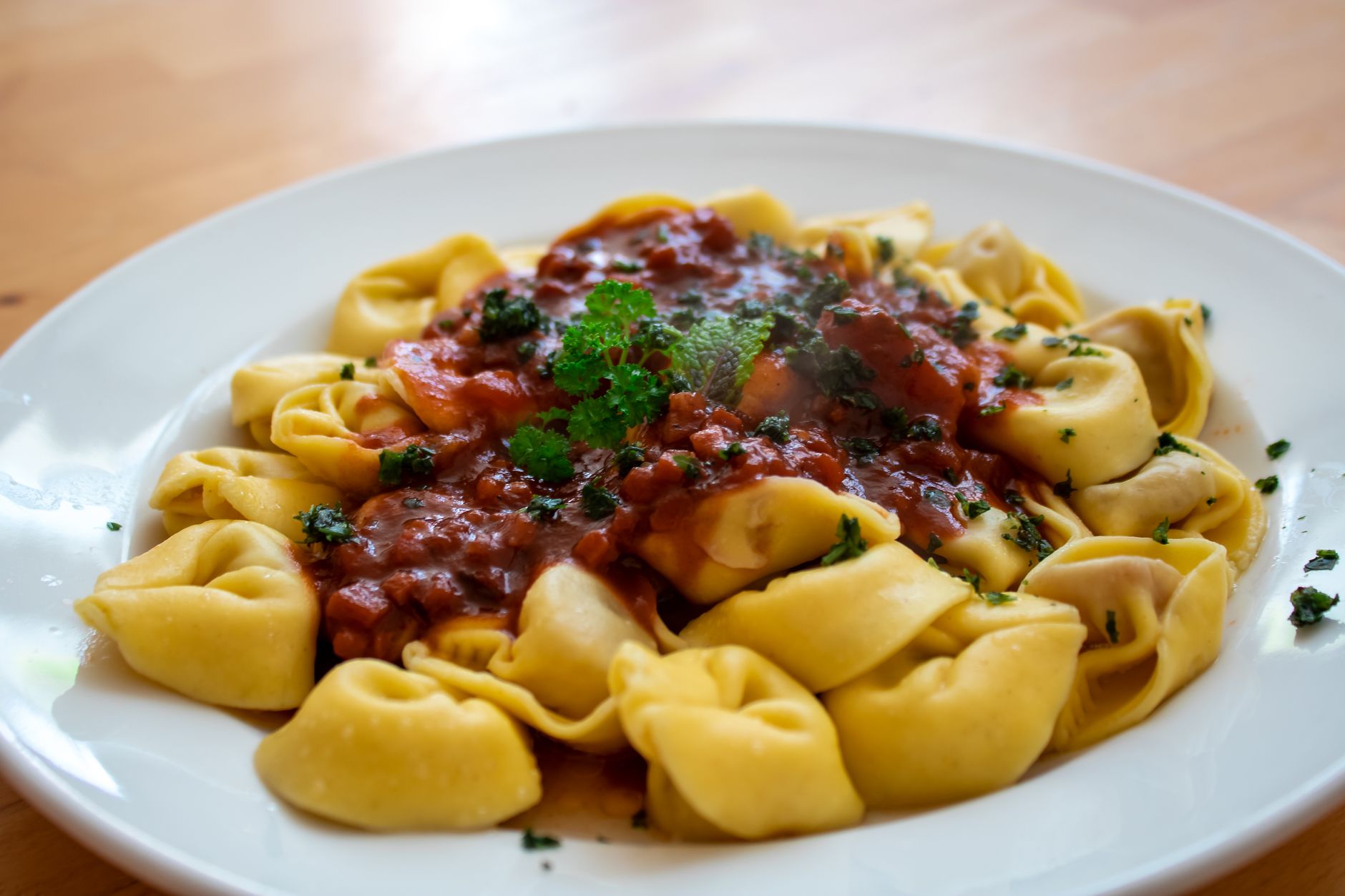
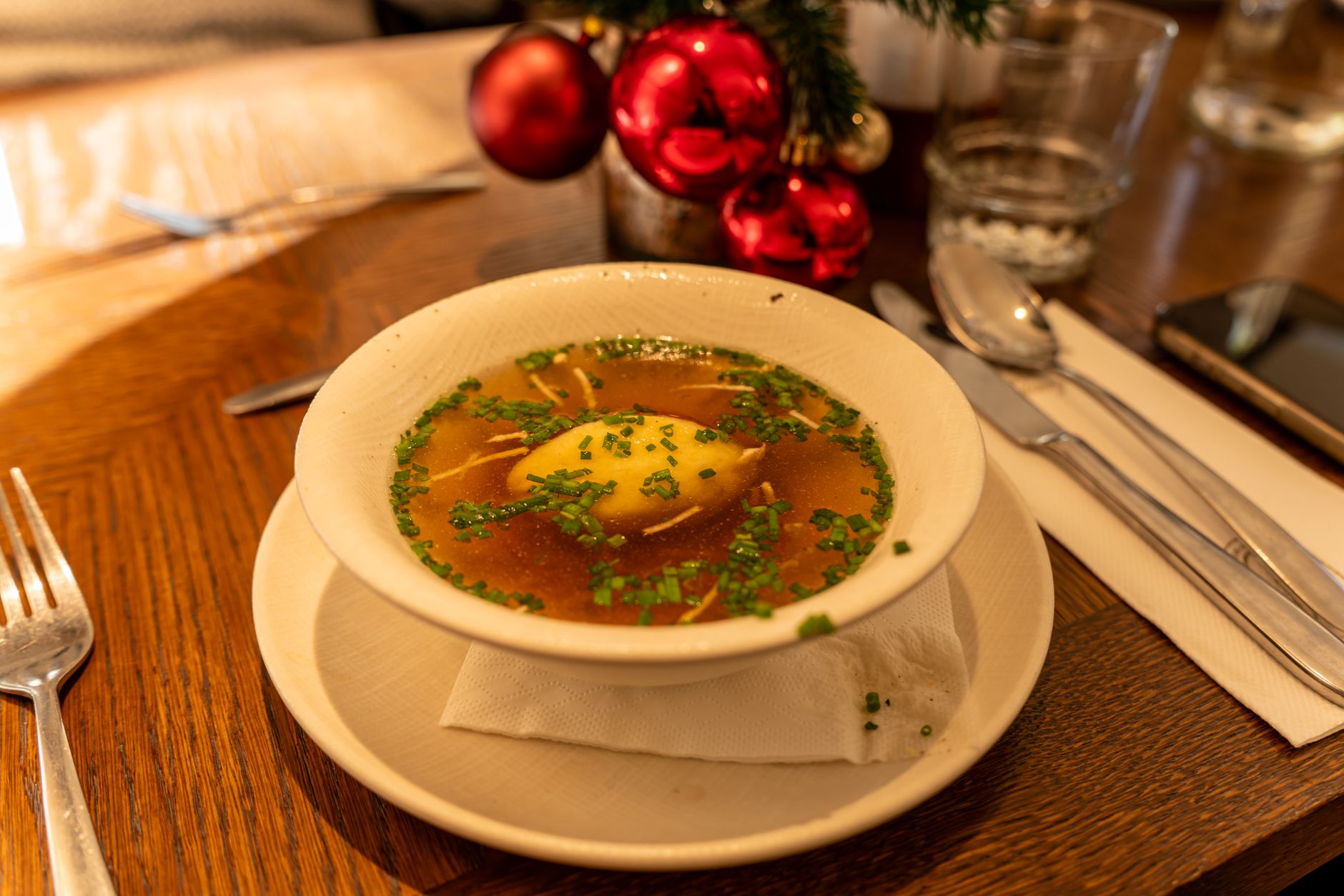
Austrian food understands mass and ceremony. It likes broth clarified to the point of morality, pastries rolled thinner than paper, gravies cooked until the onion dissolves into velvet, and dumplings with the gravity of small planets. In Vienna, Tafelspitz turns boiled beef into etiquette. In Styria, pumpkin seed oil lands on soup like dark green lacquer. In Hallstatt, salt still seasons the national imagination with prehistoric authority.
The table remembers the Habsburg Empire even when the map no longer does. Gulasch arrives from Hungary, Powidl from Slavic kitchens, coffee by way of Ottoman legend and Viennese obsession, apricots from the Danube heat near Melk. A pastry case in Austria is a geopolitical archive with whipped cream.
And then the desserts. Apfelstrudel with dough stretched until print could be read through it. Kaiserschmarrn torn by accident, or by genius. Marillenknödel that collapse in the mouth with the indecent sweetness of summer. A country is a table set for strangers.
Austria did not merely produce composers; it built rooms worthy of them. In Salzburg, Mozart becomes almost geological, less a man than a local element like stone or river fog. In Vienna, music escaped the concert hall and colonized the city itself. It lives in stairwells, on tram posters, in the posture of waiters carrying coffee, in the dangerous conviction that an evening is wasted if it contains no sonata, no quartet, no waltz, no argument about tempo.
The Austrian ear has exacting manners. It knows the difference between sweetness and sentimentality, between discipline and stiffness, between a waltz that floats and one that merely rotates. The New Year's concerts, the church organs, the summer festivals, the small chamber programs hidden in side streets: all these rituals say the same thing. Form is not the enemy of feeling. Form is how feeling becomes bearable.
Even silence is cultivated. Step into an abbey church in Melk or a winter chapel outside Innsbruck and you hear what Austria has always known: reverberation is a kind of afterlife.
Austrian etiquette is civilized, exact, and faintly theatrical. Doors are held. Greetings are not thrown away. Bread is passed with attention. You do not crash into the social fabric here; you are expected to knock, enter, and wipe your shoes on the threshold of language. The result can look formal to outsiders. It is, in fact, intimate. Rules are how distance becomes livable.
Coffeehouse etiquette deserves its own constitution. You sit. You do not rush. The newspaper rack is part of the furniture and part of the soul. A Melange is not fuel; it is a negotiated ceasefire with time. The waiter may seem stern. This means nothing. Austrian civility does not grin at you for sport. It grants you the dignity of being left alone until you require something, which is a far rarer kindness.
And yes, people complain. They complain with flourish, with syntax, with a baroque sense of injury. This is not rudeness. It is one of the national arts.
Austria builds like a country unable to choose between military caution and decorative ecstasy. The result is delicious. Baroque abbeys rise above the Danube with the confidence of emperors who believed ceilings should continue into heaven. In Vienna, Ringstrasse facades line up in obedient splendor, each one announcing law, culture, finance, and vanity in carved stone. In Salzburg, church domes and fortress walls conduct a long marriage between sanctity and surveillance.
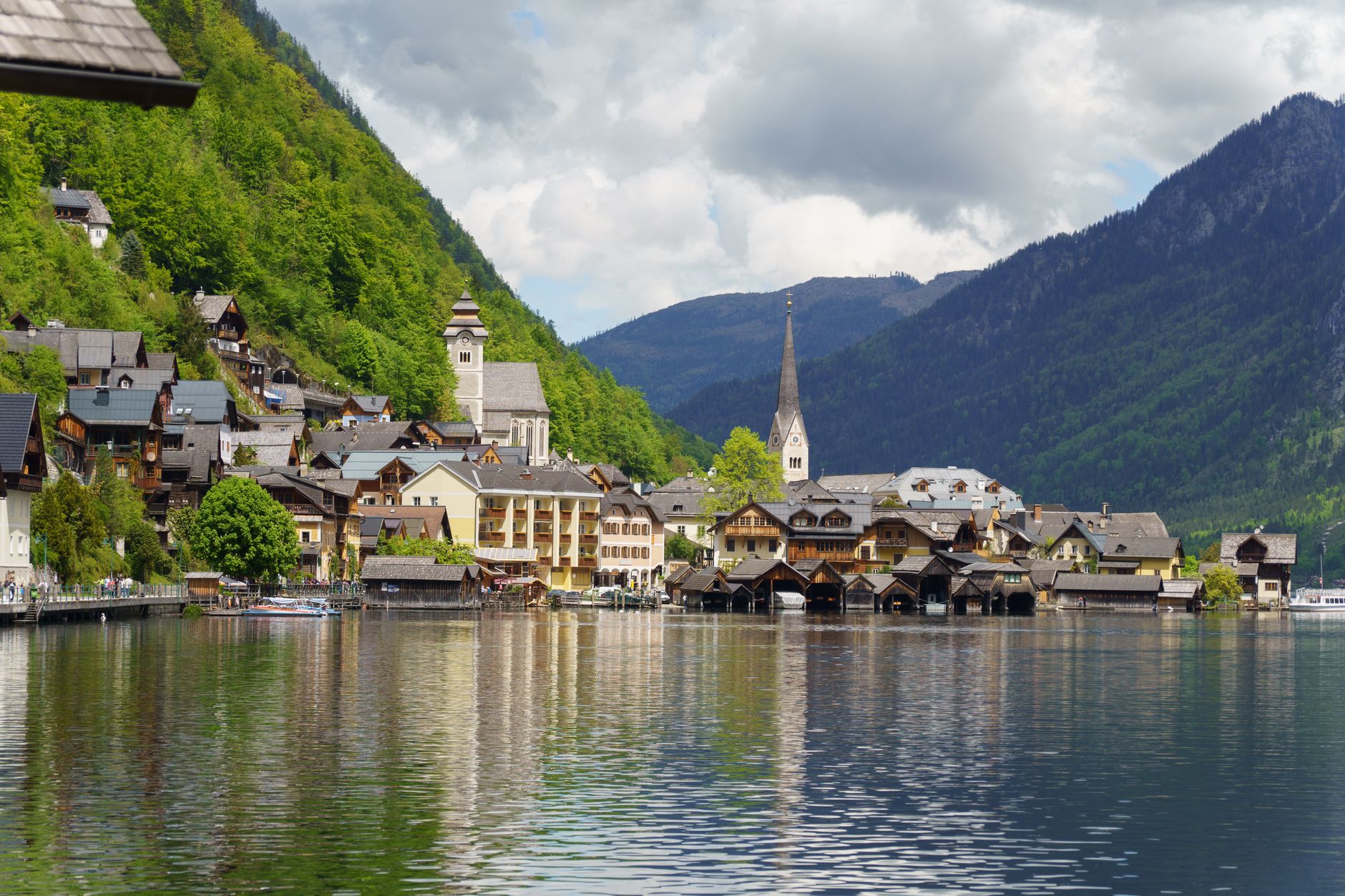
Then the mountains interrupt. In Tyrol, houses lower themselves against winter, roofs angled for snow, balconies carrying geraniums with almost suspicious neatness. In Hallstatt, the village clings to slope and water with such compact stubbornness that one understands architecture as a survival tactic before one ever calls it picturesque. Buildings here do not decorate the landscape. They negotiate with it.
Austria's finest trick is scale. Imperial avenues in Vienna. Monastic immensities in Melk. Then a side street, a courtyard, a painted inn sign, a staircase worn hollow by centuries of shoes. Grandeur without smallness is unbearable. Austria knows this.
Austrian literature distrusts innocence. It knows too much about dynasties, mothers, uniforms, dining rooms, provincial ambition, Catholic guilt, and the exquisite comedy of social humiliation. That is why it is so alive. From Hofmannsthal to Bernhard, from Bachmann to Jelinek, the sentence often arrives polished and poisoned, a silver tray carrying indictment.
Vienna trained writers to watch manners the way entomologists watch wing movement. One learns quickly that a drawing room can contain more violence than a battlefield if the conversation is sufficiently elegant. In Austrian prose, coffeehouses become laboratories, families become empires in miniature, and the provincial town becomes a stage where resentment puts on patent leather shoes. Graz knows this mood. So does Linz.
What I admire is the refusal of sentimental patriotism. Austria writes about itself with intelligence and suspicion, which is another way of saying with love. Only a country that matters to its writers gets examined this mercilessly.
Vienna, Salzburg, and Graz show three versions of Austrian power: imperial, ecclesiastical, and mercantile. Palaces, arcaded courtyards, and café culture still shape how these cities look and move.
Austria's mountains are not background scenery. Around Innsbruck and across Tyrol, the Alps decide roads, food, weather, and the difference between a summer hiking trip and a winter ski week.
The Danube corridor gives Austria some of its most memorable cultural scenery. Melk and the Wachau fold monasteries, vineyard terraces, and river traffic into one of the country's clearest historic landscapes.
Hallstatt is not famous by accident. Salt mining here reaches back thousands of years, and that ancient wealth still explains why this small lakeside village carries such outsized historical weight.
Austria cooks with precision, not showmanship. Wiener Schnitzel, Tafelspitz, goulash, apricot dumplings, and Styrian pumpkin seed oil all tell you something real about class, region, and appetite.
Austria's music culture goes well beyond concert-hall branding. In Vienna and Salzburg, church patronage, court money, and civic pride built a listening culture that still shapes the calendar.
13 cities — start with the ones we'd send you to first.
Vienna feels like a city tuned to concert pitch: tram bells, coffee spoons, and church echoes in the same measure. Even the stone facades seem to remember who passed beneath them.
In April the hillsides turn white with cherry blossoms and the air smells faintly of fruit brandy — Hitzendorf is Graz's backyard orchard, ten minutes away and a century behind.
Mozart was born here in a yellow house on Getreidegasse 9, and the city has been dining out on that fact for 250 years, though the Baroque fortress above the roofline earns its keep independently.
A medieval city centre dropped into a bowl of Alps so steep that the north face of the Nordkette mountain begins, effectively, at the end of the high street.
Austria's second-largest city barely appears on tourist itineraries, which is why its Renaissance Altstadt, a Murinsel floating in the river, and a clock tower that runs its hands backwards reward the traveller who shows
A village of 700 people wedged between a salt mountain and a glacial lake, where Iron Age miners' bodies were preserved by geology and the bone house beside the church displays 1,200 painted skulls.
Once Hitler's chosen city for a grand Führermuseum, Linz spent the postwar decades reinventing itself into Austria's most serious contemporary-art address, anchored by the Lentos and the Ars Electronica Centre on opposit
The capital of Carinthia sits at the edge of the Wörthersee, a lake warm enough to swim in from June through September, with a dragon fountain in the main square cast from the skull of a woolly rhinoceros dug from local
Perched on the eastern shore of Lake Constance where Austria tapers to a nine-kilometre strip bordering Switzerland, Liechtenstein, and Germany, its summer opera festival stages productions on a floating lake stage visib
Vienna is where imperial Austria still knows how to hold a room, but the story gets better once you look beyond the Ringstrasse. Baden bei Wien and Eisenstadt sit close enough for short hops and show the eastern lowlands at human scale: spa rituals, wine, Haydn, and a landscape that feels flatter, drier and more open than the Alpine postcard version of the country.
The Danube west of Vienna is cultivated, not wild, and that is the point. Melk rises above the river with monastic theatre, vineyard terraces and baroque confidence, while the Wachau explains how Austria learned to turn a transport corridor into one of its most persuasive cultural landscapes.
Salzburg knows exactly how beautiful it is, but the city earns the arrogance: prince-archbishop urbanism, cliff-backed monasteries and a musical legacy that still shapes the streets after dark. Then the terrain loosens into the Salzkammergut, where Hallstatt, lake steamers and old salt wealth replace urban polish with water, timber and mountain shadow.
Linz is Austria without the lace curtain. It is a Danube city of industry, media art and practical intelligence, and nearby Steyr adds narrow streets, ironworking history and one of the country's most handsome town centers without asking to be admired too loudly.
Graz has one of the best balances in Austria: a substantial old town, a living food culture and enough student energy to keep the place from turning into a museum set. Beyond it, Hitzendorf and the Styrian countryside shift the mood toward pumpkin seed oil, vineyards, orchard slopes and villages that still feel built for residents first.
Innsbruck is the cleanest introduction to alpine Austria: mountains crowd the skyline, trains thread narrow valleys, and sport feels less like recreation than daily weather. Push farther to Klagenfurt for lakeside southern calm or west to Bregenz for Lake Constance and festival season, and you start to see how many Austrias fit inside one border.
Not one palace but a full imperial-republican district, Hofburg packs chapel music, state ceremony, ball culture, and Heldenplatz memory into a single walk.
Vienna's Heldenplatz rose from ruined fortifications, then became Hitler's stage and the republic's most uneasy memory ground by the Hofburg still today.
The world's only Globe Museum lives here.
From prehistoric mines to a modern republic that still lives in conversation with its dynasties
In the Salzkammergut, salt mining enriches an Iron Age society so connected that Greek, Etruscan, and Baltic goods reach Alpine graves. Hallstatt gives its name to an entire European prehistoric culture, which is not bad for a lakeside settlement.
The Celtic kingdom of Noricum is incorporated into the Roman world with unusual smoothness. Rome wants access to ore, routes, and the Danube frontier, and the Alpine lands become strategically valuable rather than peripheral.
Carnuntum develops into one of the great Roman centers on the Danube limes. At its height it is a military, commercial, and political hub, tying the future Austrian lands to the wider imperial world.
The philosopher-emperor dies during the Danube campaigns, probably at Vindobona or nearby. His final years link Roman Austria forever with the austere moral voice of the Meditations.
Leopold I receives the Marchia Orientalis, the eastern march that will gradually become Austria. It is still a frontier zone, but the habits of territorial rule begin here.
A deed from this year contains the early form of the name that will become Österreich. It is one of those dry documentary moments historians adore because a future country flashes into view in a single word.
Returning from crusade, Richard I is seized near Vienna by Duke Leopold V. The ransom is immense, and the silver helps finance Austrian fortification and urban development along the Danube corridor.
Frederick II the Warlike dies at the Battle of the Leitha River without an heir. The succession crisis that follows opens the door to a new family whose sense of duration will be almost indecently long.
Rudolf I defeats Ottokar II and secures Austria for the Habsburg dynasty. The victory is decisive, and the family will hold the Austrian lands, in one form or another, until 1918.
After the Battle of Mohacs, the Habsburg rulers of Austria acquire the crowns of Bohemia and Hungary. Austria is no longer merely a dynastic core; it becomes the center of a much larger Central European monarchy.
The Ottoman siege of Vienna ends in defeat for the attackers and becomes one of the defining dramas of Austrian memory. Survival reshapes the Habsburg monarchy, which emerges more confident and more overtly imperial.
A young ruler inherits a composite state and immediately faces invasion. Her reign will harden Austrian administration, strengthen education and taxation, and stamp the monarchy with a formidable personal will.
Facing Napoleon and the collapse of old certainties, Francis II proclaims the Austrian Empire. Two years later he will dissolve the Holy Roman Empire, ending a political structure that had lasted for centuries.
Barricades, student unrest, and political crisis convulse the capital. The upheaval helps bring the young Franz Joseph to the throne, where he will preside over both grandeur and long decline.
The Compromise of 1867 transforms the monarchy into the Dual Monarchy of Austria-Hungary. It stabilizes the empire for a time, but it also confirms that the Habsburg state must negotiate with nationalism rather than wish it away.
Crown Prince Rudolf dies at Mayerling with Mary Vetsera, in circumstances that scandalize Europe and devastate the imperial family. The event leaves a wound in the dynasty that never quite closes.
After the assassination of Archduke Franz Ferdinand, Vienna chooses confrontation with Serbia. What follows is not a punitive local war but the opening of the First World War and, with it, the beginning of the empire’s end.
Defeat in war brings the end of Austria-Hungary, and a republic is proclaimed. Imperial Vienna remains in place physically, but politically the country must learn to exist without the dynastic structure that had defined it.
Austria is annexed by Nazi Germany after Hitler’s triumphant entry into Vienna. The annexation is welcomed by many and catastrophic for Austrian Jews, political opponents, and all those targeted by the regime.
With Nazi rule defeated, Austria begins again under Allied occupation. The new republic will rebuild its institutions while also constructing a national story about victimhood that later generations will challenge.
The Austrian State Treaty ends occupation, and Austria declares permanent neutrality. Leopold Figl announces, 'Österreich ist frei,' giving the republic one of its founding emotional moments.
Austria enters the EU and anchors its postwar identity within a wider European framework. The old imperial crossroads becomes, in a new form, a democratic connector once again.
Salt Kingdoms and Roman Noricum
Marcus Aurelius appears to us as a philosopher in bronze, but on the Danube he was a tired ruler writing moral notes to himself while plague and war closed in.
A mountain above Hallstatt kept a secret better than any palace archive. Deep in the salt, miners cut tunnels into rock crystal and left behind leather caps, wooden tools, even bodies so perfectly preserved that 19th-century workers thought the dead men had only just fallen. Before Austria had a name, it had salt, and salt meant money, trade, and the kind of power that leaves amber from the Baltic and bronze from the Mediterranean in Alpine graves.
Ce que l'on ignore souvent, c'est que Hallstatt was not some remote prehistoric backwater. Its chiefs were plugged into a European network long before Europe existed as an idea. A village by a lake in today’s Salzkammergut sent salt outward and drew prestige goods inward; that exchange made the Alps less a barrier than a toll gate.
Then Rome arrived, with the calm pragmatism of an empire that knew quality when it saw it. In 15 BCE, Noricum was absorbed with remarkably little bloodshed, because the Romans wanted what these lands could provide: iron, routes, and control of the Danube frontier. Vindobona, which became Vienna, and Carnuntum turned into military anchors, their walls facing the river and the uneasy world beyond it.
And here the tone changes. In a tent on the frontier, amid mud, dispatches, and the grinding pressure of the Marcomannic Wars, Marcus Aurelius wrote the private reflections we call the Meditations. One imagines no marble serenity, only cold air off the Danube and an emperor reminding himself, line by line, to remain decent in a world that had stopped being easy. Rome gave Austria roads, forts, and cities; Austria gave Rome steel and a frontier that tested its nerve.
One Hallstatt miner preserved by salt was so intact when he was found that workers first assumed he had died only recently.
Babenbergs and the Habsburg Seizure
Leopold V is remembered for capturing Richard the Lionheart, but the more revealing detail is that he knew exactly how to turn a royal hostage into hard cash and political advantage.
A riverboat on the Danube, a disguised king, and one bad decision: that is how one of Austria’s great medieval stories begins. In December 1192, Richard the Lionheart, returning from crusade, was recognized near Vienna and handed to Duke Leopold V of the Babenberg line. The ransom was colossal, and the silver did not vanish into some princely whim; it helped finance fortifications, foundations, and the urban growth of lands that were learning to think of themselves as more than a frontier march.
The Babenbergs mattered more than their later heirs liked to admit. From 976 onward, they built the Ostarrichi into something durable, patronized monasteries like Melk, and tied their fortunes to crusade, trade, and dynastic calculation. Their Austria was still narrow and precarious, but it had acquired the habits of statehood: charters, abbeys, tolls, marriages, and that old European instinct for turning geography into revenue.
Then came extinction by sword. In 1246, Duke Frederick II, called the Warlike, died without an heir at the Battle of the Leitha River, and the vacuum was immediate. Into it stepped the Habsburgs, who in 1278 defeated Ottokar II of Bohemia at Marchfeld and began one of the great long games in European history.
Their genius was not charm. It was patience, paperwork, and marriage contracts. The line later summed it up in the famous phrase, "Bella gerant alii, tu felix Austria nube" - let others wage war; you, happy Austria, marry. Burgundy, Spain, the Low Countries, Bohemia, Hungary: little by little, the family seated in Austria turned a regional possession into the hinge of a continent. Vienna began to look less like a border town and more like a waiting capital.
Legend says Richard’s troubadour Blondel wandered from castle to castle singing until the captive king answered from within; historians distrust the romance, but the story clung because the ransom was real.
Baroque Empire and Enlightened Reform
Maria Theresa, mother of sixteen and ruler of a quarrelsome empire, turned dynastic vulnerability into political authority by sheer endurance.
In 1683, Vienna woke to the thunder of Ottoman guns and the knowledge that Europe could pivot on a few walls, a few bastions, a few desperate weeks. The siege left fear, rubble, and legend behind it, but also something else: a new Habsburg confidence. Once the Ottoman threat receded, the dynasty rebuilt not modestly but theatrically, with domes, staircases, abbeys, and ceremonial avenues that still shape Vienna and Salzburg.
Walk into an Austrian baroque abbey and you can still feel the argument in stone. Melk rises above the Danube like an answer to chaos, all gold, fresco, and disciplined excess. This was not decoration for its own sake. It was Catholic power after the Reformation, imperial prestige after survival, and the conviction that architecture could make obedience feel like beauty.
Then the dynasty produced its most formidable woman. Maria Theresa inherited a composite monarchy in 1740, pregnant, challenged, underestimated, and immediately attacked by rivals who assumed a young woman would fold. She did not. She fought the War of the Austrian Succession, reorganized taxation, pushed education reforms, and governed through grief, childbirth, and ceaseless negotiation with men who never quite forgave her for being better at the job.
Ce que l'on ignore souvent, c'est que this glittering Austria was held together by labor, bureaucracy, and no shortage of coercion. Joseph II, her son, wanted reason, efficiency, toleration, and a state that could finally stop behaving like a family estate. He closed monasteries he found unproductive and legislated at a speed that made half the empire furious. The baroque stage remained, but backstage the machinery of the modern state was beginning to clatter into motion.
The coffeehouse myth says the sacks of coffee left behind after the Ottoman retreat helped launch Vienna’s cafe culture; the details are disputed, but the story survived because it sounds exactly like Vienna turning danger into ritual.
Empire, Waltzes, and Collapse
Franz Joseph projected granite, but the man behind the whiskers was a ruler who outlived almost everyone he loved and kept governing as if paperwork could hold history still.
A ballroom in Vienna can be deceptive. Chandeliers glitter, Strauss plays, white gloves brush past military braid, and for a moment the Habsburg Empire seems eternal. Yet the 19th century in Austria was a long exercise in elegant instability: Napoleon humbled the dynasty, nationalism gnawed at its borders, and revolution in 1848 sent crowds into the streets while the court calculated how to survive one more season.
Franz Joseph became emperor at 18 and stayed on the throne for nearly 68 years, which is long enough to turn a man into furniture in the national imagination. He rose before dawn, signed papers relentlessly, and wore discipline like armor. The tragedy is that his private life was a procession of wounds: his brother Maximilian shot in Mexico, his son Crown Prince Rudolf dead in Mayerling in 1889 beside his teenage mistress, and his wife Elisabeth, the restless, adored Sisi, stabbed by an anarchist on a Geneva quay in 1898.
Sisi herself deserves rescuing from the sugar icing. She was not merely a beauty with impossible hair. She hated court ceremony, rode obsessively, guarded her waist like a military frontier, and fled Vienna whenever she could. The films turned her into a dream; the letters and testimonies reveal a woman bored, melancholic, vain, intelligent, and badly suited to the prison of rank.
Meanwhile the empire produced astonishing culture because anxiety can be fertile. Vienna gave Europe Freud, Klimt, Mahler, and a whole civilization of cafes where people argued as if the world depended on syntax. It almost did. In 1914, after the assassination of Archduke Franz Ferdinand, Austria-Hungary chose war in the belief that authority could still be restored by force. Four years later the monarchy was gone, Franz Joseph was dead, and what had looked like permanence dissolved into successor states, hunger, and republican uncertainty.
At Mayerling, the imperial court first tried to present Crown Prince Rudolf’s death as anything but suicide because a Habsburg heir taking his own life was not only a family disaster; it was a theological and political scandal.
Republic, Annexation, and the Second Austrian Reinvention
Leopold Figl, who signed the 1955 State Treaty, gave postwar Austria one of its defining lines: 'Österreich ist frei' - Austria is free.
The empire vanished faster than its furniture. In November 1918, German-Austria declared itself a republic, and a country built to run a multinational monarchy suddenly found itself reduced, indebted, and unsure whether it was viable at all. Vienna still had imperial facades, imperial ministries, imperial habits. What it no longer had was an empire to command.
The interwar years were harsh and bitter. Red Vienna built remarkable social housing and public services, while conservatives and socialists armed themselves in language and in fact. In 1934, civil conflict broke into the open, parliamentary democracy failed, and Austria drifted toward authoritarian rule even before Hitler absorbed the country in the Anschluss of March 1938. Crowds cheered in Vienna; others were silenced, dispossessed, deported, or murdered. One cannot tell Austria’s story honestly without saying that both things happened.
After 1945 came another difficult invention. The Second Republic rebuilt itself under Allied occupation, declared permanent neutrality in 1955, and learned to present Austria as bridge, mediator, and cultured small state rather than failed empire. This self-portrait was useful, sometimes too useful; for decades it softened the reckoning with complicity in Nazi crimes.
And yet the postwar achievement is real. Austria became democratic, prosperous, federal, and outward-looking, joining the European Union in 1995 while keeping its old taste for ceremony, debate, and regional pride. Graz reinvented industrial space with contemporary culture; Salzburg kept turning music into civic identity; Hallstatt became a global image almost too famous for its own good. A country once defined by dynastic inheritance now lives by a more fragile talent: remembering enough of its past to avoid being trapped by it.
The first postwar decades cultivated the comforting myth that Austria had been only Hitler’s first victim; serious public reckoning with Austrian participation in Nazi crimes came much later, and painfully.
Austrians speak German the way a jeweler handles a watch spring: with precision, patience, and a private smile. In Vienna, the sentence often arrives wrapped in silk, yet the silk may conceal a needle. "Bitte" can mean welcome, yes, no, perhaps, continue, I refuse, I forgive you for asking. A whole civilization survives inside that one word.
Dialect changes every few valleys. In Graz, the vowels loosen. In Innsbruck, speech picks up Alpine muscle. In Bregenz, the ear drifts toward Switzerland, as if borders were only administrative gossip. Then comes Viennese Schmäh, that noble form of mischief in which irony and tenderness share the same teaspoon. An Austrian can complain about a thing so elegantly that you begin to admire the thing for having caused such beautiful dissatisfaction.
Titles matter here in a way that feels almost liturgical. Herr Doktor. Frau Professor. The formality is not coldness. It is choreography. A country reveals itself by how it addresses a stranger.
Austrian food understands mass and ceremony. It likes broth clarified to the point of morality, pastries rolled thinner than paper, gravies cooked until the onion dissolves into velvet, and dumplings with the gravity of small planets. In Vienna, Tafelspitz turns boiled beef into etiquette. In Styria, pumpkin seed oil lands on soup like dark green lacquer. In Hallstatt, salt still seasons the national imagination with prehistoric authority.
The table remembers the Habsburg Empire even when the map no longer does. Gulasch arrives from Hungary, Powidl from Slavic kitchens, coffee by way of Ottoman legend and Viennese obsession, apricots from the Danube heat near Melk. A pastry case in Austria is a geopolitical archive with whipped cream.
And then the desserts. Apfelstrudel with dough stretched until print could be read through it. Kaiserschmarrn torn by accident, or by genius. Marillenknödel that collapse in the mouth with the indecent sweetness of summer. A country is a table set for strangers.
Austria did not merely produce composers; it built rooms worthy of them. In Salzburg, Mozart becomes almost geological, less a man than a local element like stone or river fog. In Vienna, music escaped the concert hall and colonized the city itself. It lives in stairwells, on tram posters, in the posture of waiters carrying coffee, in the dangerous conviction that an evening is wasted if it contains no sonata, no quartet, no waltz, no argument about tempo.
The Austrian ear has exacting manners. It knows the difference between sweetness and sentimentality, between discipline and stiffness, between a waltz that floats and one that merely rotates. The New Year's concerts, the church organs, the summer festivals, the small chamber programs hidden in side streets: all these rituals say the same thing. Form is not the enemy of feeling. Form is how feeling becomes bearable.
Even silence is cultivated. Step into an abbey church in Melk or a winter chapel outside Innsbruck and you hear what Austria has always known: reverberation is a kind of afterlife.
Austrian etiquette is civilized, exact, and faintly theatrical. Doors are held. Greetings are not thrown away. Bread is passed with attention. You do not crash into the social fabric here; you are expected to knock, enter, and wipe your shoes on the threshold of language. The result can look formal to outsiders. It is, in fact, intimate. Rules are how distance becomes livable.
Coffeehouse etiquette deserves its own constitution. You sit. You do not rush. The newspaper rack is part of the furniture and part of the soul. A Melange is not fuel; it is a negotiated ceasefire with time. The waiter may seem stern. This means nothing. Austrian civility does not grin at you for sport. It grants you the dignity of being left alone until you require something, which is a far rarer kindness.
And yes, people complain. They complain with flourish, with syntax, with a baroque sense of injury. This is not rudeness. It is one of the national arts.
Austria builds like a country unable to choose between military caution and decorative ecstasy. The result is delicious. Baroque abbeys rise above the Danube with the confidence of emperors who believed ceilings should continue into heaven. In Vienna, Ringstrasse facades line up in obedient splendor, each one announcing law, culture, finance, and vanity in carved stone. In Salzburg, church domes and fortress walls conduct a long marriage between sanctity and surveillance.
Then the mountains interrupt. In Tyrol, houses lower themselves against winter, roofs angled for snow, balconies carrying geraniums with almost suspicious neatness. In Hallstatt, the village clings to slope and water with such compact stubbornness that one understands architecture as a survival tactic before one ever calls it picturesque. Buildings here do not decorate the landscape. They negotiate with it.
Austria's finest trick is scale. Imperial avenues in Vienna. Monastic immensities in Melk. Then a side street, a courtyard, a painted inn sign, a staircase worn hollow by centuries of shoes. Grandeur without smallness is unbearable. Austria knows this.
Austrian literature distrusts innocence. It knows too much about dynasties, mothers, uniforms, dining rooms, provincial ambition, Catholic guilt, and the exquisite comedy of social humiliation. That is why it is so alive. From Hofmannsthal to Bernhard, from Bachmann to Jelinek, the sentence often arrives polished and poisoned, a silver tray carrying indictment.
Vienna trained writers to watch manners the way entomologists watch wing movement. One learns quickly that a drawing room can contain more violence than a battlefield if the conversation is sufficiently elegant. In Austrian prose, coffeehouses become laboratories, families become empires in miniature, and the provincial town becomes a stage where resentment puts on patent leather shoes. Graz knows this mood. So does Linz.
What I admire is the refusal of sentimental patriotism. Austria writes about itself with intelligence and suspicion, which is another way of saying with love. Only a country that matters to its writers gets examined this mercilessly.
He did not come to Austria for scenery. He came because the empire was under pressure, and on this frontier he wrote some of the stern private reflections that later became the Meditations. The image is irresistible: the philosopher-emperor in a military tent near Vienna, trying to govern himself while the world became less governable.
His great stroke was not a battle but an arrest. By seizing Richard I in 1192, Leopold turned crusading glamour into hard silver, and that ransom helped finance Austrian development. Medieval politics rarely looked noble up close; in his case, that is precisely why it is memorable.
He is the man who made the Habsburg future possible. After defeating Ottokar II in 1278, Rudolf anchored his family in Austria and set in motion a dynastic project that would last more than six centuries. Empires often begin with fanfare; this one began with a careful redistribution of lands and titles.
Maximilian had the instincts of a knight and the imagination of a propagandist. He used Austrian power as the base for a European marriage machine, extending Habsburg influence with contracts as much as cannon. Innsbruck still carries his shadow better than most capitals carry their founders.
She inherited a throne under attack and refused to behave like a ceremonial placeholder. From Vienna she fought for survival, reformed taxation and schooling, and imposed authority on ministers who had expected softness and found steel. Austrian statehood became harder, clearer, and more centralized under her hand.
He wanted reason to move faster than custom, which is always a dangerous ambition. Joseph II abolished serfdom in part, widened religious toleration, and shut monasteries he considered idle, all with the impatience of a man who thought history should keep up. Austria still remembers him as both reformer and meddler, which is usually how serious reformers end up.
Austria claims Mozart twice, and with reason. Salzburg formed the prodigy, but Vienna exposed the man: brilliant, reckless with money, socially ambitious, and capable of turning human absurdity into music of unbearable precision. The powdered busts miss the point; he was funny, vulnerable, and often one unpaid bill away from panic.
She entered Austria as a Bavarian teenager and became the most mythologized woman in its modern history. Court painters gave the empire an icon of beauty; the reality was stranger and sadder: a woman who loathed etiquette, fled Vienna whenever she could, and treated movement, travel, and self-discipline as forms of escape.
He became emperor in the revolutionary chaos of 1848 and outlasted almost everyone around him. Austrians saw in him continuity, uniform, habit, and duty; privately he endured a succession of family catastrophes that would have broken less rigid men. By the time he died in 1916, he looked less like a ruler than like the exhausted embodiment of an era that was already ending.
Klimt painted gold, skin, and unease with equal conviction. His Vienna was elegant on the surface and feverish underneath, exactly the mood of late imperial Austria before the collapse. The portraits still shimmer, but what they really record is a society dressing itself beautifully while its certainties came apart.
This is the compact eastern Austria route for travelers who want imperial architecture, thermal culture and one clean taste of Burgenland without spending half the trip on trains. Start in Vienna, slip south to Baden bei Wien for Biedermeier calm and wine taverns, then finish in Eisenstadt, where the Esterhazy court still explains why Haydn mattered here and not somewhere else.
This route moves west in a line that makes geographic sense and rarely feels rushed: river monasteries first, then baroque streets, then mountain water. Melk gives you the Danube in its grandest cultivated form, Linz adds a sharper contemporary edge, Salzburg handles the music and church towers, and Hallstatt closes with the sort of scenery that would be insufferable if it were not actually real.
Southern Austria rewards travelers who care more about food, vineyards and local tempo than about collecting grand capitals. Graz is the anchor, Hitzendorf gives you a rural Styrian counterpoint a short hop away, Steyr bridges river-town history and workshop culture, and Klagenfurt opens the door to Carinthian lakes and the slower rhythm south of the Alps.
This is the long western traverse for people who want mountain rail lines, serious landscapes and a finish by the lake on the German-Swiss border. Salzburg works as the cultural threshold, Innsbruck puts you inside Tyrol's valley geometry, and Bregenz ends the trip with Lake Constance, festival architecture and one of the few Austrian cities that feels oriented as much toward Switzerland and Germany as toward Vienna.
Veal. Lemon. Potato salad. Noon or evening. Family table, white cloth, knife and fork.
Beef broth first. Sliced beef after. Apple-horseradish, chive sauce, patience. Sunday lunch, grandparents, long talk.
Warm pastry. Tart apples, rum raisins, cinnamon, Schlagobers. Mid-afternoon, coffeehouse, newspaper, rain on glass.
Shredded pancake, powdered sugar, plum compote. Mountain hut, ski day, cold cheeks, loud hunger.
Pumpkin seed oil over soup or potato salad. Black bread beside. Graz and Styria, autumn, candlelight.
Young wine, cold meats, Liptauer, pickles, rye bread. Evening, shared bench, vineyard edge near Vienna or Baden bei Wien.
Apricot inside potato dough, buttered breadcrumbs outside. Summer meal, not garnish. Wachau heat, stained fingers, silence.





Austria is in the Schengen Area. EU, EEA and Swiss citizens do not need a visa, while US, Canadian, British and Australian passport holders can usually stay up to 90 days in any 180-day period for tourism or business; passports should be valid for at least three months beyond departure and have blank pages.
Austria uses the euro. For planning, budget roughly €48-€120 a day if you are watching costs, €150-€280 for a comfortable mid-range trip, and €250+ once you move into boutique hotels, resort towns and serious dining; tipping 5-10% in restaurants is normal.
Most international arrivals land in Vienna, with strong air and rail links also through Salzburg and Innsbruck. If you are arriving overland, Railjet and Nightjet trains make Austria easy to pair with Munich, Zurich, Budapest, Prague and northern Italy without wasting a day in transit.
Austria is one of the easiest countries in Europe to cross by train, and ÖBB is the backbone: Vienna to Salzburg takes about 2 hours 30 minutes, and Vienna to Graz about 2 hours 40 minutes on fast services. Alpine valleys and lake districts still need some bus connections, so places like Hallstatt or Hitzendorf work best when you check local timetables before the day starts.
Do not treat Austria as one weather zone. Vienna and Eisenstadt run drier and warmer, Salzburg and Hallstatt get more rain, and Innsbruck or Bregenz can feel like a different country once altitude and mountain weather take over; for city trips, May-June and September are the easiest months, while December to March belongs to snow country.
Mobile coverage is strong in cities and main rail corridors, and most hotels, apartments and cafes offer reliable Wi-Fi. In mountain areas you can lose signal surprisingly fast once you leave a station town, so download tickets, maps and any Audiala guides for Vienna, Salzburg, Graz, Innsbruck or Hallstatt before you head uphill.
Austria is a low-risk destination by European standards, with the usual caveats around pickpocketing in busy stations, Christmas markets and central Vienna. The real hazard is terrain: lake paths, alpine trails and winter roads change quickly with rain, ice and fog, so take mountain warnings more seriously than city crime statistics.
ÖBB Sparschiene fares can cut long-distance ticket prices sharply if you book ahead. Leave it late and the same Vienna-Salzburg run can cost far more than it needed to.
Reserve seats on Fridays, Sundays and holiday weekends, especially on Vienna-Salzburg, Salzburg-Innsbruck and any line feeding ski or lake regions. Standing with luggage for two hours is a poor use of Austria.
In restaurants, round up or add roughly 5-10% and tell the server the total when paying. Leaving coins on the table like in the US can look uncertain rather than generous.
Budget listings often look cheaper until local overnight taxes appear at checkout. Read the final line, especially in Vienna, Salzburg, Innsbruck and Hallstatt, where the headline rate can flatter to deceive.
Lake boats, valley buses and alpine trails do not care whether your signal has dropped. Save boarding passes, hotel details and Audiala guides before leaving a main station town.
A May afternoon in Graz and an evening in Innsbruck are not the same assignment. Even in summer, carry a light waterproof and one warm layer if your day includes altitude, lakes or late trains.
Small museums, monastery sites and rural restaurants still keep old-fashioned hours, often with Monday or Tuesday closures. Austria rewards planning and punishes assumptions.
Explore Austria with a personal guide in your pocket
Audio guides for 1,100+ cities across 96 countries. History, stories, and local insight — offline ready.
No, not for short tourist stays of up to 90 days in any 180-day Schengen period. Your passport should generally be valid for at least three months beyond your departure from Schengen, and border officers can still ask for proof of accommodation, onward travel and funds.
Yes, but not uniformly. Vienna and Graz can be managed on a mid-range budget, while Salzburg, Innsbruck and Hallstatt get expensive fast in peak season; a realistic comfort budget is often €150-€280 per day once you count lodging, transport and one decent meal.
Train first, then local buses where the rails stop. ÖBB makes city-to-city travel simple, but places in the Salzkammergut, smaller Styrian villages and some alpine valleys still require timetable discipline and occasional connections that do not forgive improvisation.
Seven days is enough for a strong first trip, and ten to fourteen days lets the country breathe. Three days can cover Vienna and nearby eastern towns well, but once you add Salzburg, Hallstatt, Graz or Innsbruck, the rail hours start to matter.
May, June and September are the easiest all-round choices. You get long days, manageable temperatures and fewer pricing extremes than high summer or the December market rush, while winter makes the most sense if your trip is built around snow rather than city walking.
You should carry some cash. Cards are widely accepted in cities, but smaller inns, rural taverns, market stalls and older businesses can still prefer cash, especially outside Vienna and major tourist corridors.
Yes, if you treat it as a place to stay over or visit early, not as a noon-day photo stop. Hallstatt is at its best when the day-trippers thin out and the lake, salt history and mountain silence have room to do their work.
Yes, especially from Vienna, Salzburg and Innsbruck. Austria sits in the middle of practical routes to Munich, Zurich, Budapest, Prague and northern Italy, which means a multi-country trip can stay coherent instead of turning into a chain of airport transfers.
Last reviewed