Plan and listen to Bare Island Fort with Audiala.
Audio guide in your pocket, itinerary in your browser. Built for the way you actually visit.
Introduction: History and Significance of Bare Island Fort
Bare Island Fort, perched on a small sandstone islet at the entrance to Botany Bay, is a living testament to Sydney’s layered history. For over 7,500 years, the land and surrounding waters have been of profound significance to the Gweagal and Kameygal peoples, representing continuous Aboriginal stewardship (La Perouse Local Aboriginal Land Council). In 1770, Captain James Cook described it as a “small bare island,” and its place in history was cemented when, in the late 19th century, the site was chosen for a strategic coastal fort, built between 1881 and 1885 by engineers including Sir Peter Scratchley and Colonial Architect James Barnet (Wikipedia; kids.kiddle.co).
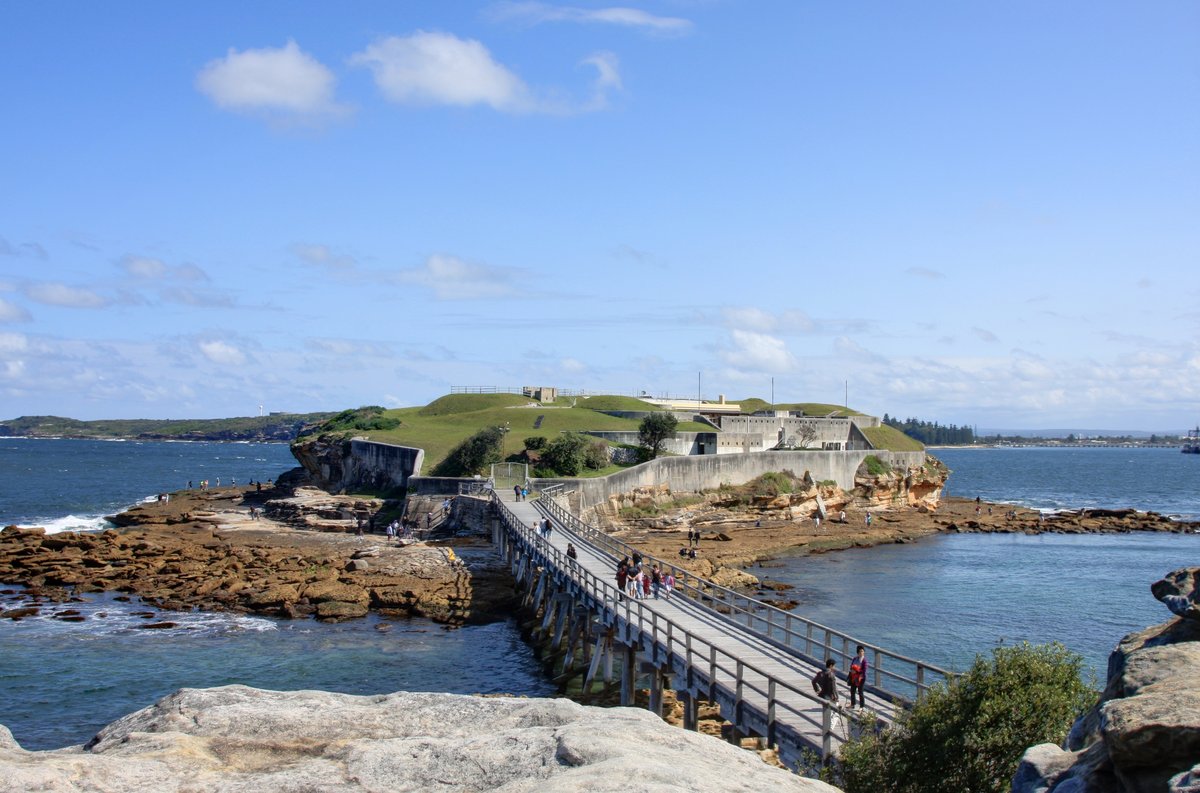
Today, Bare Island Fort is a heritage-listed destination offering visitors an immersive journey through time. Accessible by a timber footbridge from La Perouse, the fort’s guided tours reveal hidden tunnels, artillery emplacements, and barracks—while also highlighting its role as Australia’s first war veterans’ home and its enduring Indigenous significance. The island continues to play an active role in cultural events, such as the Indigenous-led Blak Markets, blending history, culture, and community engagement (NSW National Parks and Wildlife Service; Time Out Sydney).
This comprehensive guide provides all you need to plan your visit, including historical context, practical visitor information, accessibility notes, and tips for making the most of your day at this unique Sydney landmark.

Indigenous and European Connections
Bare Island is part of the ancestral lands of the Gweagal and Kameygal peoples, with a rich heritage of fishing, gathering, and cultural practices (La Perouse Local Aboriginal Land Council). After European arrival, the island became notable in Captain Cook’s journals and was near the landing sites of the First Fleet and the 1788 French expedition led by La Pérouse (kids.kiddle.co).
Colonial Era: Strategic Importance
By the late 1800s, fears of foreign attack—especially from Russia—led to the fortification of Botany Bay. Bare Island’s strategic location protected Sydney’s “back door,” with its construction overseen by Sir Peter Scratchley, James Barnet, and Gustave Morell (Wikipedia). The fort’s advanced mass concrete and iron armor design reflected the era’s cutting-edge military engineering.
Architectural Design and Defensive Features
Site and Layout
Bare Island Fort sits just 30 meters offshore from La Perouse, its placement enabling crossfire with the Henry Head Battery on the mainland (The History Hub). Its crescent-shaped battery, barracks, laboratories, and parade ground were carefully integrated into the island’s profile (Wikipedia).
Construction Methods
Notable for pioneering the use of mass concrete, the fort’s construction included cement render, cream fired brick, iron armor, and vaulted tunnels. The original bridge was added after completion to facilitate the transport of heavy guns (Wikipedia).
Defensive Technologies
The fort boasted four main guns, armored casemates, ammunition magazines, and observation posts designed to counter late 19th-century naval artillery (NSW Environment).
Heritage, Preservation, and Adaptive Reuse
Bare Island Fort is a remarkably intact example of colonial coastal defense and was listed on the NSW State Heritage Register in 1999 (Wikipedia). After decommissioning as a military site, it served as Australia’s first war veterans’ home and later as a museum. Today, managed by the National Parks and Wildlife Service, it is open for public tours and is a popular filming location (Sydney.com).
Visiting Information
Hours and Tickets
- Tour Days: Sundays year-round; additional Fridays and Saturdays during school holidays
- Tour Times: Typically mid-morning to late afternoon (check NSW National Parks for current schedule)
- Tickets: Must be pre-booked online.
- Adult: $15 | Concession: $13 | Child: $10 | Family (2 adults + 2 kids): $45 (Sydney Point)
Getting There
Bare Island is accessed via a wooden pedestrian bridge from La Perouse (17 km southeast of Sydney CBD). Public transport buses run regularly; parking is available but fills quickly on weekends (Dreaming of Down Under).
Accessibility
The fort’s historic structure means stairs, narrow passages, and uneven surfaces; wheelchair access is limited. Contact the visitor center for detailed advice.
Community, Culture, and Events
Indigenous Connections and Blak Markets
The island is central to the local Aboriginal community and hosts the Blak Markets quarterly, showcasing Indigenous art, music, dance, and bush tucker (Time Out Sydney).
Other Events
Historical reenactments, heritage days, and educational programs are held throughout the year.
Media and Popular Culture
Bare Island has featured in films, notably “Mission: Impossible 2,” and is a favorite location for photographers (We Love Sydney).
Outdoor Activities: Diving and Nearby Attractions
The surrounding waters are among NSW’s best for scuba diving and snorkeling, home to soft corals, sea dragons, and sponge gardens (Sydney.com). Other attractions include the Henry Head Walking Track, Congwong and Frenchmans Beaches, and the La Perouse Museum.
Practical Visitor Tips
- Book Ahead: Tours often sell out on weekends/school holidays.
- Arrive Early: Parking is limited.
- Dress for Conditions: Wear sturdy shoes and sun protection.
- Check for Alerts: The bridge and fort may close in severe weather or high fire risk (National Parks NSW).
- No Onsite Food: Bring water/snacks; cafés are nearby in La Perouse.
- Respect the Heritage: Stay on paths and do not remove artifacts.
Frequently Asked Questions (FAQ)
Q: When can I visit Bare Island Fort?
A: Guided tours run every Sunday and select school holiday dates. Confirm times via the NSW National Parks website.
Q: How do I book tickets?
A: Tickets must be booked online in advance.
Q: Is the site wheelchair accessible?
A: No, due to stairs and uneven ground.
Q: Can I visit the island without a tour?
A: The fort’s interior is only accessible via a guided tour. The bridge and exterior can be visited freely.
Q: Are there facilities on the island?
A: No shops or restrooms; facilities are available nearby.
Q: Can I dive or snorkel at Bare Island?
A: Yes, the waters are open to the public for diving/snorkeling, independent of fort tours.
Listen to the full story in the app
The whole Bare Island Fort,
told well.
Listen to sourced travel stories with local history and practical context — ready offline.
Verified, and shown.
Researched and written by the Audiala editorial team from historical records, architectural archives, and local expertise.
Built from cited sources · see the method · How we make our guides →