Australia

Australia

Australia

Australia travel guide: plan the best time to go, where to start, and how Sydney, Melbourne, Cairns, and the Red Centre fit one trip.

location_city

Capital

Canberra

translate

Language

English

payments

Currency

Australian dollar (AUD)

calendar_month

Best season

September-May, depending on region

schedule

Trip length

10-21 days

badge

EntryPre-approved ETA or eVisitor for many travelers

Introduction

This Australia travel guide starts with the hard truth: one country contains tropical reef, wine cities, desert monoliths, and beaches that can swallow a week.

Australia rewards travelers who plan by region, not by flag. Sydney gives you the grand harbor, ocean pools, and sandstone colonial edges the postcards flatten into one glossy view. Melbourne works differently: better coffee, harder weather, sharper opinions, and whole neighborhoods built on migration and argument. Canberra, often skipped, explains the country better than either, because power, memory, and national myth sit close together there. Start in cities, then widen the map. The distances are brutal, domestic flights are often the sane choice, and that scale is part of the point.

The countryโ€™s strongest contrast is not coast versus outback but control versus wildness. In Cairns, the Great Barrier Reef begins as a boat timetable and ends as a living structure 2,300 kilometers long. In Darwin and Alice Springs, the dry season changes everything: roads reopen, heat loosens its grip, and landscapes that look empty start showing rock art, floodplains, and deep trade histories. Hobart turns colder, stranger, and more literary by the hour. Perth feels geographically isolated because it is. Adelaide wears its churches, markets, and wine access with almost suspicious calm.

Australia also makes sense through its older stories, and they run far deeper than the colonial timeline many visitors arrive with. Budj Bim in Victoria preserves eel channels older than the Roman Republic. Around Sydney, the story of British settlement is inseparable from Aboriginal resistance, especially Pemulwuyโ€™s. In Broome and Darwin, northern Australia points toward Asia as much as Europe, with Makassan contact predating British rule by centuries. That is why a useful trip here mixes icons with friction: Sydney and Melbourne for scale, Cairns for reef country, Alice Springs for the Red Centre, and Canberra for the national script the others keep arguing with.

A History Told Through Its Eras

Before the Flags, the Fire Stories

Deep Time Australia, c. 65000 BCE-1606 CE

The first Australians did not drift here by accident. They crossed open water, at least 70 kilometers of it, into Sahul when no chart existed and no one in recorded history had yet attempted such a passage. At Madjedbebe in Arnhem Land, stone tools dated to about 65,000 years before present suggest a human arrival so early that it still rearranges the global story of migration.

Ce que l'on ignore souvent, c'est que this ancient world was not a blank interior dotted with wandering bands. At Budj Bim in western Victoria, the Gunditjmara cut channels, built weirs, and managed eel traps across a volcanic landscape for centuries. Europeans later looked at Australia and saw emptiness; they were standing among the remains of an engineered food system.

Listen closely and another archive appears. Gunditjmara stories tell of Budj Bim, a creator being whose mouth opened and spilled fire; geologists date the volcanic eruption in that landscape to roughly 30,000 years ago. One has to pause before such continuity: memory here is not a metaphor, but a method.

Trade tied the continent together long before any European sail reached Cape York. Greenstone axe heads from Mount William traveled hundreds of kilometers; shells from the tropical north turned up deep in the desert. Australia begins, then, not with discovery but with connection, ceremony, and a confidence in land management that later colonists were too arrogant to recognize.

Mungo Man, buried with red ochre around 42000 years ago, reminds you that ritual, grief, and dignity were old in Australia when Europe was still peopled by mammoths.

The stories around Budj Bim may preserve eyewitness memory of a volcanic eruption across roughly a thousand generations.

The Dutch Pass By, the French Arrive Too Late, the British Stay

Sails on the Horizon, 1606-1788

In March 1606, Willem Janszoon came ashore on Cape York from the little Dutch ship Duyfken and failed, magnificently, to grasp what lay before him. He thought this coast belonged to New Guinea, recorded it as hostile country, lost a man, and sailed away. One of the most consequential misunderstandings in imperial history lasted only a few weeks.

For nearly two centuries, European contact stayed fragmentary along the edges. Macassan trepang fishermen from Sulawesi worked the northern coast in search of sea cucumber, traded with Yolngu communities, and left words, songs, technology, and family ties behind them. This was not conquest. It was commerce, season after season, with all the intimacy that commerce brings.

Then came January 1788, one of those dates that seems staged by a novelist with a taste for irony. While Arthur Phillip's First Fleet raised the British flag at Sydney Cove in Sydney, the French expedition of Lapรฉrouse anchored at Botany Bay on the very same day, 26 January, only a few miles away. Two empires, two futures, one coastline, and the wind chose for them.

The British who stayed did not arrive at a ready-made colony. They brought 11 ships, 778 convicts, marines, officials, children, livestock, and far too little certainty. The first camp was raw timber, wet canvas, hunger, and bafflement, and from that improvised settlement grew the colonial order that would claim a continent.

Arthur Phillip, often remembered as the founder, was in fact a weary naval officer trying to keep 1500 frightened, quarrelsome people alive at the edge of his own instructions.

Lapรฉrouse watched the British settlement begin at Botany Bay, then vanished into the Pacific so completely that Europe spent decades guessing his fate.

Rum, Rations, and the Men Who Refused to Yield

Convicts, Coup, and Frontier War, 1788-1851

The first years of British rule were less pageant than ordeal. Crops failed, tools broke, food ran short, and Sydney was for a time little more than a hungry camp beside an excellent harbor. Phillip did something almost shocking for his class: he rationed convicts and marines equally, which scandalized officers who thought rank should survive famine.

Yet the greater violence ran outward. As settlement pushed from Sydney toward Parramatta and beyond, it collided with peoples who did not regard invasion as a legal technicality. Pemulwuy of the Bidjigal led a long campaign of resistance around the farms west of Sydney, raiding, retreating, reappearing, and earning such dread that colonists whispered bullets could not kill him.

Power inside the colony was sordid in a more familiar way. Rum became currency, officers enriched themselves, and the New South Wales Corps grew fat on monopoly and intimidation until Governor William Bligh tried to stop them. In 1808 the officers arrested him in the Rum Rebellion, the only military coup in Australian history, and yes, posterity insists on remembering that he was found hiding under a bed.

This rough, punitive society also produced its own strange forms of ambition. Emancipists wanted land and standing. Officers wanted profit. Aboriginal communities fought for country with astonishing persistence. The colony survived not because it was orderly, but because every group in it wanted something fiercely enough to continue the struggle.

Pemulwuy was not a noble abstraction but a strategist, wounded many times, hunted relentlessly, and feared precisely because he turned resistance into a long war instead of a single gesture.

After Pemulwuy was killed in 1802, his head was sent to London in spirits for Joseph Banks; it has never been returned.

From Gold Dust to Gallipoli

Gold, Federation, and the Making of a Nation, 1851-1945

In 1851, gold changed the tempo of everything. Men ran to the diggings in Ballarat with pans, picks, debts, and impossible hopes; tents rose overnight; merchants grew rich; officials lost control. A colony built as a penal experiment suddenly had the feverish manners of a speculative kingdom.

Gold also made room for rebellion. At Eureka in 1854, miners in Ballarat raised a stockade against license hunts and official harassment, and though the clash was brief, its afterlife was enormous. Australia loves to remember itself as practical and anti-theatrical, yet one of its founding political myths begins under a handmade flag in gun smoke.

Federation came in 1901 with more paperwork than trumpet blasts, but the sentiment behind it was real enough: six colonies becoming a Commonwealth, a nation still tied to Britain by emotion, law, and imagination. Canberra would later be built as a compromise because Sydney and Melbourne distrusted each other too much to let the other win. That, too, is a national trait.

Then war gave the young country a harsher legend. Gallipoli in 1915 was a military failure and a triumph of memory, a disastrous campaign transmuted into a story about endurance, mateship, and grief. By 1945, after another world war and the shock of fighting closer to home, Australia had begun to understand that its future would be made in the Pacific, not only in the shadow of London.

Peter Lalor, leader at Eureka, lost an arm in the uprising and later entered Parliament, which is a very Australian way of turning insurrection into institution.

Canberra exists because neither Sydney nor Melbourne could bear to see the other crowned capital.

Postwar Tables, Stolen Children, and a Different Voice

The Country Reconsiders Itself, 1945-present

After 1945, Australia filled with new arrivals and new accents. Italians, Greeks, Yugoslavs, Lebanese families, Vietnamese refugees, and many others altered the country at table level first: espresso bars in Melbourne, fruit shops, milk bars, backyard vines, church halls, union halls, and the glorious refusal to eat like the British any longer. The postwar nation was rebuilt not only by policy, but by recipes and rent money.

Yet prosperity sat beside a long, ugly silence. Aboriginal children had been removed from their families under state policies now known as the Stolen Generations, and the public language for that violence lagged far behind the suffering itself. When the 1967 referendum passed with overwhelming support, allowing the Commonwealth to make laws for Aboriginal people and include them in the census, the vote did not repair the wound; it merely forced the country to admit it existed.

Ce que l'on ignore souvent, c'est que modern Australia has repeatedly been pushed forward by gestures that were moral before they were comfortable. The 1992 Mabo decision destroyed the fiction of terra nullius in law. Kevin Rudd's apology in 2008, delivered in Canberra, gave parliamentary form to what families had carried in private for generations.

The result is not a settled national story, and one should distrust anyone who claims it is. Australia remains a negotiation between old sovereignty and imported institutions, between the beach postcard and the frontier ledger, between what Sydney and Melbourne display and what the interior remembers. That unfinished argument is part of the country's truth.

Eddie Mabo, a gardener from Mer, changed Australian law because he refused to accept that his own land could be treated as if it had never belonged to anyone.

The word terra nullius sounded like dry legal Latin, yet it masked one of the largest acts of dispossession in modern history.

The Cultural Soul

A Country That Cuts Words Short

Australian English behaves like a pocketknife: small, sharp, always in the hand. Afternoon becomes arvo, mosquito becomes mozzie, service station becomes servo, and the reduction is not laziness but style. Why waste a syllable when the sun is already doing too much? In Sydney or Melbourne, you hear the same sentence carry warmth or warning depending on the handling of one word: mate. It can open a door. It can close one.

This is a nation that distrusts grand declarations. People say no worries with the calm of a secular prayer, and the phrase covers apology, forgiveness, refusal to dramatize, and the faint suggestion that you may be dramatizing already. I admire such efficiency. Language here keeps a straight face while performing social surgery.

Then the continent widens. In Darwin and Alice Springs, English lives beside dozens of Aboriginal languages, Kriol, and the residues of older trade routes from the north. A place that long was described as empty turns out to be crowded with vocabularies. The lie was colonial. The verbs remain.

Listen closely and you catch the deeper rule: Australians use understatement the way other peoples use perfume. Sparingly. Deliberately. A disaster may be a bit rough. A marvel may be pretty good. The sentence shrinks so the feeling can breathe.

Politeness in a Sun Hat

Australian manners are shy about announcing themselves. Nobody bows, nobody performs old velvet rituals, and yet the code is strict enough to bruise you if you ignore it. Say please. Say thanks. Arrive when you said you would. Queue without creative interpretation. Do not ask a stranger what they earn, whom they vote for, or why they have not married, as if a biography were a receipt.

The governing principle is equality, but equality here is theatrical in the best sense. Anyone who tries to rise above the group will be trimmed back, often by a joke so dry it takes three seconds to register. That delay is part of the pleasure. Australians prefer mockery to sermon because mockery leaves everyone dressed.

Hospitality often comes disguised as casualness. You are offered a beer, a chair, a plate, a place in the conversation, all with the air that this is nothing at all. It is not nothing. The refusal to fuss is itself a form of generosity. In Brisbane or Perth, that ease can feel almost tropical; in Canberra, it acquires a neat collar but keeps the same skeleton.

One rule matters more than the rest: never confuse informality with intimacy. The smile is quick. The trust is slower. A country can greet you in flip-flops and still expect you to earn your way into the room.

Butter First, Then the Salt of the Nation

Australian food begins with contradiction. The country spent years pretending to have no cuisine, only appetite, and then quietly built one of the most recognizable tables on earth. British ghosts remain in the meat pie and fish and chips, Mediterranean discipline rules the espresso machine, Asia rewrote the pantry, and the oldest layer of all belongs to First Nations ingredients and techniques that the settler imagination ignored for far too long. Shameful. Delicious. Sometimes both in the same mouthful.

Take Vegemite on toast. Foreigners treat it like a dare because they spread it with the optimism of jam. This is barbarism. Butter first, while the toast still shines with heat, then a dark scraping of yeast extract so thin it feels almost theoretical. Salty, bitter, rich, medicinal, perfect. A national icon should challenge you a little.

Then comes the other Australia, the one that eats outdoors as if kitchens were only rehearsal spaces. Barramundi near water. Mango over the sink. Sausage sizzle in a hardware-store car park, onions sliding, tomato sauce escaping, a paper napkin already defeated. In Adelaide and Hobart, markets display cheese, oysters, apricots, sourdough, olive oil, and wine with a seriousness usually reserved for legal evidence.

The cafe may be the country's true church. Order a flat white in Melbourne and you are not buying caffeine but entering a doctrine of texture, temperature, and milk discipline. The foam must not show off. Australians distrust show-offs, even in dairy form.

Books Written With Dust on the Cover

Australian literature does not ask for your affection. It assumes weather first, distance second, people third, and even then it watches those people with a skeptical eye. This is why it matters. From Patrick White's spiritual abrasions to Helen Garner's surgical intimacy, from Alexis Wright's tidal force to Tim Winton's salt and silence, the writing tends to distrust polish. Good. Countries with too much polish usually have something to hide.

A book here is rarely just a book. It is also a climate report, a class document, a map of who got to speak and who was made to disappear. Read enough and you discover that the national story is full of thefts disguised as beginnings. The correction has not finished. It has barely started.

Travelers who know only the postcard cities should read before they move. Sydney on the page is not the same as Sydney in the brochures. Melbourne in fiction often reveals its private weather: ambition, irony, damp wool, coffee, hunger. In the north, stories change tempo. In the interior, they change oxygen.

What I like most is the refusal of innocence. Even the comic writers know that the continent keeps receipts. A sentence may begin with suburban embarrassment and end with the oldest grief in the room. That is not imbalance. That is accuracy.

Tin Roofs, Verandas, and the Cult of Useful Beauty

Australian design understands heat in the way northern design understands winter. Shade is not decoration. Airflow is not a luxury. The veranda, the deep eave, the corrugated-iron roof, the elevated Queenslander house on stumps: these are aesthetic choices born from climate, insects, storms, and the long afternoon. Practicality can produce beauty more convincing than any manifesto.

What pleases me is the absence of solemnity. Furniture, public spaces, beach pavilions, garden suburbs, and city houses often prefer honest materials to noble poses. Timber, brick, concrete, steel, linen, terrazzo, broad windows, narrow excuses. In Perth, the light demands restraint because it exposes every lie. In Sydney, houses negotiate with slope, harbour glare, and the fantasy of living outdoors year-round.

Then there is the postwar and contemporary strand: modernism adapted to sun rather than ideology. Robin Boyd argued against decorative fraud. Glenn Murcutt designed as if a building should listen before speaking. Some of the best Australian structures look lightly placed on the land, though the moral question of whose land remains underneath every beautiful line.

Even ordinary objects carry the national temperament. Refillable water bottle, broad-brimmed hat, enamel mug, picnic rug, weatherproof sandal, sharp kitchen knife, reusable coffee cup. A civilization reveals itself by what it keeps near the door. Australia keeps readiness.

What Makes Australia Unmissable

waves

Reef and wild coast

The Great Barrier Reef runs for 2,300 kilometers off Queensland, but the real pleasure is contrast: coral cays near Cairns, rougher Pacific edges near Sydney, and Indian Ocean light out by Perth.

landscape

Red Centre scale

The interior rewires your sense of distance. From Alice Springs, the desert feels less empty than stripped back, with sacred monoliths, dry riverbeds, and night skies that make cities seem like an odd experiment.

museum

Oldest living cultures

Australiaโ€™s First Nations histories are not a preface to the trip but the main argument. Rock art, trade routes, aquaculture at Budj Bim, and living cultural practice give the landscape a depth the colonial map cannot explain on its own.

restaurant

Serious food cities

Melbourne, Sydney, and Adelaide eat with immigrant confidence and little patience for ceremony. Flat whites, market seafood, Vietnamese bakeries, pub parmigiana, and winery lunches all belong in the same national appetite.

hiking

Climate by latitude

This is a country where the best season depends entirely on where you stand. Swim near Cairns in winter, walk Hobart in summer, and save Darwin and Alice Springs for the dry months when heat stops running the itinerary.

account_balance

Colonial myths, corrected

Australiaโ€™s built history is more conflicted than the beach image suggests. Canberra, Sydney, and Ballarat reveal convict foundations, gold-rush wealth, political improvisation, and the long habit of turning national legend into architecture.

Cities

Cities in Australia

Sydney

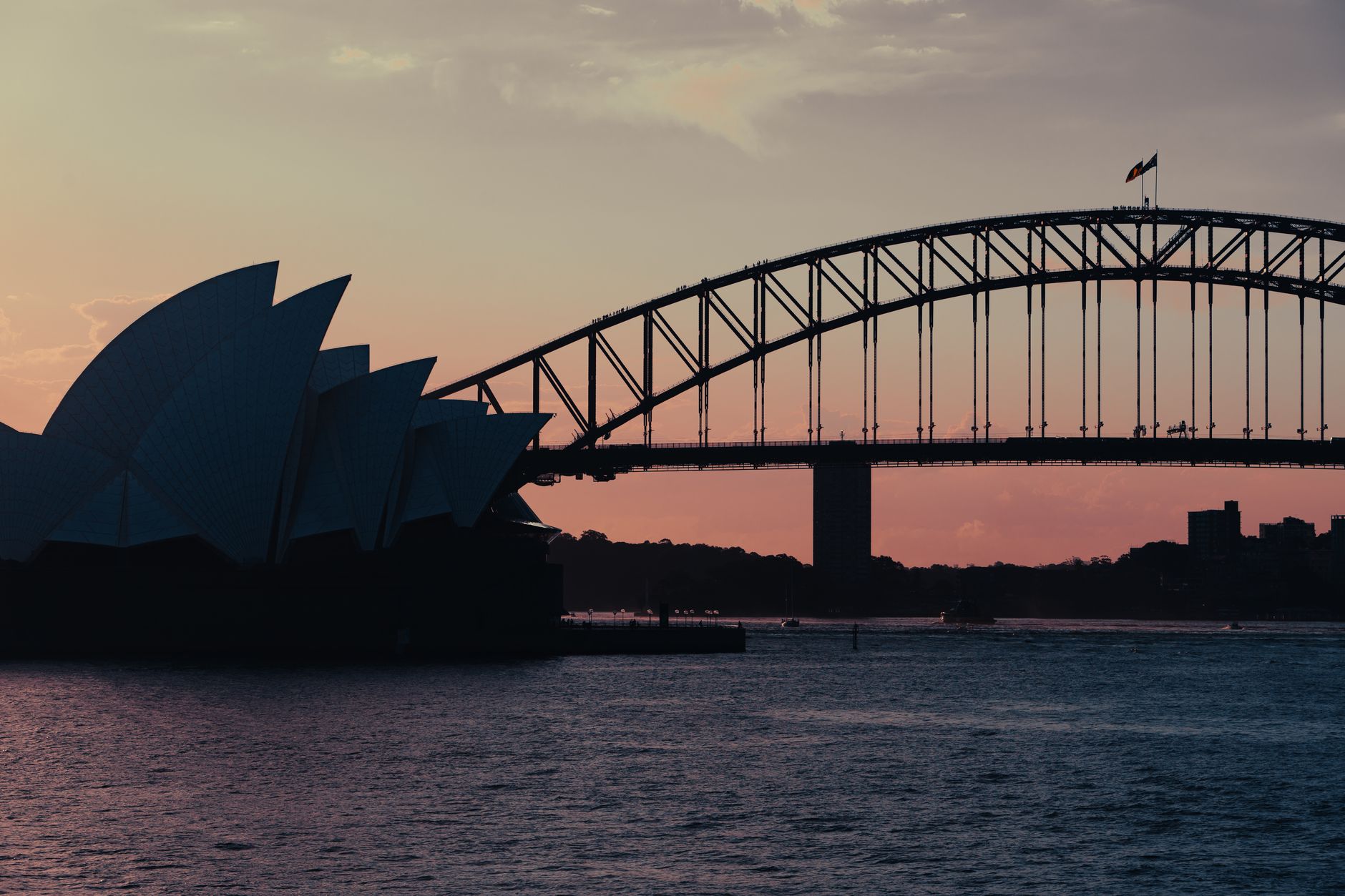
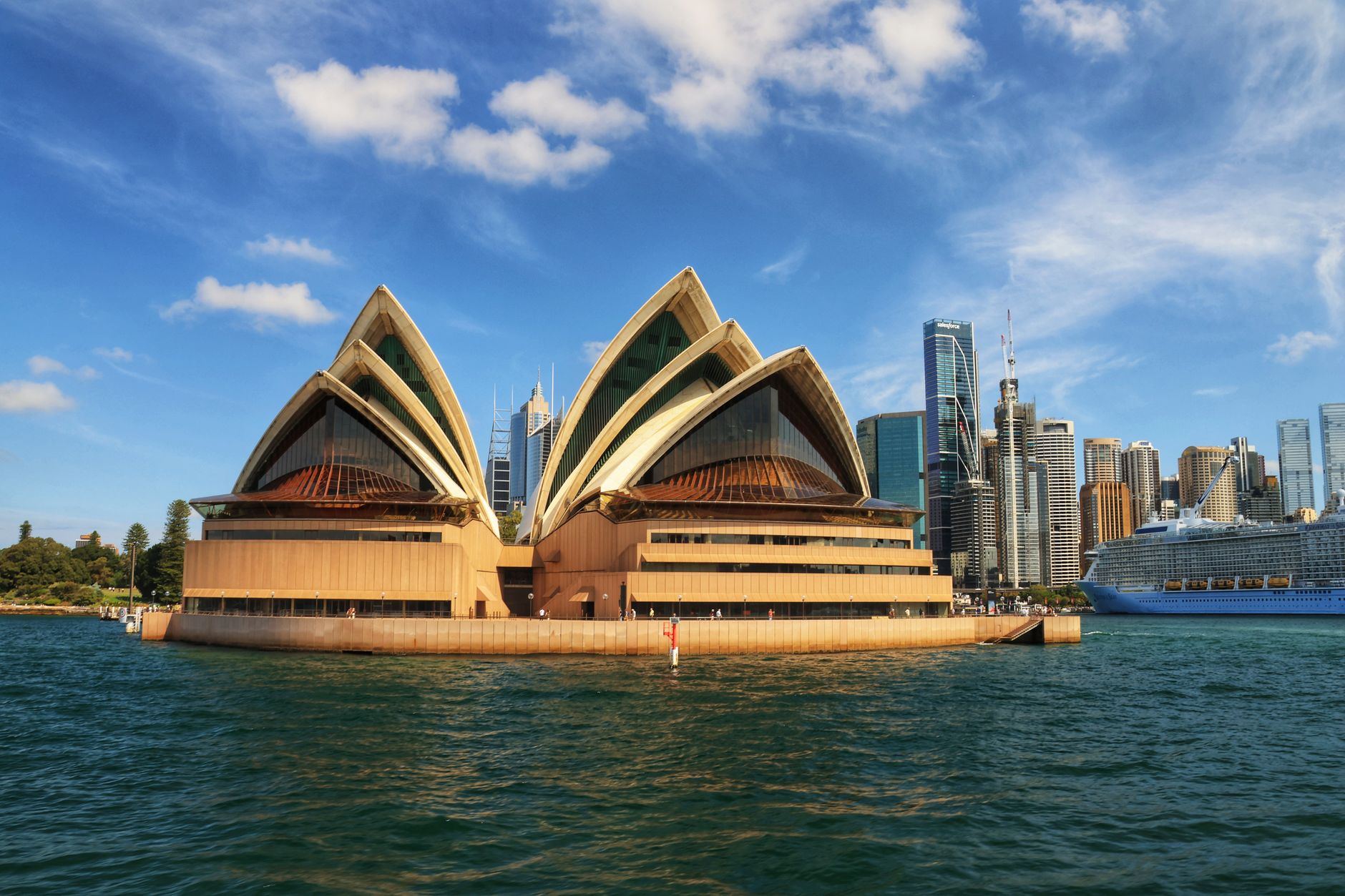
"The first time the ferry clears the bridge and the Opera House appears, you understand why people fall stupidly in love with this place."

133 guides

Melbourne

"The city pretends to be orderly with its Hoddle grid, then hides its best cafes down alleys so narrow you can almost touch both walls at once."

99 guides

Brisbane

"Subtropical light, a river that bends through the city like a question mark, and a former industrial south bank that became one of the most liveable stretches of public space in the southern hemisphere."

Cairns

"The jumping-off point for the Great Barrier Reef, where 2,300 kilometres of coral begins just offshore and the rainforest comes down to meet the sea at the edge of town."

Perth

"More isolated from the rest of Australia than from Singapore, Perth has developed a particular self-sufficiency โ€” white-sand beaches inside the city limits and a wine region, the Swan Valley, forty minutes from the CBD."

Adelaide

"A planned city of 1836 laid out in a perfect grid between the Mount Lofty Ranges and the Gulf St Vincent, now home to more live music venues per capita than anywhere else in Australia and a food scene that runs on Baross"

Hobart

"MONA โ€” David Walsh's underground museum of sex and death carved into a sandstone cliff above the Derwent โ€” turned a quiet colonial port into one of the most genuinely strange cultural destinations on earth."

Darwin

"The only Australian city that has been bombed, rebuilt, and then flattened again by a cyclone on Christmas Day 1974, Darwin lives with a frontier directness that the southern capitals have long since smoothed away."

Alice Springs

"Sitting at the dead centre of the continent, 1,500 kilometres from the nearest city, Alice is the place where the red dirt, the dry Todd River, and the Arrernte people's 40,000-year relationship with this land become imp"

Canberra

"Designed by Walter Burley Griffin after winning an international competition in 1911 and mocked ever since, Canberra holds the National Gallery, the War Memorial, and the Archives โ€” the country's memory, housed in a city"

Broome

"A pearling town at the edge of the Kimberley where the tidal flats at Cable Beach turn the colour of a bruise at sunset and the multicultural history โ€” Japanese, Malay, Aboriginal, Afghan โ€” is written into the cemetery r"

Ballarat

"In 1854, miners at the Eureka Stockade raised a flag โ€” the Southern Cross on a blue field โ€” and fired the single clearest shot at colonial authority in Australian history; the flag itself survives in a museum on the site"

Regions

Sydney

Southeast Capitals

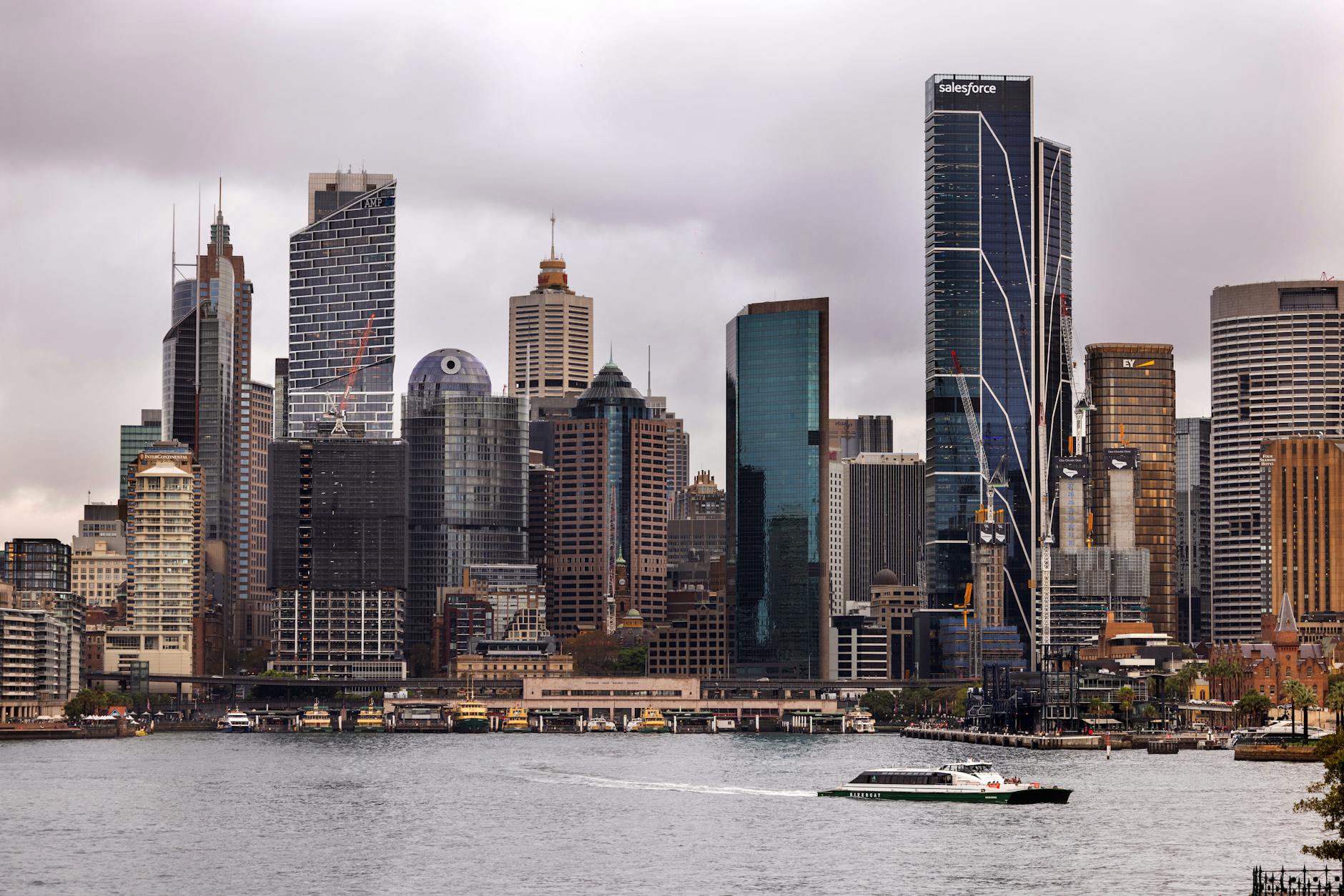
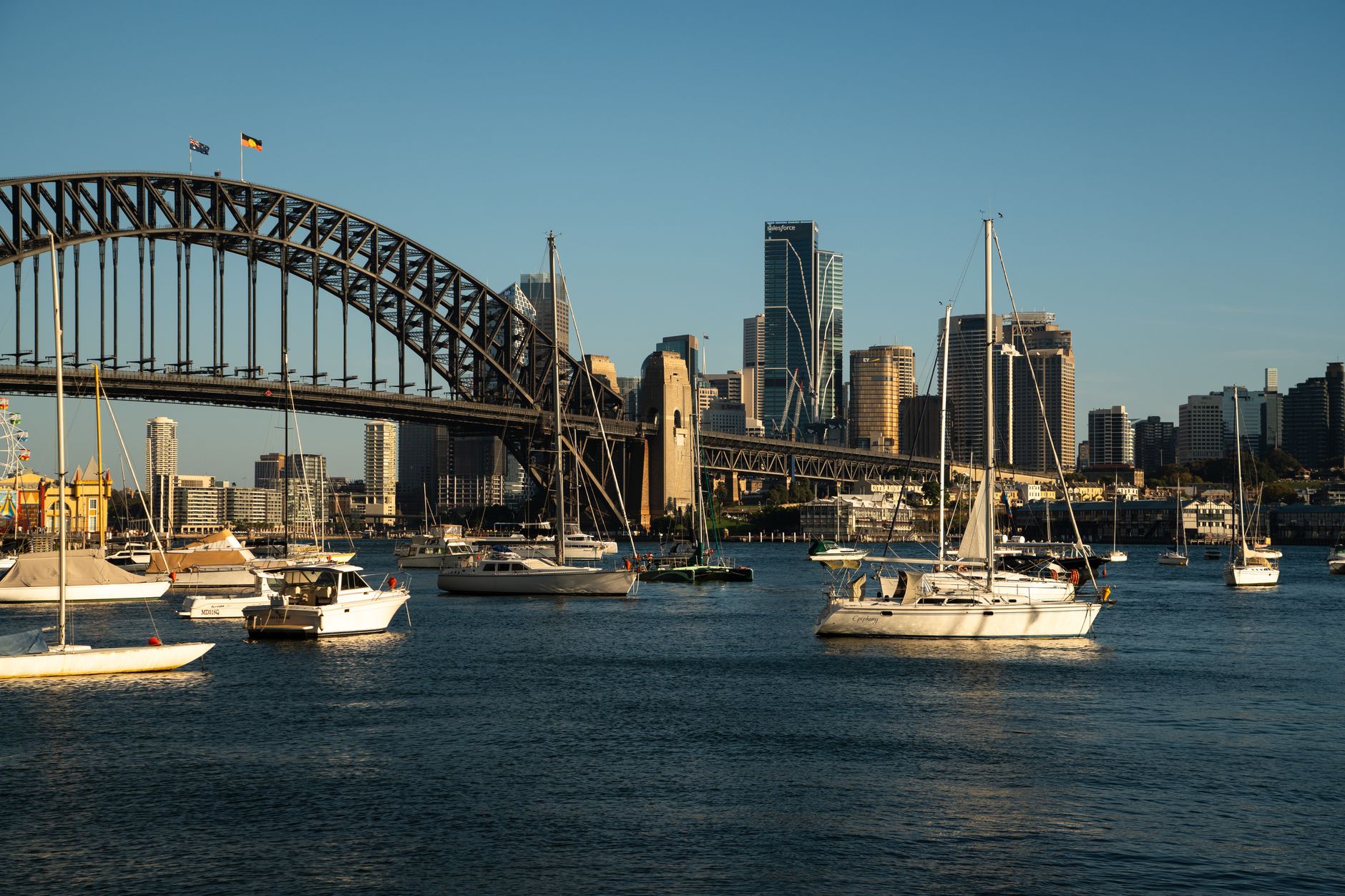
Sydney and Canberra show two sides of the country that barely pretend to match. Sydney runs on harbor light, ferries and expensive confidence; Canberra is cooler, planned, political, and much better at museums than outsiders expect.

placeSydney Harbour placeThe Rocks placeBondi Beach placeCanberra placeAustralian War Memorial

Melbourne

Victoria and Tasmania

Melbourne likes argument, weather and coffee made with doctrinal seriousness. Ballarat adds the gold-rush chapter, while Hobart shifts the mood entirely: smaller streets, colder air, stronger edges, and a food scene that has stopped apologizing for itself.

placeMelbourne placeBallarat placeGreat Ocean Road placeHobart placeMONA

Cairns

Queensland Tropics

Brisbane is the workable entry point, but the emotional center sits farther north in Cairns, where reef boats leave early and the humidity does not negotiate. This is the Australia of mangroves, coral, tropical fruit and weather that can rearrange your plans by lunchtime.

placeBrisbane placeCairns placeGreat Barrier Reef placeDaintree Rainforest placeK'gari

Perth

West Coast and Indian Ocean

Perth feels physically detached from the rest of the country, and that distance shapes the place. The city itself is easygoing, clean and beach-minded, while the wider west opens into long drives, hard light, wine country and the kind of empty space Europeans tend to underestimate.

placePerth placeFremantle placeMargaret River placeNingaloo Reef placeThe Pinnacles

Darwin

Top End and Red Centre

Darwin and Alice Springs belong to Australia, but they answer to heat, distance and older stories first. The Top End is floodplains, monsoon skies and crocodile country; the Red Centre strips everything back to rock, roadhouses and the fact that the nearest town may still be hundreds of kilometers away.

placeDarwin placeKakadu National Park placeAlice Springs placeUluru-Kata Tjuta National Park placeKings Canyon

Adelaide

Southern Ocean and Wine Country

Adelaide is the civilized edge of a rougher state: churches, markets, festivals and a city center that still feels manageable on foot. Beyond it sit cellar doors, harsh coastal scenery and long inland routes where the country starts to flatten into distance.

placeAdelaide placeBarossa Valley placeKangaroo Island placeFlinders Ranges placeNullarbor Plain

Suggested Itineraries

3 days

3 Days: Sydney and Canberra

This is the tight, smart first-timer route for travelers who want harbor views in Sydney and a clean hit of national history in Canberra. It works by train, coach or rental car, and it gives you two very different versions of Australia without wasting half the trip in transit.

Sydneyโ†’Canberra

Best for: first-timers, museum lovers, short breaks

7 days

7 Days: Melbourne to Hobart via Ballarat

Start in Melbourne for coffee, laneways and strong galleries, detour to Ballarat for gold-rush architecture, then fly or sail south to Hobart for sharp food and colder light. The route stays compact, easy to price, and rich in texture without repeating the east-coast clichรฉs.

Melbourneโ†’Ballaratโ†’Hobart

Best for: design travelers, history fans, food-focused trips

10 days

10 Days: Brisbane to Cairns

This run up Queensland trades big-city ease for reef air and tropical heat. Begin in Brisbane, then head north to Cairns for the Great Barrier Reef and rainforest country; it is one of the few Australian itineraries where the climate, the food and the pace all change visibly within a single domestic flight.

Brisbaneโ†’Cairns

Best for: winter sun, reef trips, travelers who want warmth without the Red Centre

14 days

14 Days: Perth to Broome via the Top End

This is the long-haul Australia many visitors skip: Indian Ocean light in Perth, then a jump north to Darwin, Alice Springs and Broome for red rock, wet-dry country and Kimberley horizons. It needs flights and some planning, but the reward is a route that feels more like four countries stitched together than one neat nation-state.

Perthโ†’Darwinโ†’Alice Springsโ†’Broome

Best for: repeat visitors, big landscapes, road-trip planners

Notable Figures

Pemulwuy

c. 1750-1802 ยท Bidjigal resistance leader
Led armed resistance around early Sydney

Pemulwuy turned the frontier around Sydney into a war zone the colonists could never fully pacify. He raided farms near Parramatta, survived gunshot wounds that fed his legend, and forced the British to discover that invasion would not proceed uncontested.

Arthur Phillip

1738-1814 ยท First Governor of New South Wales
Founded the British colony at Sydney in 1788

Phillip arrived in Sydney with orders, convicts, marines, and far too little margin for error. His real achievement was less ceremonial than administrative: he kept a starving, fractious settlement from collapse and understood sooner than most that brutality alone would not build a colony.

William Bligh

1754-1817 ยท Colonial governor and naval officer
Governor deposed during the Rum Rebellion

Bligh came to Australia already famous for the Bounty mutiny and managed to make fresh enemies in Sydney. He was often right about corruption, especially the rum trade, but he possessed that fatal gift of being correct in a way that made people long to lock the door behind him.

Bennelong

c. 1764-1813 ยท Wangal man and intermediary
Moved between Eora society and the first British colony in Sydney

Bennelong has too often been reduced to the role of cultural go-between, as if that were a simple thing. In early Sydney he negotiated, resisted, observed, traveled to Britain, and returned carrying the burden of being expected to translate two worlds that had no equal terms.

Peter Lalor

1827-1889 ยท Eureka leader and politician
Led the Eureka Stockade in Ballarat

At Ballarat, Lalor became the face of a miners' rebellion that was brief, chaotic, and politically unforgettable. He lost an arm in the fighting, then entered Parliament, which gave Australia one of its favorite national myths: the rebel who grows respectable without quite losing the dust of the barricade.

Ned Kelly

1854-1880 ยท Bushranger
Outlaw of colonial Victoria

Kelly remains the country's most theatrical criminal, a man in homemade armor who understood spectacle before modern media had a name for it. His story is about class anger, police pressure, Irish grievance, and the dangerous charm of anyone who looks doomed and keeps talking anyway.

Edith Cowan

1861-1932 ยท Reformer and politician
First woman elected to an Australian parliament, in Western Australia

Cowan brought questions of women, children, justice, and public decency into a political world that preferred not to hear them from a woman at all. Her presence in Parliament was not symbolic decoration; it altered what subjects could be spoken about with authority.

Eddie Mabo

1936-1992 ยท Land rights campaigner
His case overturned terra nullius in Australian law

Mabo was not a courtroom ornament but the living center of a legal revolution. By insisting that Meriam people held rights to their own land before British annexation, he forced Australia to admit that its founding legal fiction had always been just that: a fiction.

Oodgeroo Noonuccal

1920-1993 ยท Poet and activist
Aboriginal public voice in the 20th century

Oodgeroo gave modern Australia a language sharp enough to speak about race, memory, and belonging without polite evasions. Her poems and activism carried the force of someone who refused to let the country admire Aboriginal culture in the abstract while ignoring Aboriginal people in the present.

Top Monuments in Australia

Practical Information

badge

Visa

Australia does not offer visa on arrival for tourists. US, Canadian and UK passport holders usually use the ETA (subclass 601) through the official app with an AUD 20 service fee, while many EU passports qualify for the free eVisitor (subclass 651); both usually allow multiple entries over 12 months with stays of up to 3 months per visit.

payments

Currency

Australia uses the Australian dollar (AUD), and card payment is the norm from Sydney to Perth. GST is 10 percent and is usually built into displayed prices, while tipping stays modest: round up or leave 5 to 10 percent only when service is genuinely good.

flight_land

Getting There

Most long-haul travelers arrive through Sydney, Melbourne, Brisbane or Perth, with smaller international gateways in Adelaide, Cairns and Darwin. The easiest airport links are Sydney's train to the center in about 13 minutes, Brisbane's Airtrain in about 20 minutes, and Perth's Airport Line in about 18 minutes; Melbourne still relies on the SkyBus to Southern Cross.

train

Getting Around

Domestic flights are often the sensible choice because Australian distances are brutal on paper and worse on the ground. Trains work well on a few corridors such as Sydney to Melbourne, Brisbane to the Gold Coast and Perth to Fremantle, while a rental car makes far more sense for Tasmania, the Red Centre and long scenic drives.

wb_sunny

Climate

Australia has no single high season because Cairns, Melbourne and Alice Springs live by different weather rules. September to November and March to May suit Sydney and Melbourne, May to September is the safe window for Darwin and the Red Centre, and June to October is usually the sweet spot for reef trips out of Cairns.

wifi

Connectivity

Mobile coverage is solid in cities and major highways, but it drops fast once you leave the coast or head into the Outback. Buy an eSIM or local SIM before a road trip, download offline maps, and do not assume you will have service between Alice Springs, Darwin and remote parks.

health_and_safety

Safety

Australia is easy to travel independently, but nature sets the terms: heat, distance, surf and wildlife cause more trouble than crime. Swim between lifeguard flags, avoid driving at dawn or dusk in kangaroo country, carry more water than feels reasonable, and respect seasonal marine stinger warnings in tropical Queensland.

Taste the Country

restaurantVegemite on buttered white toast

Breakfast. Hot toast, butter, thin Vegemite, tea. Solitude or family table.

restaurantMeat pie with tomato sauce

Lunch. Football stand, bakery counter, paper bag, one hand, no ceremony.

restaurantSausage sizzle

Weekend. Hardware-store car park, white bread, sausage, onions, tomato sauce, coins, conversation.

restaurantChicken parmigiana with chips

Pub dinner. Friends, beer, argument over parma or parmy, crumbs, chips, loud table.

restaurantBarramundi, skin on

Evening. Grill, lemon, hands, waterfront table, salt air, quiet company.

restaurantLamington with tea

Afternoon. School fete, kitchen bench, paper plate, tea, coconut on fingers.

restaurantFlat white

Morning. Ceramic cup, seated body, newspaper or silence, judgment of milk and crema.

Tips for Visitors

euro
Budget By Distance

Flights booked early usually save more money than any rail pass in Australia. Once a journey pushes past about 800 kilometers, compare Jetstar, Virgin Australia and Qantas before you romanticize the overland option.

train
Use Trains Selectively

Rail works best for short urban or regional links, not for crossing the continent. Sydney to the Blue Mountains, Brisbane to the Gold Coast and Perth to Fremantle make sense; Sydney to Cairns does not unless slowness is the whole point.

hotel
Book Regional Beds Early

Rooms in Hobart during summer, Darwin in the dry season and Cairns in peak reef months can tighten fast. Remote lodges and national-park stays often need booking weeks ahead, especially if you are traveling during school holidays.

restaurant
Eat At Lunch

Australia's restaurant prices sting less at lunch, and many city cafes do their best work before 2 pm. Save dinner splurges for one or two serious meals and use markets, bakeries and pub specials to keep the rest of the budget sane.

health_and_safety
Respect Heat

Summer in Alice Springs or inland South Australia can turn a casual day trip into a bad idea by noon. Carry more water than you think you need, avoid midday hikes, and never assume the next fuel stop is close.

thumb_up
Mind The Tone

Australians are usually informal, but that does not mean careless. Be on time, say thanks, do not overshare personal questions, and read the room before using local slang such as mate or bogan like you invented it.

wifi
Download Before Driving

Coverage falls away fast outside major towns, particularly in the Northern Territory, Western Australia and inland Queensland. Load maps, tickets and hotel details onto your phone before you leave Perth, Darwin or Alice Springs.
Explore Australia with a personal guide in your pocket

Your Personal Curator, in Your Pocket.

Audio guides for 1,100+ cities across 96 countries. History, stories, and local insight โ€” offline ready.

smartphone

Audiala App

Available on iOS & Android

download Download Now

Join 50k+ Curators

Frequently Asked

Do I need a visa for Australia as a US citizen? add

Yes, usually an ETA rather than a full paper visa. Most US travelers apply through the official Australian ETA app and pay the current AUD 20 service fee, with permission typically allowing stays of up to 3 months per visit.

Is Australia expensive for tourists in 2026? add

Yes, especially in Sydney, Melbourne and remote regions. A realistic daily budget starts around A$110 to A$170 for budget travel, moves to A$220 to A$380 for mid-range comfort, and climbs quickly once you add domestic flights, reef trips or Outback lodges.

What is the best month to visit Australia? add

It depends entirely on the region, which is the honest answer most brochures avoid. September to November works well for Sydney and Melbourne, June to October suits Cairns and the reef, and May to September is the safer window for Darwin and Alice Springs.

Can you travel around Australia without a car? add

Yes in the main city corridors, no for many of the country's best landscapes. Sydney, Melbourne, Brisbane and Perth are easy on public transport, but Tasmania, the Red Centre, wine regions and national parks usually work better with a rental car or an organized tour.

How many days do you need in Australia for a first trip? add

Ten to fourteen days is the point where Australia starts to feel coherent rather than rushed. With less time, choose one region such as Sydney and Canberra, Melbourne and Hobart, or Brisbane and Cairns instead of pretending you can cover the whole continent.

Is tipping expected in Australia? add

No, not in the US sense. Prices already include tax, staff are paid differently, and most travelers simply round up or leave 5 to 10 percent for strong sit-down restaurant service.

Is Sydney or Melbourne better for first-time visitors? add

Sydney is easier for a classic first trip because the harbor, beaches and major sights land fast. Melbourne rewards longer stays, better weather luck and travelers who care more about neighborhoods, food and culture than postcard views.

Can I use my phone data in the Australian Outback? add

Not reliably, and planning as if you can is a mistake. Coverage outside major towns is patchy to nonexistent, so buy a good SIM or eSIM, download offline maps, and tell someone your route before driving out of Alice Springs or Darwin.

Sources

Last reviewed: