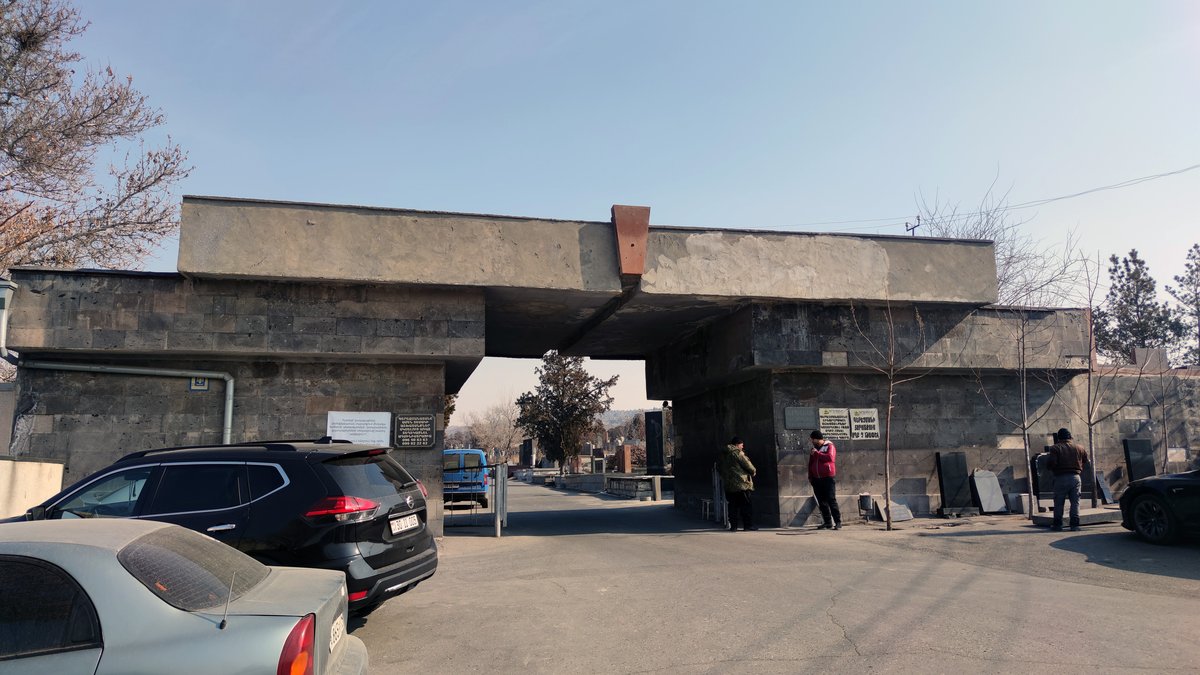
Plan and listen to Tokhmakh Cemetery with Audiala.
Audio guide in your pocket, itinerary in your browser. Built for the way you actually visit.
Introduction to Tokhmakh Cemetery in Yerevan
Tokhmakh Cemetery—also referred to as Kentronakan Cemetery or Nor Khovtash Cemetery—is a prominent historical and cultural site in Yerevan, Armenia’s capital. Established in the 1930s during a period of rapid urbanization, it embodies the city’s social history, artistic traditions, and evolving urban landscape. As the final resting place for both everyday citizens and distinguished figures—including artists, intellectuals, and war heroes—Tokhmakh Cemetery offers a profound window into Armenian society’s values, challenges, and commemorative practices (Deadicated.nl; chaikhana.media).
Beyond its role as a burial ground, Tokhmakh serves as a living archive of memory and a cultural pantheon, featuring elaborate mausoleums and gravestones that reflect family honor and communal ties. Its hillside setting provides panoramic views of Yerevan, and its proximity to other historic sites enhances its appeal for cultural travelers (Mirror Spectator; Eurasianet).
This guide delivers an in-depth overview of Tokhmakh Cemetery’s history, cultural significance, visitor logistics (hours, tickets, accessibility, transportation), and nearby attractions. Whether you are a history enthusiast, a respectful traveler, or someone seeking to pay respects, this resource will help you fully appreciate one of Yerevan’s most emblematic heritage sites (Deadicated.nl; chaikhana.media; Eurasianet).

Historical Background
Origins and Development
Tokhmakh Cemetery was established in the 1930s to accommodate Yerevan’s growing population and to replace older graveyards that were closed or repurposed during Soviet urban reforms. Its location on a hillside was chosen for both its expansive views and accessibility, aligning with contemporary urban planning principles (Deadicated.nl).
Expansion and Overcrowding
Initially designed as a spacious burial ground, Tokhmakh has faced significant overcrowding as Yerevan expanded. By the early 21st century, cemeteries occupied about 10% of Yerevan’s land—double the sustainable proportion. Family plots are densely packed, and, in some places, graves encroach upon surrounding streets (Eurasianet).
Social and Cultural Significance
Tokhmakh Cemetery is a reflection of Armenian customs and societal structures. Cemeteries in Armenia are not just places of interment; they are expressions of family legacy, social status, and artistic achievement. Elaborate gravestones, mausoleums, and statues demonstrate the importance placed on memorialization in Armenian culture (chaikhana.media). The site is a microcosm of Yerevan’s diversity, containing sections for Armenian Apostolic, Russian Orthodox, Yazidi, and other communities.
Notable Burials and Pantheon Status
While the Komitas Pantheon is more widely known, Tokhmakh also serves a pantheon function, with dedicated areas for intellectuals and artists. The site includes the graves of prominent Armenians, such as genocide scholar Dr. Vahakn Dadrian, whose initially unmarked grave underscores ongoing administrative challenges (Mirror Spectator); (Traces of War).
Administrative and Urban Challenges
Tokhmakh Cemetery’s management reflects Yerevan’s broader urban issues. Overcrowding, illegal expansions, and encroachment on recreational areas are persistent problems. Proposals for cremation and alternative burial practices have faced resistance due to cultural traditions, even though cremation was legalized in 2006 (Eurasianet; chaikhana.media). Urban development continues to pressure the cemetery’s boundaries, sparking debates about the balance between honoring tradition and accommodating city growth.
Visitor Information
Visiting Hours and Tickets
- Hours: Open daily from 8:00 AM to 6:00 PM. (Hours may vary on public holidays.)
- Tickets: Entry is free; no tickets are required.
Accessibility
Tokhmakh’s hillside terrain features uneven gravel paths, steps, and inclines. Accessibility is limited, with wheelchair access only near the main entrance and select central paths. Comfortable footwear is highly recommended.
Guided Tours
While there are no regular on-site guided tours, several local operators and cultural organizations offer guided experiences that include Tokhmakh Cemetery. Booking in advance or confirming with the Yerevan tourism office is suggested.
Getting There
- Location: Northern Yerevan, approximately 7 km from Republic Square, accessed via the Ashtarak Highway.
- Transport: Taxis (1,500–2,500 AMD/$4–$7 USD) are recommended for convenience. Public buses and marshrutkas also serve the area but may have Armenian-only signage.
- Parking: Available near the entrance but limited during major memorial days.
Nearby Attractions
Combine your visit with other Yerevan landmarks such as the Armenian Genocide Memorial and Museum, Victory Park, Komitas Pantheon, Cascade Complex, and the National History Museum of Armenia. These sites offer deeper context to Armenia’s cultural and historical narrative.
Etiquette, Facilities, and Safety
- Dress: Modest attire is recommended, especially in religious sections.
- Behavior: Maintain a quiet and respectful demeanor. Avoid loud conversations, music, or inappropriate behavior.
- Photography: Allowed, but always be discreet and ask permission if ceremonies or families are present.
- Facilities: Limited; restrooms near the entrance may not meet Western standards. No on-site cafés—bring water and snacks if needed.
- Safety: The cemetery is safe during daylight but unlit at night. Leave before sunset, especially in winter.
Travel Tips
- Visit on weekday mornings or during spring/autumn for a peaceful experience and pleasant weather.
- Learn a few basic Armenian phrases for communication.
- Bring a translation app for signage and assistance.
- Use online or app-based maps, as on-site signage is limited.
Frequently Asked Questions (FAQ)
Q: What are the visiting hours for Tokhmakh Cemetery?
A: Open daily, 8:00 AM–6:00 PM.
Q: Is there an entrance fee?
A: No, entry is free.
Q: Are guided tours available?
A: Some local operators offer guided tours; check in advance.
Q: How do I get there?
A: Taxi is recommended; public transport is available but less convenient.
Q: Is the cemetery wheelchair accessible?
A: Only partially, near main entrance and central paths.
Q: Can I take photographs?
A: Yes, but be respectful and avoid disturbing mourners.
Q: What is the best time to visit?
A: Spring and autumn for mild weather and fewer crowds.
Visuals and Media Suggestions
- Photograph of Tokhmakh Cemetery entrance (alt: "Entrance to Tokhmakh Cemetery in Yerevan")
- Close-up of an ornate Armenian gravestone (alt: "Intricately carved Armenian gravestone at Tokhmakh Cemetery")
- Panoramic view of Yerevan from the cemetery hillside (alt: "Panoramic view of Yerevan from Tokhmakh Cemetery")
- Map showing the cemetery’s location and main paths (alt: "Map of Tokhmakh Cemetery in Yerevan")
- Tour group at a mausoleum (alt: "Guided tour at Tokhmakh Cemetery")
Discover More
Tokhmakh Cemetery is one of Yerevan’s most symbolic and evocative sites, offering insight into Armenia’s past and present. Its blend of historical significance, cultural artistry, and living traditions make it a must-visit for anyone seeking to understand the soul of the city.
For more travel tips and heritage site guides, download the Audiala app and follow us on social media. Explore related posts for deeper insights, and plan your visit to experience the enduring legacy of Tokhmakh Cemetery.
Listen to the full story in the app
The whole Tokhmakh Cemetery,
told well.
Audio guides for 1,100+ cities across 96 countries. History, stories, and local insight — offline ready.
Verified, and shown.
Researched and written by the Audiala editorial team from historical records, architectural archives, and local expertise.
Researched from Wikidata, Wikipedia & official sources · fact-checked · How we make our guides →