Plan and listen to President'S Residence, Yerevan with Audiala.
Audio guide in your pocket, itinerary in your browser. Built for the way you actually visit.
Introduction
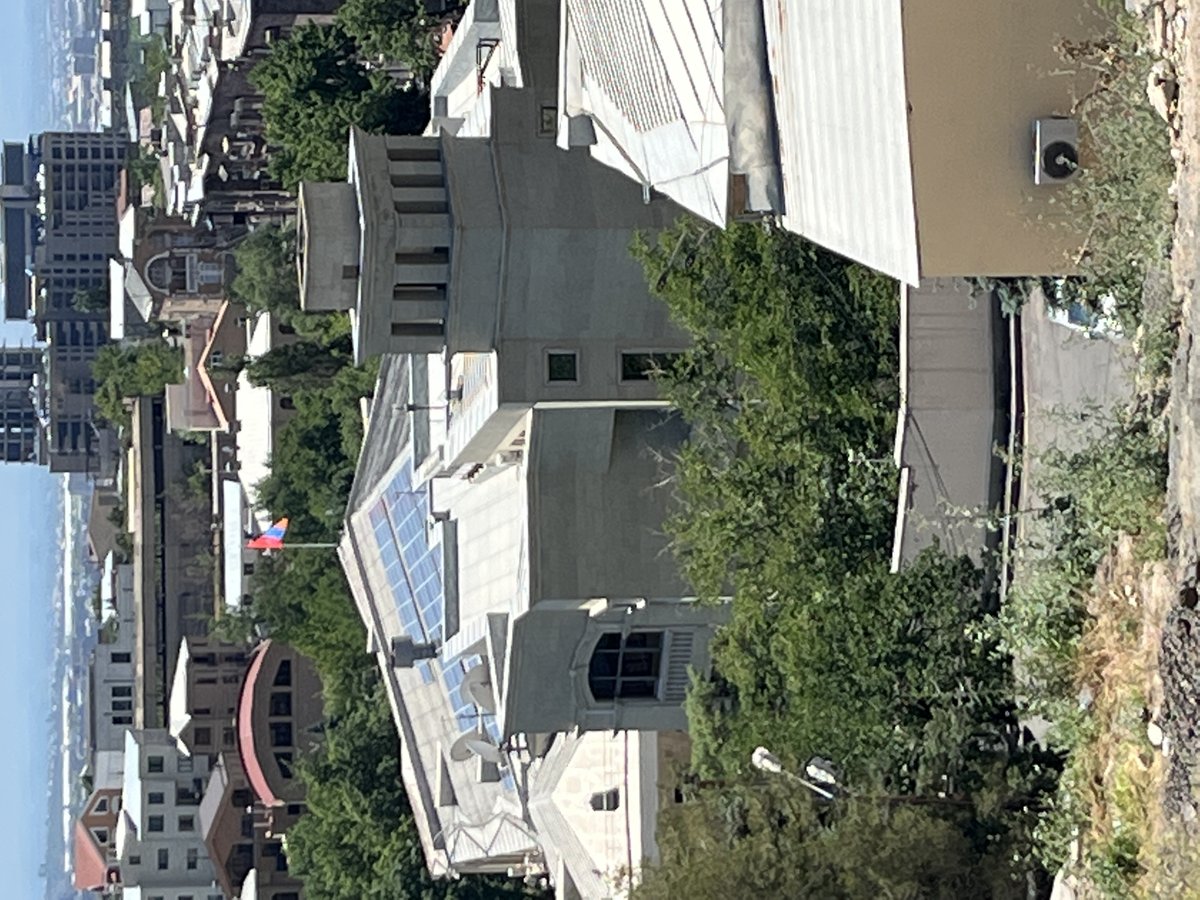
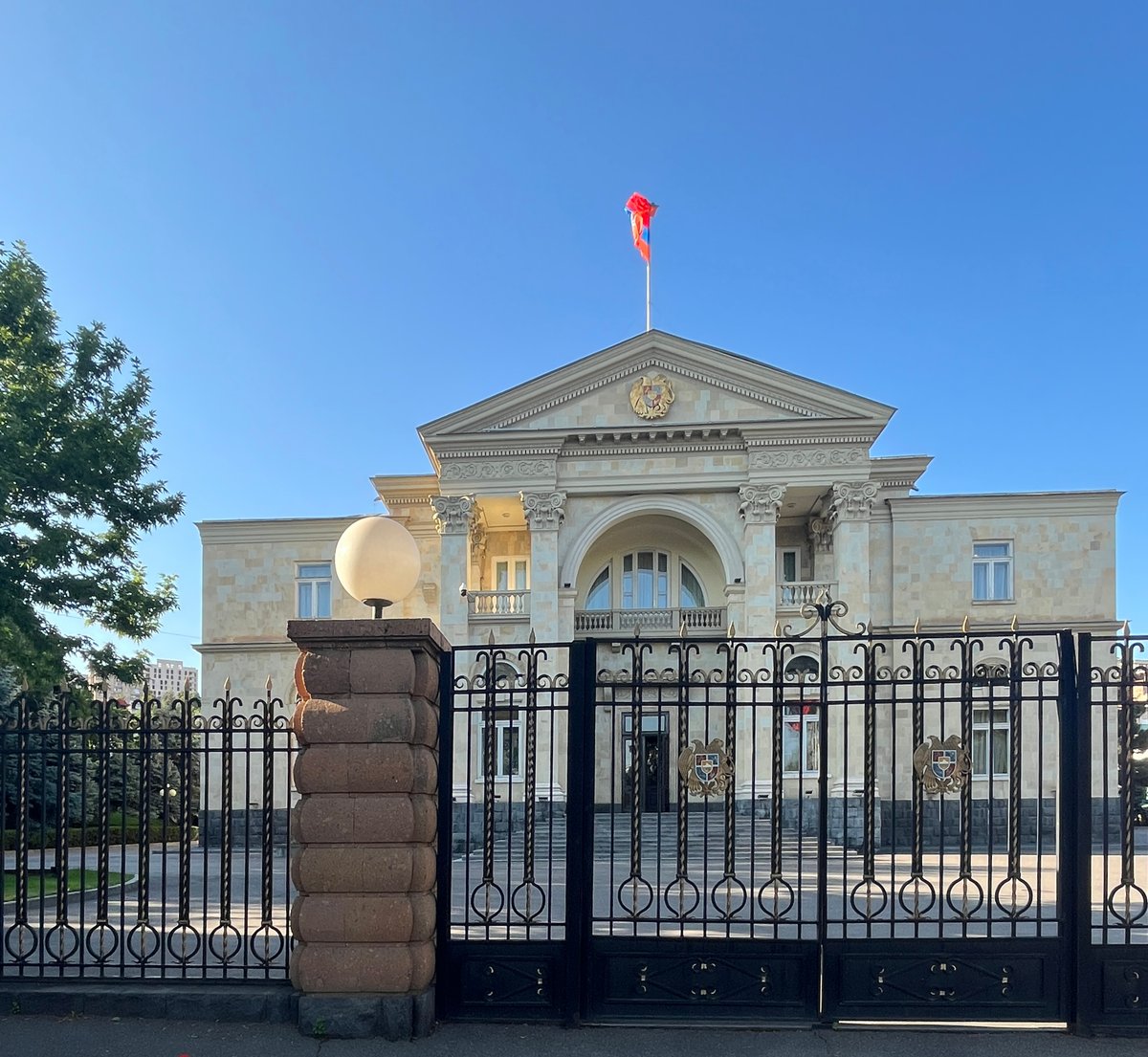
The President’s Residence in Yerevan is one of Armenia’s most significant political, cultural, and architectural landmarks. Located at the heart of the capital on Baghramyan Avenue, this historic building reflects Armenia’s evolution from a Soviet republic to an independent nation. Its unique blend of Soviet monumentalism and Armenian national motifs, crafted using local pink tuff, travertine, and basalt, sets it apart as a symbol of national identity and governance (World Atlas, Visit Yerevan, President of Armenia).
Though primarily a government building with restricted interior access, the residence’s grand façade, surrounding gardens, and proximity to major attractions make it a notable stop for anyone exploring Yerevan. This comprehensive guide covers the President’s Residence’s historical background, architectural features, visiting hours, ticketing information, and practical tips for travelers.
Soviet Foundations and Political Transformation
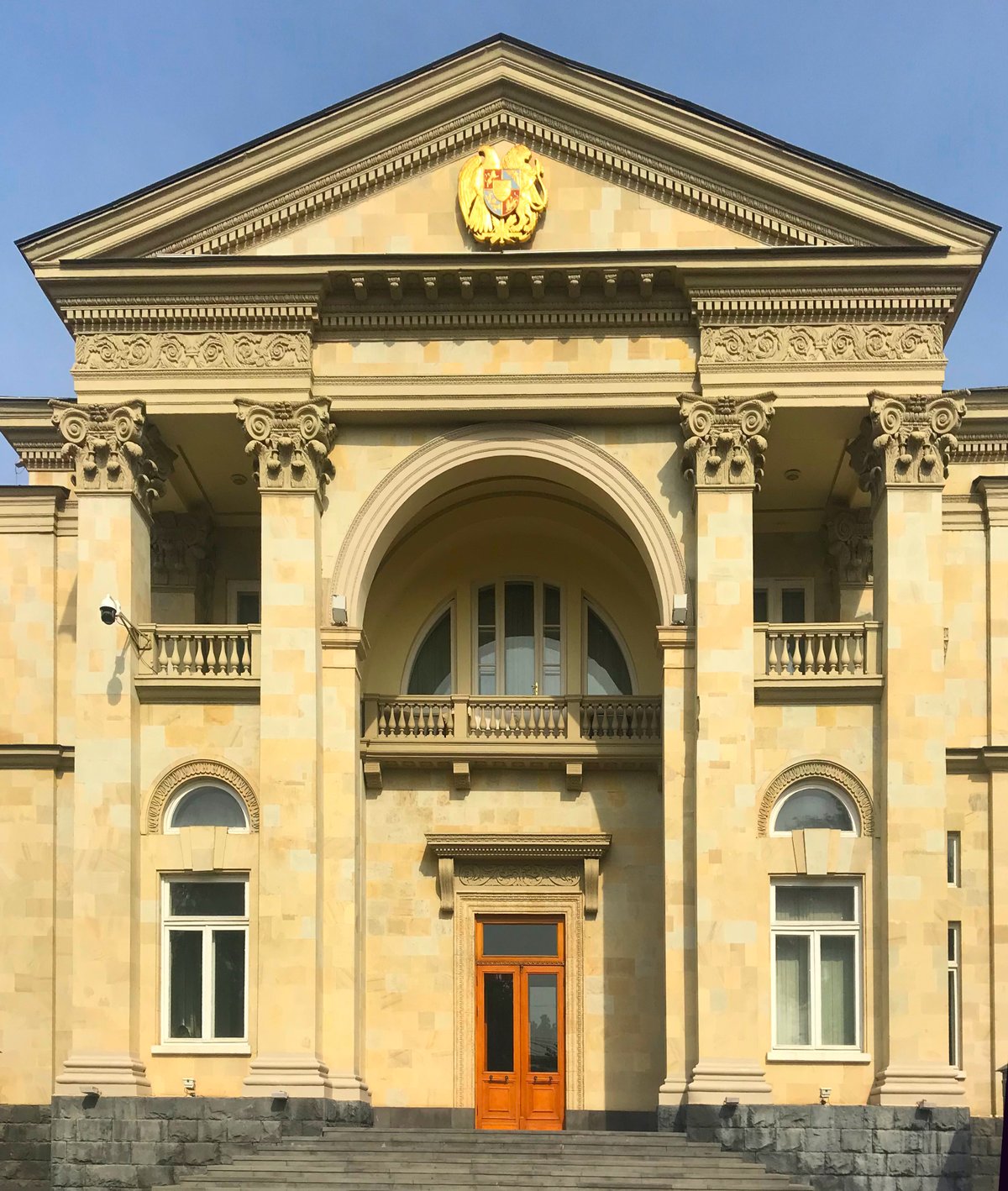
The residence was constructed between 1951 and 1953, originally serving as the seat of the Armenian SSR’s Council of Ministers. Designed by Mark Grigorian, a leading Soviet Armenian architect, the building became a symbol of authority and state structure in the Soviet era (World Atlas).
Following Armenia’s independence in 1991, the building was re-designated as the official residence of the President of the Republic of Armenia. Its role evolved with the nation’s changing political landscape, briefly housing the Prime Minister’s office in 2018 before returning to presidential use.
Architectural Evolution
Design and Materials
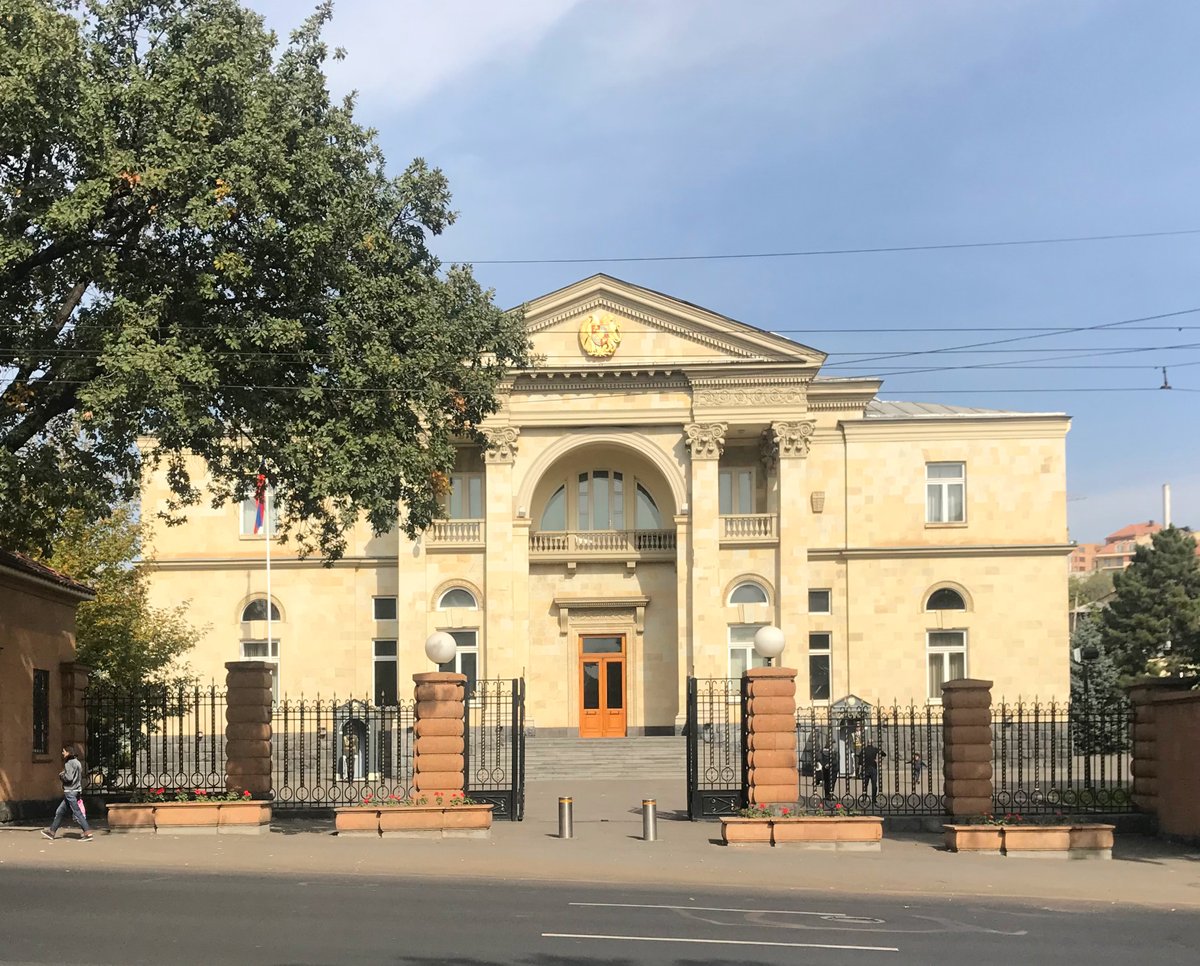
The President’s Residence is a prime example of Soviet-era monumental architecture fused with Armenian classical influences. The façade features arcaded entrances, a triangular pediment supported by Ionic columns, and extensive use of pink tuff, travertine, and basalt. The design echoes early medieval Armenian basilicas and classical forms, blending national pride with functional government aesthetics.
Renovations and Expansions
- 1987: Addition of two three-story wings.
- 2009–2010: Construction of a four-story administrative extension by architect Narek Sargsyan, using materials that harmonize with the original structure.
- Gardens and Sculpture: The grounds include statues of Tigran II the Great and Noah, enhancing the cultural ambience.
Cultural and Heritage Significance
National Symbol and Protected Monument
The residence is listed in the State Registry of Yerevan Historical and Cultural Immobile Monuments, ensuring preservation and recognition as a place of state significance (World Atlas).
Artistic Collections
The residence’s halls and demonstration areas display works by celebrated Armenian artists, such as Hovhannes Aivazovsky, Panos Terlemezyan, Martiros Saryan, and Gevorg Bashinjaghyan. These collections highlight Armenia’s artistic heritage and are occasionally accessible during official events.
Visiting Information: Hours, Tickets, and Tips
Standard Public Access
- Exterior Viewing: The building’s façade and gardens can be viewed from Baghramyan Avenue at any time during daylight hours.
- Interior Access: The interior is generally closed to the public due to security protocols. Access is only granted during special events, national holidays, or pre-arranged group tours.
Guided Tours and Events
- Tours: Occasionally available during national holidays or cultural events. Advance booking is required.
- Tickets: There is no regular ticketing system; entry during official events is usually free but requires prior arrangement (Visit Yerevan, President of Armenia).
Travel Tips
- Arrive early during public events, as spaces may be limited.
- Respect photography restrictions—photography is allowed from outside, but interior photos require special permission.
- Dress modestly and behave respectfully, especially during official occasions.
Accessibility and Security
- Wheelchair Accessibility: The exterior area is wheelchair-friendly; interior access may be limited.
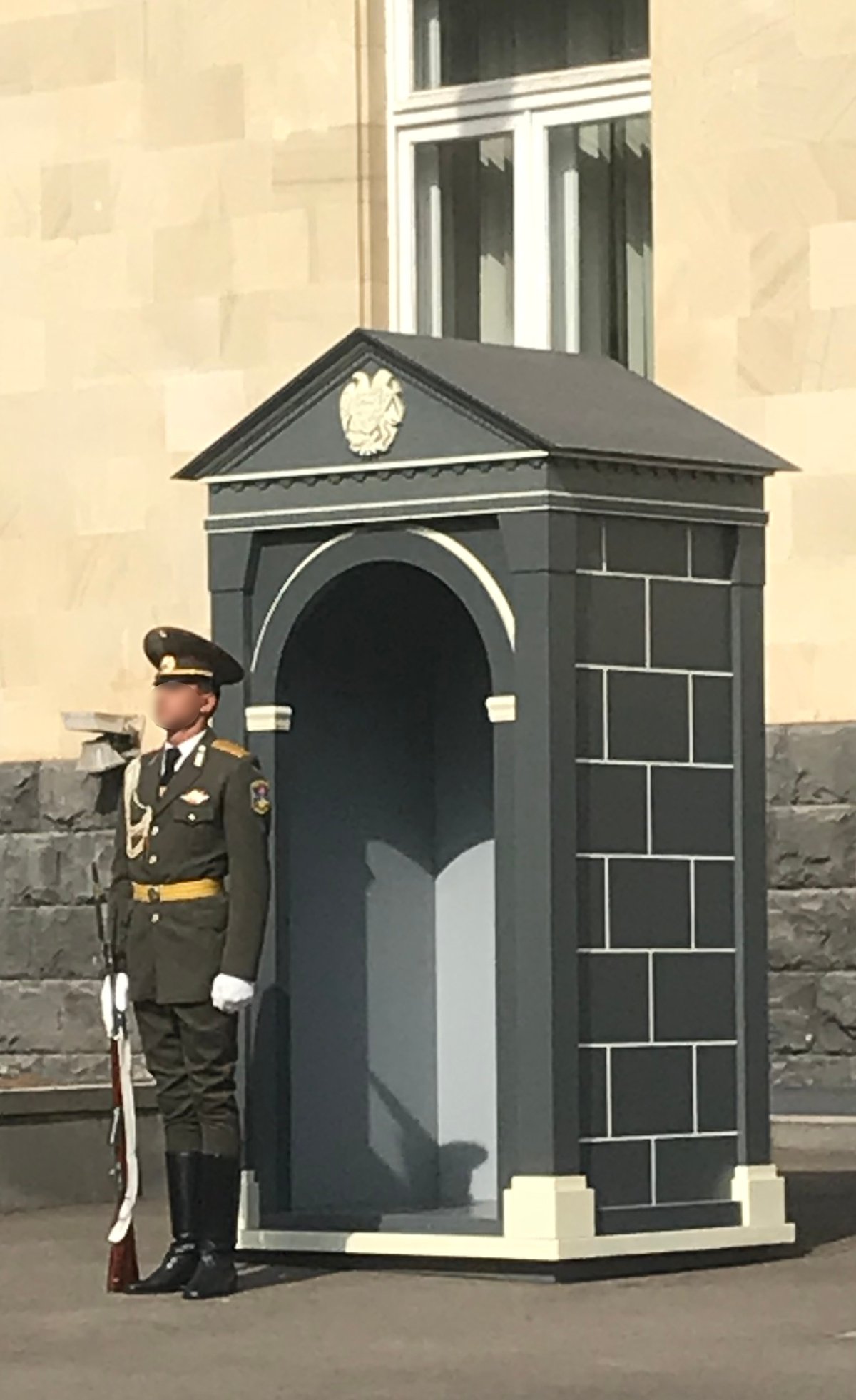
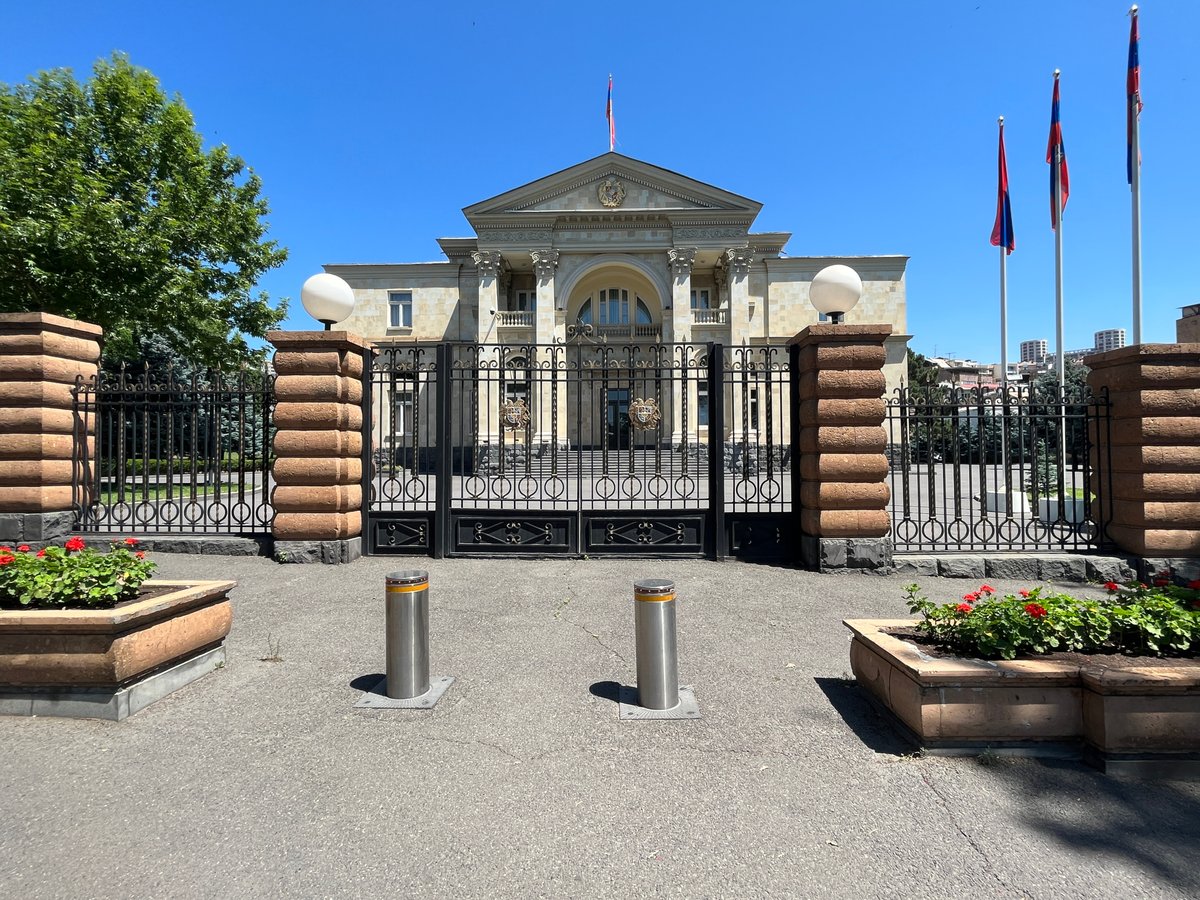
- Security: Expect ID checks, bag screenings, and visible police presence. Drones and close-up photography of security personnel are prohibited.
- Language: Armenian is the official language, but English and Russian are commonly spoken by staff. Bilingual signage is present around main sites (Armenia Travel).
Nearby Attractions
- National Assembly of Armenia: Further along Baghramyan Avenue.
- Lovers’ Park: A landscaped public park nearby.
- Cascade Complex: Monumental stairway with art galleries and panoramic views.
- Opera House and Republic Square: Easily accessible for a broader cultural itinerary (My Global Viewpoint).
Frequently Asked Questions (FAQ)
Can I visit the President’s Residence interior?
Generally, no. Interior access is limited to special events and official tours. Exterior views are always available.
Are there entrance fees?
No regular tickets are issued; entry for special events is free but must be arranged in advance.
Is the area wheelchair accessible?
Yes, the exterior and nearby sidewalks are accessible.
Is photography allowed?
Photography is permitted from outside the fence. Avoid photographing security personnel or restricted zones.
Which nearby sites should I visit?
The National Assembly, Cascade Complex, Lovers’ Park, and Opera House are all within easy reach.
Final Tips for Visitors
- Check official sources for up-to-date visiting hours and possible tour opportunities.
- Use public transport or taxis for easy access; parking is limited.
- Dress appropriately, carry identification, and respect all security protocols.
- Enhance your visit by exploring nearby historical sites and using digital guide apps like Audiala for curated experiences.
The President’s Residence is more than a government building—it is a living symbol of Armenia’s resilience, culture, and national pride. Even if interior access is limited, its architectural beauty, artistic displays, and central location make it a must-visit for anyone exploring Yerevan’s rich historical tapestry.
Listen to the full story in the app
The whole President'S Residence, Yerevan,
told well.
Audio guides for 1,100+ cities across 96 countries. History, stories, and local insight — offline ready.

Verified, and shown.
Researched and written by the Audiala editorial team from historical records, architectural archives, and local expertise.
Researched from Wikidata, Wikipedia & official sources · fact-checked · How we make our guides →