Armenia
location_city

Capital

Yerevan

translate

Language

Armenian

payments

Currency

Armenian dram (AMD)

calendar_month

Best season

Autumn (September-October)

schedule

Trip length

7-10 days

badge

EntryVisa-free up to 180 days for US, EU, UK and Canada

Introduction

An Armenia travel guide starts with a surprise: one of the world’s oldest Christian nations still feels raw, mountainous and gloriously unfinished.

Armenia rewards travelers who want substance fast. In Yerevan, a 782 BCE fortress sits behind a modern capital of pink tuff facades, brandy bars and genocide memory that does not soften itself for visitors. Forty minutes away, Vagharshapat holds the spiritual center of the Armenian Apostolic Church, where the story of 301 CE still shapes the country’s sense of itself. This is the real hook: Armenia is small enough to cross in days, yet dense with firsts, arguments and survivals that keep turning a scenic trip into something heavier and more memorable.

The route outward changes quickly. Lake Sevan gives you high-altitude light and monastery views above one of the world’s largest alpine freshwater lakes; Dilijan trades volcanic plateau for forest and slower air; Gyumri offers black-stone 19th-century architecture, dark wit and a cultural life that never quite learned to behave. Head north to Alaverdi and the Debed canyon, and the landscape starts reading like a medieval manuscript written in basalt and cliffs. Armenia rarely flatters itself. That helps. The monasteries, roads and mountain towns feel lived in, not staged for your camera.

Then there is the south, where the country grows sharper. Goris opens the way to cave dwellings, switchback roads and the long pull toward Tatev country, while Meghri and Kapan edge closer to Iran than to postcard Armenia. Food keeps pace with geography: khorovats over charcoal, lavash baked in tonir ovens, tart matzoon, herbs folded into bread, wine from Areni grapes that have had millennia to settle in. Come for churches if you like, or Soviet ghosts, or hiking, or the need to stand somewhere old enough to make your calendar feel flimsy. Armenia can carry all of that.

A History Told Through Its Eras

Erebuni, basalt walls, and the first royal ambition

Fortresses and Highland Kings, c. 900 BCE-55 BCE

A stone inscription, cut in 782 BCE, still speaks with the confidence of a king who assumed posterity would listen. Argishti I ordered the founding of Erebuni on the Arin Berd hill above modern Yerevan, and the gesture was not modest: a fortress, granaries, wine stores, and a command post watching the Ararat plain. Before Armenia was a nation in the modern sense, it was already a habit of building high and looking far.

Ce que l'on ignore souvent, c'est que these early highland kingdoms were obsessed with logistics as much as glory. Urartian power ran on canals, storehouses, and garrisons; the romance of mountain citadels rested on barley, bronze, and disciplined labor. Later Armenians would read these stones as ancestral memory, even when dynasties changed and languages shifted.

Then came the age of larger predators. Persians, Seleucids, and local dynasts fought over the plateau until Armenian rulers learned the great Caucasian art: bend without disappearing. By the 2nd century BCE, the Artaxiad kingdom gave the region a more clearly Armenian court, and under Tigranes II the Great, crowned in 95 BCE, that court stopped behaving like a frontier survivor and started acting like an empire.

Imagine the scene: messengers arriving dusty from Syria, nobles in layered robes, silver on the table, horses outside, and a king who held lands from the Caspian approaches toward the Mediterranean. Tigranes built, conquered, married strategically, and overreached magnificently. That, too, is part of the Armenian pattern: brilliance on a dangerous scale, followed by the hard reckoning of geography.

Tigranes the Great was no marble abstraction but a ruler with the appetite, vanity, and stamina to turn a mountain kingdom into a brief eastern power.

The birth certificate of Yerevan is effectively a royal building inscription: few capitals can point to such a precise founding act, carved in stone.

A king in chains, a saint in the dark, and letters made for survival

The Cross and the Alphabet, 55 BCE-451 CE

The court drama begins, as it often does, with imprisonment. According to Armenian tradition, Gregory the Illuminator spent years in the pit of Khor Virap before emerging to convert King Tiridates III, the very monarch who had persecuted him. Whether one lingers on every detail of the legend or not, the turning point matters: in 301 CE, Armenia claimed Christianity as state religion before Rome had done the same.

This was not a decorative piety. In Vagharshapat, where Echmiadzin would become the spiritual heart of the Armenian Apostolic Church, faith took architectural form in stone, ritual, and hierarchy. A kingdom caught between Rome and Persia chose the Cross not simply as belief, but as political grammar.

Then came the second miracle, quieter and perhaps even more enduring. In 405 CE, Mesrop Mashtots created the Armenian alphabet, not as a scholarly ornament but as an instrument of survival; scripture, law, memory, and poetry could now live in a script shaped for Armenian speech. You still feel that choice today in Yerevan, on shop signs, on school walls, on the solemn lettering of church facades.

And the price was immediate. In 451, at Avarayr, Vardan Mamikonian and his nobles fought the Sasanian Persians over the right to keep that Christian identity under Armenian terms. They lost the battle in military terms, but won something stranger and longer: a moral victory that made faith, language, and political stubbornness inseparable.

Gregory the Illuminator matters because he turned a private ordeal into statecraft, dragging a kingdom's conscience out of a dungeon and into daylight.

Armenian tradition says Mashtots did not merely standardize existing signs; he fashioned an alphabet so precisely fitted to the language that it became a national relic in its own right.

Ani's thousand churches and the long art of not disappearing

Stone Kingdoms and Vanished Capitals, 451-1375

A medieval Armenian capital did not smell of abstraction. It smelled of wax, wool, horses, manuscripts, and winter smoke caught in the stone. When the Bagratid kingdom was restored in 885 and Ani rose to prominence, Armenia produced one of the great courtly and sacred landscapes of the medieval world, a place of cathedrals, merchant wealth, and theological confidence set on a windy plateau.

By 961, Ani had become the Bagratid capital, and its churches multiplied so quickly that later memory called it the city of a thousand and one churches. Ce que l'on ignore souvent, c'est que this splendor was never sheltered from danger; Byzantines coveted it, Seljuk armies watched it, and trade routes could enrich a capital one decade and expose it the next. Armenian magnificence has often stood one step away from catastrophe.

While crowns shifted, monasteries became the real vaults of continuity. In the Debed canyon near Alaverdi, Haghpat and Sanahin stored manuscripts, learning, and liturgy high above the river. Elsewhere, around Lake Sevan, on roads that later lead toward Goris and the southern passes, the same instinct prevailed: build in stone, copy the text, teach the child, ring the bell, endure.

When Ani fell first to Byzantine annexation in 1045 and then to the Seljuks in 1064, the political map fractured again. Yet Armenian power did not simply end; it moved. In Cilicia, far to the southwest, Armenian nobles built another kingdom, maritime, crusader-adjacent, diplomatic, and glittering, until its final collapse in 1375 sent one more wave of memory into exile.

King Gagik I of Ani presided over a court that understood display, devotion, and statecraft as parts of the same performance.

Ani's fame for its innumerable churches was not mere poetic inflation; medieval visitors genuinely encountered a skyline crowded with domes, drums, and bell towers on a scale rare for the region.

Between Ottoman pashas, Persian shahs, and the stubborn memory of a kingdom

Merchants, Meliks, and Empires, 1375-1915

After the fall of Cilicia, Armenia did not vanish into silence. It was divided, taxed, raided, governed by others, and yet peopled by families who kept churches open, trade networks alive, and genealogies very much in order. One can picture the scene in Julfa before deportation, or later in New Julfa in Isfahan: ledgers on the table, silk contracts folded into chests, priests blessing a caravan before dawn.

This was the Armenian genius of the early modern centuries. Under Ottoman and Safavid rule, and later under Russian expansion in the east, Armenians became merchants, printers, clerics, craftsmen, and local nobles, the meliks of mountain strongholds who preserved fragments of autonomy where they could. Survival here was rarely heroic in the theatrical sense. It was administrative, liturgical, familial. In a word, tenacious.

The 19th century changed the tempo. Eastern Armenia moved under Russian rule after 1828, and cities such as Yerevan and Gyumri entered an imperial world of garrisons, rail ambition, new schools, and new political ideas. Writers, revolutionaries, churchmen, and composers all began to ask the same dangerous question: what would a modern Armenian nation look like after centuries of partition?

Then the question met horror. Long before 1915, massacres and repression in the Ottoman Empire had made clear how exposed Armenian subjects were. The genocide did not arrive out of nowhere; it was the culmination of a politics that had learned to treat an ancient people as a problem to be removed.

Sayat-Nova, singing in Armenian, Georgian, and Azerbaijani courts, embodied a world in which Armenian identity could be cultured, cosmopolitan, and still painfully precarious.

Armenian merchant networks from New Julfa stretched as far as Madras and Manila, proof that a stateless people could build influence through account books as surely as through armies.

Ashes, apricot stone, concrete republic

Genocide, Soviet Rule, and the Republic, 1915-present

A history this old does not often narrow to one date, but Armenia's modern conscience does: 24 April 1915. Arrests in Constantinople opened the genocide that destroyed whole communities across the Ottoman Empire; families were driven into the desert, clergy murdered, children scattered, memory forced onto the road. Any account of Armenia that treats this as a footnote has understood nothing.

And yet even here, history refused a single ending. In 1918, amid war, famine, and impossible odds, the First Republic of Armenia appeared for a brief, exhausted interval. It lasted only until 1920, when Sovietization redrew the frame, but the fact of republican statehood mattered. Once imagined in law, a country does not easily return to being only a memory.

Soviet Armenia transformed the landscape in concrete, factories, broad avenues, and planned culture. Yerevan became a distinct modern capital, pink tuff meeting Soviet geometry; composers such as Aram Khachaturian and filmmakers, painters, and scientists gave the republic a public voice inside the USSR's rigid structure. But silence had limits. In 1965, mass demonstrations in Yerevan demanded public remembrance of the genocide, and memory entered the street again.

Independence came on 21 September 1991, after the Soviet collapse, with all the hope and hardship that word contains. Since then Armenia has lived as a small republic with an outsized history: wounded, argumentative, inventive, and deeply attached to the fact of its own survival. Stand in Yerevan at dusk, when Mount Ararat appears beyond the traffic and apartment blocks, and the whole story is suddenly present at once: loss across a border, endurance at home, and a future still being negotiated.

Komitas, priest, composer, and survivor, carries the unbearable intimacy of modern Armenian history because the catastrophe passed not over an abstraction but through a musician's mind.

The genocide memorial at Tsitsernakaberd stands in Yerevan because public pressure in Soviet 1965 forced the authorities to acknowledge a grief they had long preferred to manage in silence.

The Cultural Soul

An Alphabet That Refuses to Whisper

Armenian script does not decorate the country. It occupies it. In Yerevan, the letters stand on pharmacy signs, pastry boxes, bus shelters, church walls, supermarket receipts; they look less like an alphabet than a carved weather system, invented in 405 by Mesrop Mashtots and still carrying the full burden of being needed.

A country can survive conquest if it keeps its nouns. Armenia understood this early. The letters are angular, then suddenly soft, like a hand that knows both blessing and resistance, and even if you cannot read a menu in Yerevan or Gyumri, you feel at once that the script is not performing heritage for you; it is busy living its own life.

Listen to the music of address. Դուք for distance, Դու for intimacy. An elder grants the second; you do not seize it. That small grammar lesson explains half the country: affection here comes with form, and form is never the enemy of feeling.

Then a word appears that no clean English equivalent can discipline. Kef. The mood when food, argument, song, and time decide to cooperate. Armenians say the kef came, as if joy were a visitor with excellent timing. I believe them.

The Table As a Moral Obligation

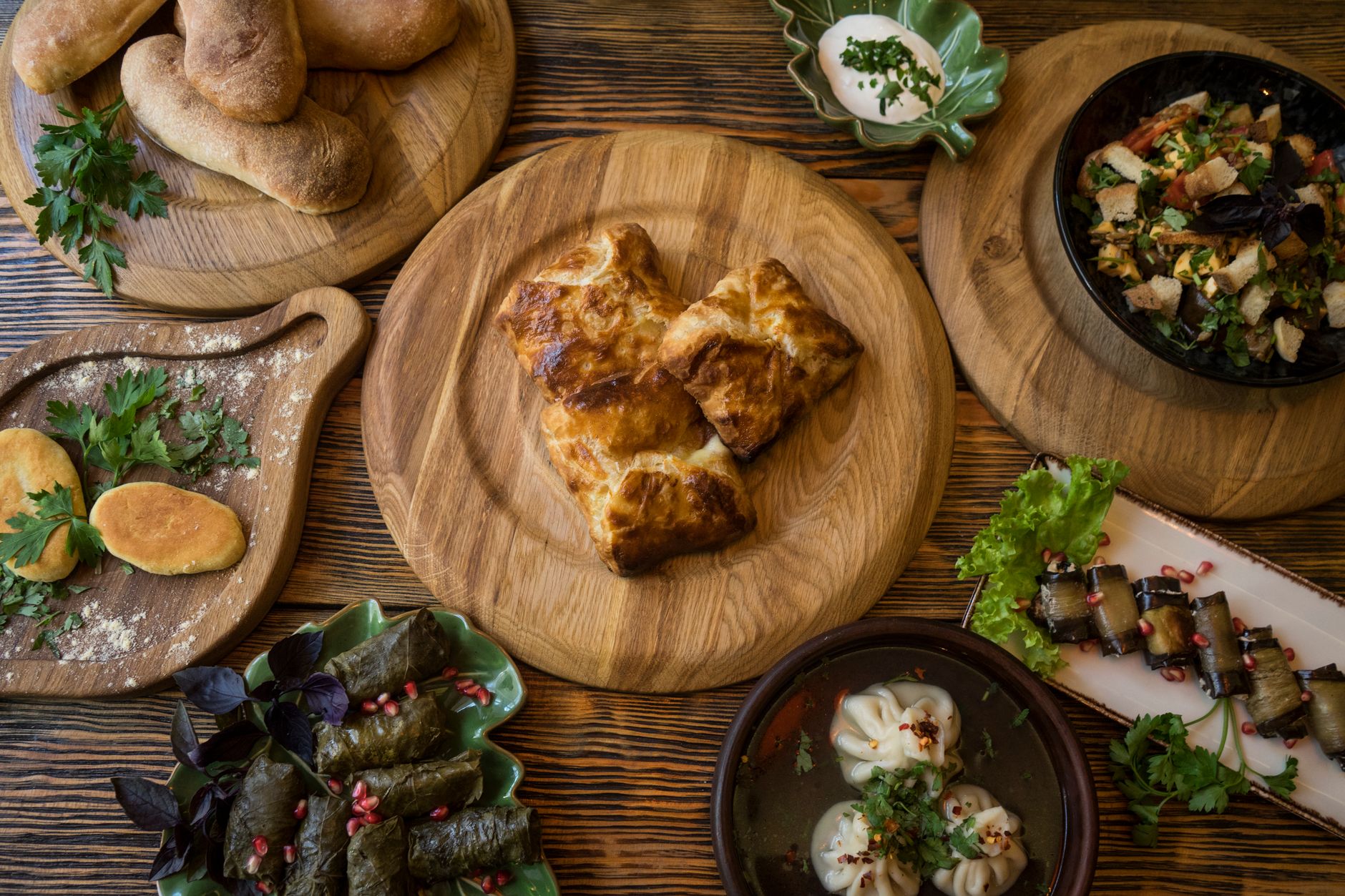
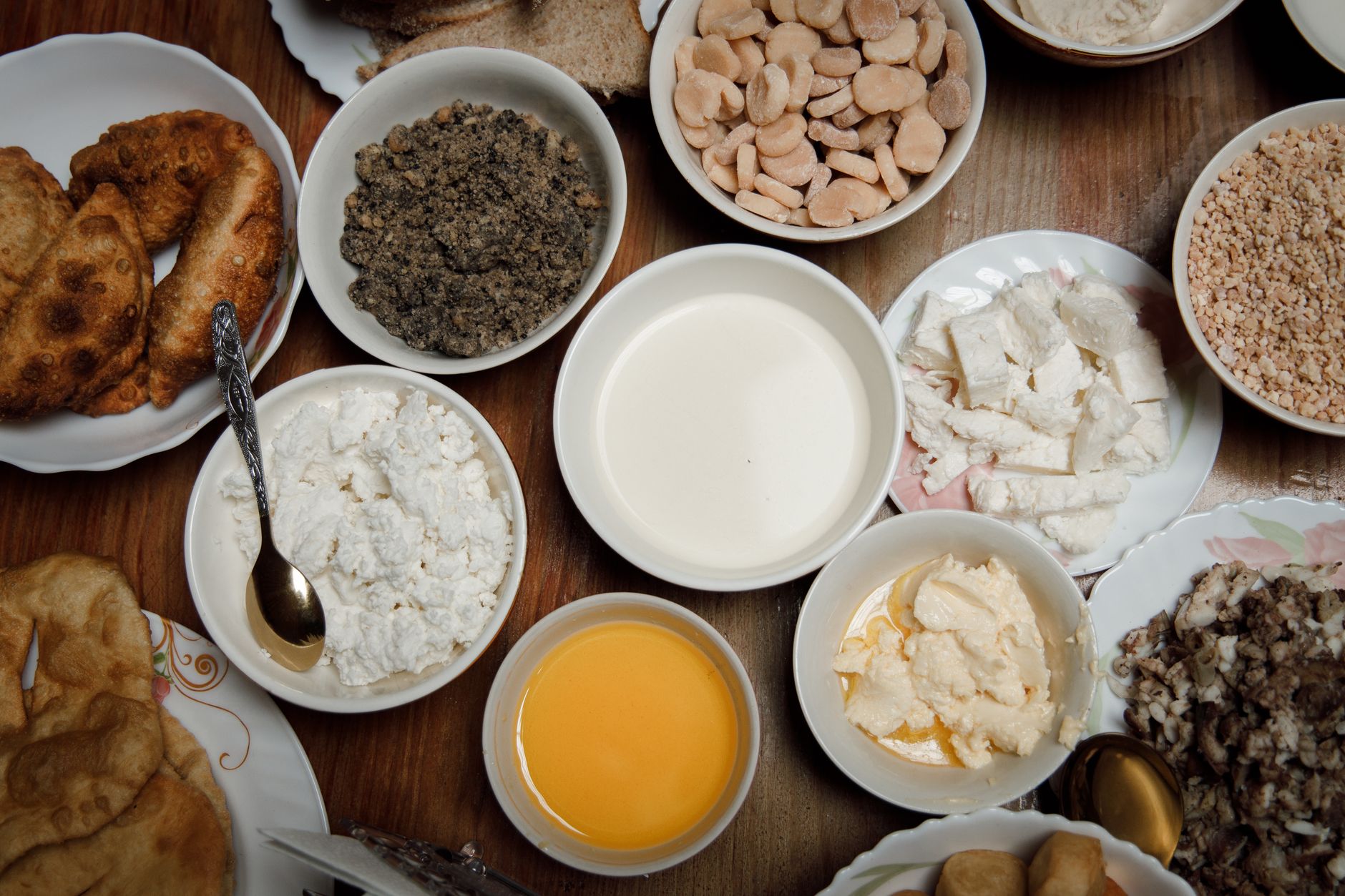
In Armenia, feeding you is not hospitality in the hotel sense. It is closer to an ethical reflex. A table in Yerevan begins with lavash, herbs, white cheese, radishes, cucumber, perhaps basturma sliced thin enough to scandalize a vegetarian, and before you understand the sequence you are already being urged to eat more, which is affectionate and slightly tyrannical, the best combination.

Lavash explains the country. Flour, water, salt, a tonir oven, women's hands moving with the speed of percussion, then a sheet of bread so thin it seems based on optimism rather than physics. It dries, it revives under a damp cloth, it wraps khorovats, it drapes over shoulders at weddings in Vagharshapat, it accompanies breakfast without demanding applause. Bread with a second life. A useful national metaphor.

Then come the dishes that mistrust appearances. Harissa looks plain to the point of insult: wheat and chicken or lamb cooked until they surrender all vanity. One spoonful changes the argument. The texture is patience itself, and patience is one of Armenia's chief ingredients.

Even fruit behaves ceremonially. Apricots, pomegranates, sour plums, pumpkin filled with rice and dried fruit, mulberry vodka in the south near Meghri, trout from Sevan, herbs folded into zhingalov hatz in the direction of Goris and Kapan. A country is a table set for strangers. Armenia simply refuses to let the stranger remain one for long.

Formality With a Knife and a Kiss

Armenian etiquette has an elegance that would terrify a lazy person. You do not arrive empty-handed if invited to a home. You greet the oldest person first. You accept coffee, fruit, bread, at least a symbolic amount of whatever is offered, because refusal can sound less like modesty than rejection, and nobody at the table has worked this hard to be rejected.

Toasts matter. Not because everyone performs them like diplomats, but because a glass is expected to carry meaning. Someone will raise one to parents, to the dead, to children abroad, to peace, to the person who cooked, to a friend who has not yet arrived but somehow is already present in the room. The meal acquires architecture.

Conversation does not proceed by timid turn-taking. It overlaps. It interrupts. It argues. In Yerevan cafés and in family dining rooms from Vanadzor to Alaverdi, contradiction often means interest, not hostility. Silence among strangers can feel awkward; silence among intimates can feel sacred. The distinction is exact.

And the bill. Watch it. In many restaurants in Yerevan, a 10 percent service charge appears with bureaucratic serenity. If service was good and you want the waiter, not the management philosophy, to benefit, a little cash on the table remains the clearest language.

Stone, Incense, and the Discipline of Survival

Armenia's Christianity does not behave like decoration placed on top of national life. It is mixed into the mortar. The country adopted Christianity as a state religion in 301, which sounds like a date from a catechism until you stand in Vagharshapat, near the cathedral of Echmiatsin, and grasp that this is not merely old faith; it is organized memory, liturgy used as a method of remaining oneself.

Armenian churches have a genius for austerity. Dark tuff stone outside, cool air inside, candles burning with a seriousness that excludes spectacle. The architecture directs the eye upward, yes, but first it disciplines the body: lower your voice, slow your steps, allow your pupils to adjust. Revelation takes a minute.

Geghard, cut into rock above the Azat gorge, feels less built than persuaded into existence. The acoustics do half the theology. A single chant rises and the stone returns it altered, older, as if the mountain had decided to sing back.

Religion here is also public grief with excellent memory. April 24 is not abstract mourning. In Yerevan, at Tsitsernakaberd, remembrance becomes movement: flowers carried by hand, silence measured by footsteps, names and absences arranged with more dignity than many nations manage for their living. Piety can take the form of persistence.

Volcanic Stone and Impossible Balance

Armenian architecture loves a difficult site. A monastery at the lip of a gorge, a church on a wind-struck plateau, a stairway climbing Yerevan as if the city were trying to negotiate directly with the sky. Builders here seem to have looked at cliffs and concluded: perfect, let us place a sanctuary there.

The material tells the story before the guide does. Tuff in shades of rose, ash, honey, black. Basalt with the temperament of final judgment. In Yerevan, the pink stone can make an entire avenue blush at sunset; in Gyumri, darker stone gives streets a grave composure that the occasional joke in wrought iron cannot quite undo.

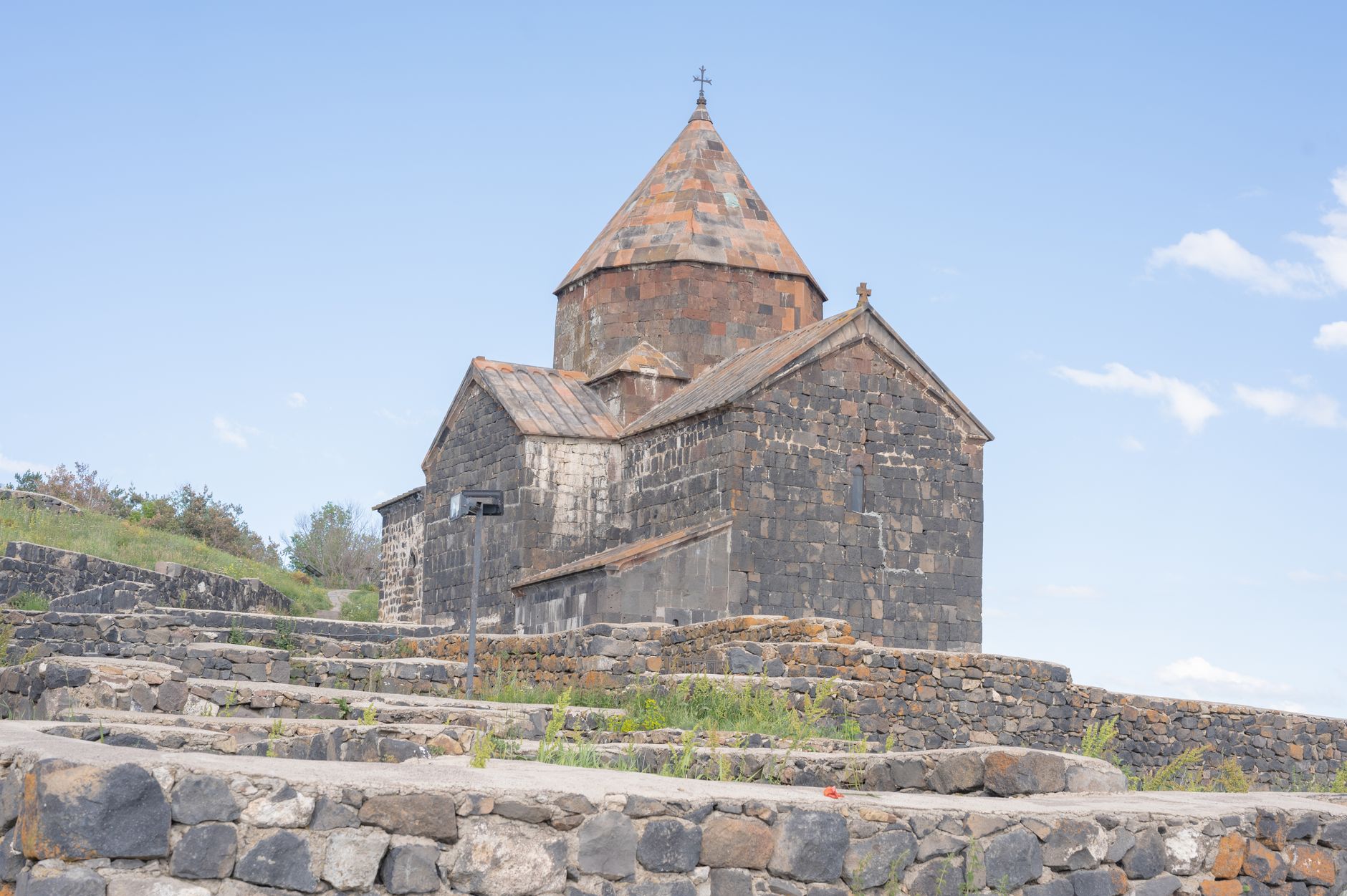
Armenian churches understand proportion with almost indecent precision. Drum, dome, conical roof, walls thick enough to keep summer outside and prayer inside. The forms are compact, then suddenly vertical, like a held breath becoming speech.

And then the landscape interferes, magnificently. Sevan Monastery above the lake. Tatev beyond the great southern void near Goris. Haghpat and Sanahin over the Debed canyon near Alaverdi. Buildings do not dominate Armenia; they negotiate with it. That is why they remain convincing.

A Reed Pipe Against the Mountains

The sound most likely to break your heart in Armenia is the duduk. Apricot wood, double reed, breath turned into something between lament and caress. The instrument does not insist. It enters the room the way memory does: softly, then everywhere.

A duduk melody in Yerevan can make a restaurant fall briefly quiet, which is not a small achievement. The timbre carries dust, incense, departure, return. You hear why exile became one of Armenia's most durable composers.

But Armenian music is not only sorrow behaving beautifully. At weddings and feast days the dhol arrives, hands clap, voices rise, and the room remembers that rhythm can be communal law. Dance lines form almost before anyone has announced them. Bodies understand first.

Sacred music adds another register entirely. In the churches of Vagharshapat, or in smaller sanctuaries where the stone seems to absorb centuries and release them only as resonance, a chant can sound less performed than uncovered. Some countries write music. Armenia excavates it.
What Makes Armenia Unmissable

church

Monasteries in the Mountains

Armenia’s greatest buildings do not sit politely in city centers. They cling to gorges, plateaus and ridge roads, from Geghard’s rock-cut sanctuaries to the church horizons around Vagharshapat and the monastic country near Alaverdi.

menu_book

The First Christian State

Armenia adopted Christianity as a state religion in 301 CE, and that fact still shapes the country’s architecture, rituals and political memory. You feel it in carved khachkars, lit candles and the seriousness with which sacred places are still used.

landscape

Highland Drama

Half the country sits above 2,000 meters, which means big skies, volcanic massifs and roads that keep turning theatrical. Sevan, Dilijan and the south toward Goris show how quickly Armenia can shift from blue water to forests to canyon country.

restaurant

Bread, Fire, Herbs

Armenian food is built on texture and smoke: khorovats off the grill, lavash from the tonir, dolma with cold matzoon, basturma at breakfast, herb-packed flatbreads in the south and east. The table is not background here; it is part of the country’s social code.

history_edu

Civilizations in Layers

Urartian foundations, medieval monasteries, Persian traces, Soviet avenues and genocide memorials sit close enough to visit in a single trip. Yerevan and Gyumri are especially good at showing how Armenia keeps old ruptures visible instead of hiding them behind a polished national story.

Cities

Cities in Armenia

Yerevan

"A pink-tuff city that rewrote itself after Soviet collapse and now runs on espresso, cognac, and a collective grief that doubles as civic pride."

203 guides

Gyumri

"Armenia's second city wears its 1988 earthquake scars openly, yet its 19th-century merchant quarter and black-tufa facades make it the country's most architecturally honest place."

Dilijan

"Forested, rain-damp, and full of restored caravanserais turned craft studios — the Armenians call it 'Little Switzerland,' which undersells how specifically Armenian it actually feels."

Vanadzor

"Industrial and unpolished, this Debed valley gateway rewards the traveler who arrives before the tour buses do, with a canyon full of medieval monasteries within an hour's drive in any direction."

Goris

"Carved into a plateau above cave-riddled ravines in the far south, Goris is the last real town before the Tatev gorge drops away and the landscape turns operatic."

Alaverdi

"A copper-smelter town strung along a narrow canyon where Soviet-era cable cars still cross the gorge and the Haghpat and Sanahin monasteries loom on the plateau above like a two-part argument about eternity."

Sevan

"Sitting at 1,900 metres on the shore of the largest high-altitude lake in the Caucasus, the town exists mainly to feed you grilled ishkhan trout and let you watch the light go strange on the water at dusk."

Vagharshapat

"Known to the world as Etchmiadzin, this small city four kilometres from Yerevan holds the seat of the Armenian Apostolic Church and a cathedral whose foundations date to 301 CE — the oldest state church on earth."

Meghri

"Pressed against the Iranian border in a subtropical microclimate where pomegranates and figs grow at the roadside, Meghri feels less like Armenia than like a rumour of Persia that never quite left."

Stepanavan

"A quiet Soviet-planned town in Lori province that most visitors drive through without stopping, missing the fact that Pushkin visited, that the surrounding forests are the densest in the country, and that the nearby Lori"

Kapan

"The de facto capital of Syunik, hemmed in by mountains and copper-mine infrastructure, with a river running through its centre and a frontier energy that comes from being the last significant Armenian city before roads b"

Abovyan

"A planned Soviet satellite town north of Yerevan that nobody puts on an itinerary, yet its proximity to Geghard Monastery, the Azat River basalt columns, and the Garni temple makes it the most practical base for the coun"

Regions

Yerevan

Central Armenia

Yerevan is the country's working center, not just its capital: pink tuff apartment blocks, Soviet geometry, new wine bars, and the long emotional shadow of Mount Ararat. This region also holds Vagharshapat and Abovyan, so one compact area gives you Armenia's main transport hub, the seat of the Armenian Apostolic Church, and the easiest launch point for day trips east and south.

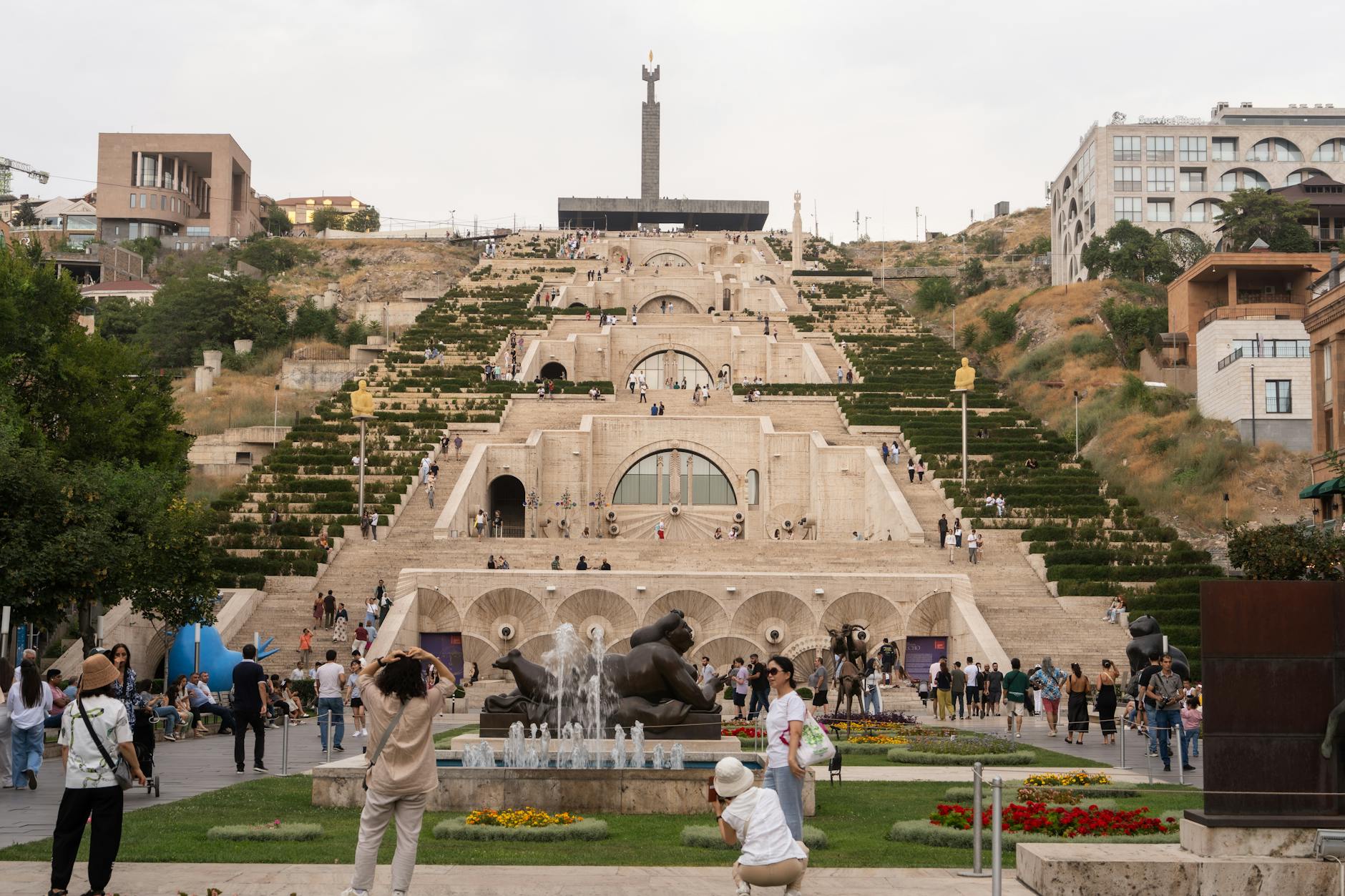
placeYerevan Cascade placeRepublic Square, Yerevan placeEtchmiadzin Cathedral, Vagharshapat placeZvartnots Cathedral ruins placeGarni and Geghard day trip via Abovyan corridor

Gyumri

Shirak Plain

Gyumri wears its history in dark stone and dry humor. The region feels flatter, windier, and less polished than Yerevan, with 19th-century merchant houses, earthquake memory, and some of the sharpest street life in the country.

placeKumayri Historic District, Gyumri placeSev Berd placeGyumri markets and black-tuff streets placeMarmashen Monastery placeShirak Airport approach road into Gyumri

Alaverdi

Lori and the Debed Canyon

Northern Armenia narrows into canyons, old industrial towns, and some of the country's strongest monastery landscapes. Alaverdi is not pretty in a brochure sense, which is exactly why it works: it puts you beside Haghpat, Sanahin, Vanadzor, and Stepanavan without softening the region's rough edges.

placeHaghpat Monastery placeSanahin Monastery placeDebed Canyon viewpoints placeVanadzor center placeStepanavan Dendropark

Dilijan

Tavush and the Lake Country

Dilijan sits in the green exception to Armenia's usual palette of ochre rock and open steppe. Pair it with Sevan and you get forests, monasteries, summer villas, trout lunches, and a version of Armenia that feels cooler, softer, and better suited to long walks than hard driving.

placeDilijan Old Town placeHaghartsin Monastery placeParz Lake placeSevanavank placeLake Sevan shoreline

Goris

Syunik Highlands

Southern Armenia becomes more vertical and more remote as soon as you enter Syunik. Goris has the sandstone houses and cave-dotted ridges, while Kapan adds the working-town reality of the region; together they frame the long drive toward Tatev country and the far south.

placeOld Goris cave dwellings placeTatev Monastery placeWings of Tatev ropeway placeKapan town center placeVorotan Gorge viewpoints

Meghri

Far South Borderlands

Meghri feels almost separate from the rest of Armenia, warmer and more orchard-heavy, with Iran just beyond the frontier logic of the place. Apricots and pomegranates grow here in a climate that surprises travelers who have spent a week thinking Armenia is all highland chill and stone monasteries.

placeMeghri old quarter placeSt. Astvatsatsin Church, Meghri placeAras valley viewpoints placeBorderland orchards placeRoad south from Kapan to Meghri

Suggested Itineraries

3 days

3 Days: Yerevan, Vagharshapat and the Central Plain

This is the short first trip that actually works. Base yourself in Yerevan, make time for Vagharshapat for the religious core of the country, and use Abovyan as a practical springboard into the Kotayk plateau rather than pretending three days can cover all of Armenia.

YerevanVagharshapatAbovyan

Best for: first-timers, short breaks, church history, easy logistics

7 days

7 Days: Gyumri to the Debed Canyon

Northern Armenia has a tougher, more layered mood than the capital: black tuff facades in Gyumri, forested bends around Stepanavan, and monastery country above the Debed. This route keeps the distances sane while giving you Armenia's strongest mix of architecture, mountain roads, and post-Soviet texture.

GyumriStepanavanVanadzorAlaverdi

Best for: second-time visitors, architecture, road trips, cooler summer weather

10 days

10 Days: Sevan Basin and the Tavush Forests

This eastern loop trades city-hopping for lake light, wooded hills, and slower days. Start around Abovyan for the easy exit from the capital region, linger by Sevan, then move into Dilijan where Armenia briefly feels green and damp rather than volcanic and bare.

AbovyanSevanDilijan

Best for: couples, summer escapes, soft hiking, food-and-nature travelers

14 days

14 Days: Deep South to Syunik and Meghri

The south is where Armenia stretches out and turns dramatic: long canyon roads, monastery detours, and borderland towns that feel far from Yerevan in every sense. Goris gives you the sandstone theatrics, Kapan anchors Syunik's mining-and-mountain reality, and Meghri near the Iranian border brings pomegranates, heat, and a completely different pace.

GorisKapanMeghri

Best for: slow travelers, photographers, serious road trips, travelers who want the Armenia most visitors skip

Notable Figures

Argishti I

c. 786-764 BCE · King of Urartu
Founded Erebuni on the site of modern Yerevan

Argishti I is the ruler who gave Yerevan its written beginning. His inscription at Erebuni is not just archaeology; it is a king's voice saying, with perfect royal self-belief, that this hill, these walls, this storehouse of grain and wine, were meant to outlast him.

Tigranes II the Great

140-55 BCE · King
Expanded the Kingdom of Armenia into a regional empire

Tigranes made Armenia briefly behave like the center of the world rather than its crossroads. He married well, conquered boldly, and built too much too fast, which is often how memorable monarchs distinguish themselves from merely prudent ones.

Gregory the Illuminator

c. 257-c. 331 · Saint and church founder
Led the conversion of Armenia to Christianity

Gregory's legend has everything a court historian could want: persecution, prison, royal madness, and a reversal so complete that a kingdom changed its faith. What matters most is the outcome: he helped bind Armenian identity to a church that would carry memory when states failed.

Mesrop Mashtots

c. 362-440 · Monk, scholar, creator of the Armenian alphabet
Created the script that still defines Armenian written culture

Mashtots did not give Armenia a mere technical tool. He gave it a script capable of holding scripture, law, poetry, and self-respect in Armenian words, which is why schoolchildren still learn his letters with something close to reverence.

Vardan Mamikonian

387-451 · Military leader and nobleman
Led Armenian forces at the Battle of Avarayr

Vardan is remembered less for victory than for refusal. At Avarayr he became the face of a principle Armenians still cherish: some defeats alter history more than easy triumphs, because they define what a people will not surrender.

Gagik I

c. 940-1020 · Bagratid king
Ruled during Ani's medieval flowering

Under Gagik I, Ani was not a ruin in the wind but a living capital of courts, churches, craftsmen, and merchants. He belongs to that rare category of ruler whose reign survives not only in chronicles but in the silhouette of a city.

Sayat-Nova

1712-1795 · Poet and troubadour
Armenian cultural icon of the Caucasus

Sayat-Nova sang across courts and languages, which tells you much about Armenian life in the 18th century: cultivated, mobile, and never enclosed within one frontier. His songs carry tenderness and wit, but also the fragility of a world where culture could flourish under borrowed roofs.

Komitas

1869-1935 · Priest, composer, ethnomusicologist
Collected and preserved Armenian sacred and folk music

Komitas listened where others might have hurried past. He collected village melodies, liturgical modes, and the sound of a people speaking through song; after surviving arrest in 1915, he became one of the most painful symbols of what genocide damages beyond bodies.

Aram Khachaturian

1903-1978 · Composer
Became the best-known Armenian composer of the Soviet era

Khachaturian turned Armenian musical color into something the wider world could hear at concert scale. Behind the familiar swagger of works like the Sabre Dance lies a deeper story: a Soviet Armenian artist translating national rhythm into public grandeur.

Charles Aznavour

1924-2018 · Singer, songwriter, diplomat
Diaspora Armenian who became a global voice for Armenian memory

Aznavour was born in Paris, but Armenia was never an ornament in his biography. He used celebrity for remembrance, aid, and advocacy, proving that Armenian history is not confined to the republic's borders; the diaspora is one of the country's great extensions.

Top Monuments in Armenia

Practical Information

passport

Visa

Armenia runs its own entry rules, separate from Schengen. US, EU, UK, Canadian, and Australian passport holders can generally enter visa-free for up to 180 days within one year, but check the Armenian MFA visa tool before booking because the live country list is what matters at the border.

payments

Currency

Armenia uses the Armenian dram, written AMD or ֏. In April 2026, 1 USD was roughly 373 AMD and 1 EUR about 440 AMD; prices are usually tax-included, and a practical restaurant tip is 5 to 10 percent if a service charge has not already been added.

flight

Getting There

Most travelers arrive through Zvartnots International Airport near Yerevan, the main gateway by a distance. Shirak Airport near Gyumri is the useful secondary option, while overland arrivals usually come from Georgia; the borders with Turkey and Azerbaijan remain closed.

directions_bus

Getting Around

Armenia works best as a road-trip country with marshrutkas, intercity buses, taxis, and hired drivers doing most of the work. Trains connect a few useful corridors such as Yerevan to Gyumri and seasonal services toward Sevan, while the resumed Yerevan-Kapan flight is the one domestic air route that can save serious time.

wb_sunny

Climate

Expect a highland continental climate: dry heat in Yerevan from June to August, cold snowy winters in the mountains, and big temperature swings by altitude. September and October are the sweet spot for most trips, with clear skies, harvest season, and easier walking weather from Dilijan to Goris.

wifi

Connectivity

Wi-Fi is common in Yerevan cafes, hotels, and restaurants, and solid enough for routine work in larger towns such as Gyumri and Dilijan. GG and Yandex Go are the ride apps people actually use, Yandex Maps is often better for transit detail, and a local SIM or eSIM makes a real difference once you head south toward Kapan or Meghri.

health_and_safety

Safety

Armenia is generally manageable for independent travelers, with the usual urban cautions around traffic, cash, and late-night taxis. The bigger issue is geography, not petty crime: mountain roads can be slow, weather can turn fast, and you should stay well away from closed border zones and check current government advisories before any trip near the Azerbaijan frontier.

Taste the Country

restaurantKhorovats

Skewers arrive. Lavash wraps meat. Families tear, dip, argue, pour vodka, continue.

restaurantLavash at the tonir

Women slap dough onto clay walls. Bread blisters, dries, stacks, returns at every meal.

restaurantHarissa

Wheat cooks with chicken for hours. Butter melts in the center. Feast days, memorial days, church tables.

restaurantDolma with matzoon

Grape leaves hold lamb, rice, herbs. Yogurt lands cold on heat. Lunch becomes ceremony.

restaurantManti

Tiny boats bake, then drown in yogurt and paprika butter. Spoons crack the crust. Conversation stops, then resumes louder.

restaurantFish from Sevan

Trout or whitefish grills near Sevan. Lemon, herbs, bread, beer. Afternoons lengthen.

restaurantGhapama

Pumpkin opens. Rice, dried fruit, honey, steam. New Year tables sing before eating.

Tips for Visitors

euro
Carry Small Cash

Cards work well in Yerevan, but not every guesthouse, roadside stand, or village cafe will take them. Keep small AMD notes for marshrutkas, market buys, candles in churches, and bathrooms at bus stations.

restaurant
Check Service Charge

Many Yerevan restaurants add a 10 percent service charge to the bill. If service was good and you want the waiter to actually feel it, leave a little cash as well rather than assuming the charge reaches staff.

train
Book Rail Smart

The Yerevan-Tbilisi night train is useful, but it is seasonal and schedules shift between the cooler months and summer services toward Batumi. Check South Caucasus Railway before building an itinerary around it, especially if you are trying to connect Gyumri with Georgia.

directions_car
Road Time Expands

A 150-kilometer drive in Armenia can take much longer than the map suggests. Mountain roads, trucks, weather, and photo stops slow everything down, especially on the run from Goris to Kapan or farther south to Meghri.

church
Church Etiquette

Dress modestly in active churches and keep your voice low, even when the building feels half museum, half shrine. Lighting a candle is common, photography rules vary, and the polite move is to watch what locals do before stepping into the nave.

hotel
Reserve Weekends

Summer weekends fill first around Sevan and Dilijan, not just in Yerevan. If you want a lakeside room or a well-run guesthouse, book early for Friday and Saturday nights and do not assume you can improvise in August.

wifi
Download Offline Maps

Signal is fine in the main cities, then patchier once you get into mountain roads and canyon country. Save offline maps before heading toward Alaverdi, Tatev, or Meghri, and keep your hotel pin in both Google Maps and Yandex Maps.

Explore Armenia with a personal guide in your pocket

Your Personal Curator, in Your Pocket.

Audio guides for 1,100+ cities across 96 countries. History, stories, and local insight — offline ready.

smartphone

Audiala App

Available on iOS & Android

download Download Now

Join 50k+ Curators

Frequently Asked

Do I need a visa for Armenia with a US or EU passport? add

Usually no. US and EU passport holders can generally enter Armenia visa-free for up to 180 days within one year, but you should still check the Armenian MFA visa tool before departure because entry rules are set by nationality, not by assumption.

Is Armenia expensive for tourists in 2026? add

No, by European standards it is still fairly affordable. A budget traveler can get by on roughly 20,000 to 30,000 AMD a day, while a comfortable mid-range trip with hotel, restaurant meals, and taxis often lands around 40,000 to 70,000 AMD.

Can you use euros in Armenia or do you need dram? add

You need Armenian dram for everyday travel. Hotels and a few tour operators may quote prices in euros or dollars, but buses, taxis, casual restaurants, and market stalls expect AMD.

What is the best way to get around Armenia without a car? add

Marshrutkas, intercity buses, and taxis are the backbone of independent travel. Trains exist on a few routes, but they are limited, so most travelers stitch together Yerevan, Gyumri, Dilijan, Sevan, and Goris by road.

Is Armenia safe to visit right now? add

For most travelers, yes, with the same common-sense precautions you would use anywhere. The serious planning issue is not street crime but geography and geopolitics: roads can be slow, mountain weather changes fast, and border areas near Azerbaijan require extra care and up-to-date official advice.

When is the best month to visit Armenia? add

September is the easiest all-round answer. You get clear weather, harvest season, better temperatures in Yerevan, and more comfortable conditions for moving between places like Dilijan, Sevan, Vagharshapat, and Goris.

Can you take the train from Tbilisi to Yerevan? add

Yes, but check the season before you commit. The overnight Yerevan-Tbilisi service usually runs in the cooler months, while summer timetables often pivot to the Yerevan-Batumi train, which still serves Tbilisi en route.

How many days do you need in Armenia? add

Seven days is the practical minimum for a first trip that is not all windshield and no substance. That gives you enough time for Yerevan plus one or two strong regional contrasts such as Gyumri and Lori, or Sevan and Dilijan.

Sources

Last reviewed: