location_city
Atlantic Cities
Luanda, Benguela, and Lobito show three versions of Angola's coast: power, faded rail wealth, and working port life. Come for grilled fish, colonial street grids, and the cold Atlantic light that sharpens everything.
Angola is one of the few countries where a week can take you from a UNESCO royal capital to Atlantic fish markets, highland escarpments, and desert older than most empires.
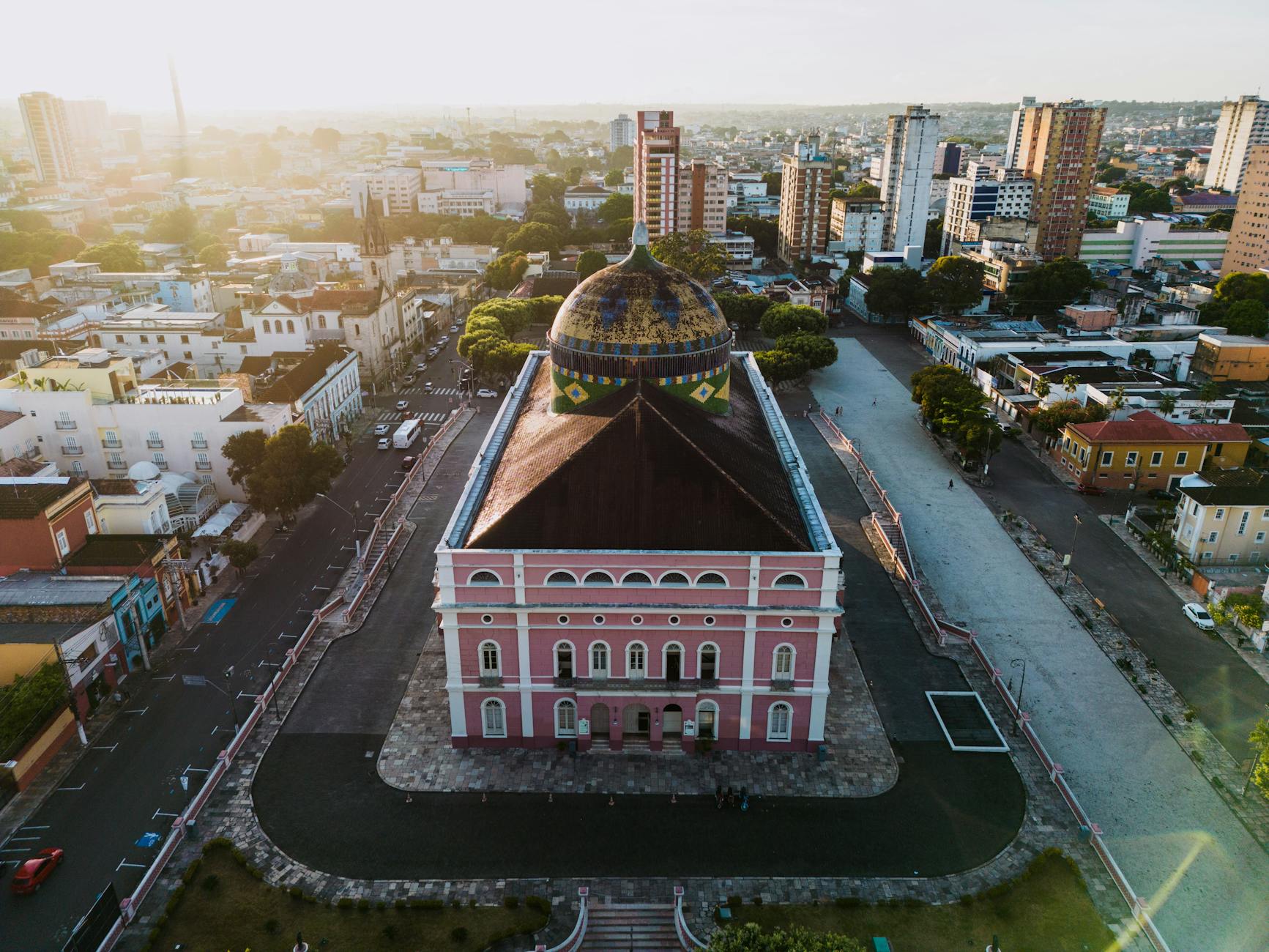 Angola
EntryVisa-free tourist entry for many nationalities; Angola is not Schengen.
AAn Angola travel guide starts with a surprise: this country gives you Atlantic cities, royal capitals, desert cliffs, and one of Africa's biggest waterfalls in a single trip.
Most travelers land in Luanda expecting an oil capital and leave talking about the light: pale Atlantic glare on the Marginal, grilled fish on Ilha do Cabo, and a skyline where Portuguese facades, concrete towers, and postwar ambition stand shoulder to shoulder. Then the country opens fast. Benguela and Lobito bring old rail history and salt air. Malanje pulls you inland toward Kalandula Falls, where water drops roughly 105 meters in a horseshoe of spray that feels bigger than the photos. Angola does not flatten into one mood. That is the point.
History here is not a museum label. It is a route. In Mbanza Kongo, the old capital of the Kingdom of Kongo, royal memory and Christian conversion still sit in the same ground, which is why the city matters far beyond Angola's borders. Huambo and Kuito carry the quieter weight of the 20th century, when rail lines, war, and reconstruction changed how people moved and where they stayed. In Luanda, you hear that history in Portuguese shaped by Kimbundu and Umbundu, and you taste it in funge, calulu, mufete, and cold beer after a long lunch.
Kingdoms Before the Atlantic, c. 1390-1482
Morning mist hangs over the hills of Mbanza Kongo, and the red earth clings to sandals long before one reaches the old royal ground. That matters, because Angola does not begin with a European sail on the horizon. It begins with courts, titles, tribute, and rivalries that were already old when Portuguese captains began taking notes.
According to Kongo tradition, the kingdom took shape under Lukeni lua Nimi, a founder half historical, half dynastic memory, the sort of man who becomes larger each time a court retells his victories. By the fifteenth century, Kongo was no village confederation. It was a structured monarchy with a capital, provincial authority, and enough political weight to command routes stretching deep into the interior.
To the south, Ndongo was forming its own language of power, and one title would echo for centuries: ngola. Ce que l'on ignore souvent, c'est que this title did more than name a ruler; it gave the country its future name. Angola is, in a sense, the fossil of an office.
That older political world still flickers through modern geography. Luanda would come later, Benguela later still, but the first great theater of power stood inland, where kings judged disputes and dynasties measured prestige in lineage, land, and allegiance. Then the Atlantic arrived, and with it came priests, muskets, letters, and bargains no one would fully control.
Lukeni lua Nimi stands at the edge of history like many founders do: partly documented, partly remembered, entirely indispensable to a kingdom's self-image.
The country's very name comes from the royal title ngola, a reminder that a political office outlived the court that coined it.
Kings, Crosses and Captives, 1482-1665
In 1482, Diogo Cão reached the mouth of the Congo River and entered a world that was not waiting to be discovered, only to be negotiated with. A few years later, Kongo's rulers were corresponding with Lisbon, receiving missionaries, and testing whether Christianity could be turned into a tool of monarchy rather than submission. At court, baptismal names and sacred objects arrived beside trade goods and diplomatic promises.
No one embodies that wager more painfully than Mvemba a Nzinga, better known as Afonso I. He wrote as a Christian king, argued as a sovereign, and pleaded like a man watching the floorboards give way beneath his own palace. In letters from the 1520s, he complained that Portuguese traders and their African partners were seizing free subjects and nobles for the slave trade, turning alliance into predation.
Ce que l'on ignore souvent, c'est que the tragedy was not born from misunderstanding but from terrible clarity. Both sides knew perfectly well what was at stake. Kongo wanted prestige, literacy, and controlled exchange; Portugal wanted labor, access, and advantage. The same ships that carried priests also carried chains.
South of Kongo, Ndongo learned the lesson quickly. War hardened around the Kwanza basin, and Portuguese ambitions shifted from diplomacy to territorial grip, especially once Luanda was founded in 1575 as a fortified port for commerce and conquest. The human current flowing out of the region fed Brazil, remade Atlantic wealth, and left scars that still sit beneath family names, church records, and the silences of archives.
The great break came in 1665 at the Battle of Mbwila, when King António I of Kongo was killed fighting the Portuguese. A kingdom survived, but its center of gravity cracked. After that, crowns still glittered, yet the old confidence was gone.
Afonso I was no passive convert; he was a ruler trying to use the written word, the altar, and the throne to save his kingdom from the very ally he had invited in.
Afonso I's surviving letters are among the most intimate political documents in central African history: a king effectively telling his European counterpart that the alliance had become a kidnapping machine.
Ports, Plantations and Slow Conquest, 1665-1961
Stand on the waterfront in Luanda or in Benguela and it is easy to see the imperial facade first: churches, administrative buildings, sea light on white walls, the geometry of a colony pretending to permanence. But the Portuguese grip on Angola was uneven for centuries. Coastal enclaves could be governed; vast interiors had to be bargained with, raided, or fought over, again and again.
One woman refused to play the role assigned to her. Nzinga Mbande, later Queen Njinga, negotiated in Luanda, converted when it suited her, broke with the Portuguese when she had to, and moved between diplomacy and war with unnerving fluency. Legend loves the scene in which, denied a chair during negotiations, she ordered a servant to kneel so she could sit at equal height with the governor. Whether embroidered or exact, the image survives because it captures her perfectly.
After the slave trade formally waned, exploitation did not become gentler; it simply changed costume. The nineteenth and early twentieth centuries brought military campaigns, forced labor, plantations, rubber, and an imperial bureaucracy determined to turn paper claims into real occupation. Inland routes toward Malanje, Huambo and Lubango became the corridors through which Portugal tried to bind territory, extract work, and fix borders that had once remained fluid.
The railways made that ambition visible. The Benguela Railway, reaching from Lobito toward the mineral heart of central Africa, was not built for romance. It was built for freight, control, and imperial arithmetic. And yet stations created towns, towns created habits, and colonial infrastructure left behind the skeleton of modern Angola even as it deepened inequality.
By the mid-twentieth century, the colony was presenting itself as eternal. It was anything but. Under the polished rhetoric of empire sat censorship, racial hierarchy, and a labor regime many Angolans experienced as organized theft. The revolt, when it came, would not begin in abstraction. It would begin with names, arrests, gunfire, and poems.
Nzinga turned statecraft into theater and survival into art, a ruler who understood that dignity itself could be a weapon.
The famous chair episode from Luanda endures because even when historians debate the staging, nobody doubts the political intelligence behind it.
Poets, Guerrillas and a Country Torn in Three, 1961-2002
In 1961, the colonial order began to split open. Uprisings and reprisals shook northern Angola, prisons filled, plantations burned, and Lisbon answered with force. What had long been called a province was now impossible to mistake for anything but a war zone.
This is the era when Angola produces one of history's most elegant paradoxes: a liberation movement led by a poet. Agostinho Neto wrote of dignity and pain, then became the first president when independence was declared on 11 November 1975 in Luanda. But no anthem could still the rival movements circling the capital. The MPLA, FNLA, and UNITA were not simply political parties; they were armed futures, each backed by foreign patrons in the cold fury of the Cold War.
Ce que l'on ignore souvent, c'est how quickly liberation curdled into siege. Luanda celebrated independence while South African forces, Zairian backing, Cuban troops, Soviet aid, and American calculations pushed Angola into an internationalized civil war almost at once. The country became a map on which outsiders drew their own obsessions.
The fighting chewed through the interior for decades. Huambo changed hands and suffered terribly. Kuito became a symbol of endurance and ruin. Cabinda remained strategic because oil kept speaking even when diplomacy failed. Families were broken by conscription, displacement, hunger, and the simple arithmetic of mines left in fields and beside roads.
Neto died in 1979. Jonas Savimbi outlived ceasefires. José Eduardo dos Santos ruled through long attrition and oil money. Only in 2002, after Savimbi was killed, did the war truly end. Peace arrived without grandeur. It arrived like exhaustion.
Agostinho Neto carried the strange burden of being both the man of verses and the man of state violence, a liberator who inherited a country already slipping into war.
At independence, Angola was so entangled in global rivalry that Cuban troops were already fighting on its soil before the new nation had time to catch its breath.
Reconstruction, Oil and the Work of Remembering, 2002-present
The first postwar image is rarely monumental. It is often a road reopened, a market reassembled, a family discovering who is still alive. After 2002, Angola rebuilt with startling speed in places: towers rose in Luanda, roads were laid, airports expanded, and money from offshore oil gave the state the means to build at a scale the war years had made unthinkable.
But reconstruction has its own court etiquette, and it can be just as merciless as dynastic politics. Wealth concentrated fast. Luanda became one of the world's most expensive cities while many neighborhoods still lacked dependable basics. In the glitter of new construction, old questions remained stubborn: who benefited, who waited, and who paid for development through silence.
Memory returned in another form too. In 2017, Mbanza Kongo was inscribed on the UNESCO World Heritage List, a moment of recognition that mattered far beyond heritage policy. The old Kongo capital was no longer just a place of archaeology or regional pride. It became an international acknowledgment that Angola's history does not begin with colonial masonry on the coast.
Travel through Lubango, Benguela, Malanje or Namibe now and you feel a country rearranging its own narrative. The war is not everywhere visible, yet it remains in the spacing of towns, in the caution of older people, in the empty stretches where nothing was built for years. Angola today is not a neat success story. Better than that, and harder: it is a place still deciding what to do with survival.
And that brings the story full circle. The kingdoms, the ports, the railways, the battlefields, the oil towers, the heritage sites: each era tried to define Angola from above. The country keeps answering from below, in memory, music, and endurance.
The emblematic figure of this era may be no ruler at all, but the Angolan returnee and survivor who rebuilt a household before the state rebuilt a monument.
Mbanza Kongo's UNESCO inscription in 2017 quietly reversed an old coastal bias by placing an inland African capital, not a colonial port, at the center of Angola's international historical image.
Portuguese runs through Angola like a pressed jacket worn over an older skin. In Luanda you hear the sentence arrive in one empire and land in another: Portuguese vocabulary, Kimbundu pressure, street music in the vowels, respect tucked into the choice between "Senhor" and a first name that must wait its turn.
Greetings do not decorate the day. They authorize it. A rushed question without a greeting sounds like a door struck with the foot, and Angola dislikes bad entrances. In Uíge, in Huambo, in Benguela, the exchange of health, family, sleep, and elders can last longer than the practical business that follows. Good. A country is a table set for strangers.
Then comes the delicious part: the local words that refuse exile. "Cota" does not mean merely an older person; it means age promoted to rank. "Bué" is quantity with swagger. "Musseque" in Luanda is not a neat urban-planning term at all, but a social weather system, a history, a literature, a way the city remembers itself when concrete pretends to be forgetful.
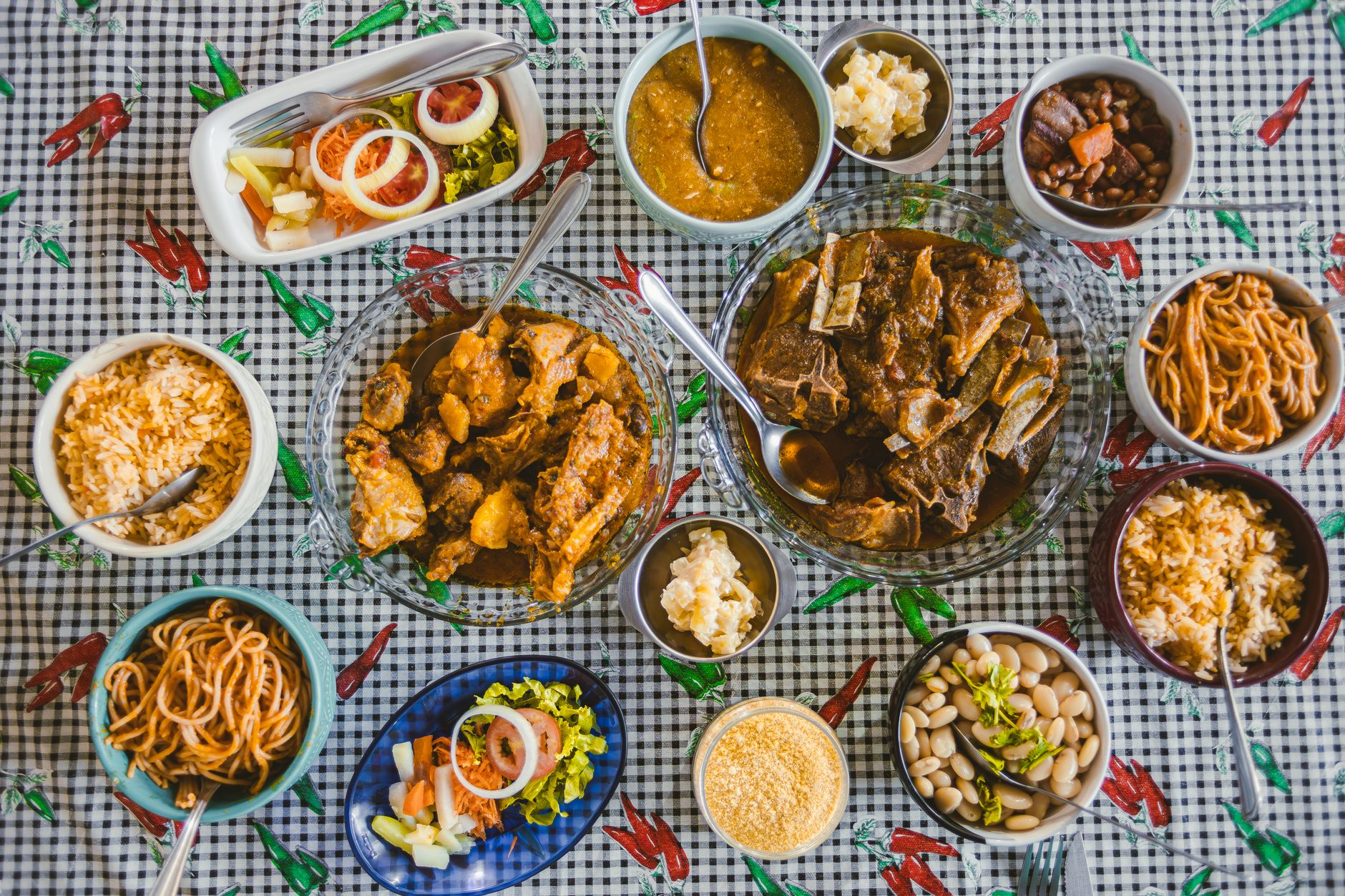
Angolan food begins with texture, not display. Funge arrives pale, elastic, almost severe, and then proves itself to be one of the great instruments of civilization: a starch that receives sauce the way silk receives perfume. You pinch, turn, scoop, and suddenly eating has become syntax.
The coast writes one sentence, the interior another. In Luanda and Lobito, grilled fish comes with onions, beans, sweet potato, cassava, plantain, and the stern little fire of gindungo. In Malanje and farther inland, cassava leaves, peanuts, dried fish, and long-cooked stews speak with older Central African authority. Palm oil stains the plate orange and the fingers honest.
Portugal is present, of course, but not as master. More as a relative who married into a formidable family. Bacalhau appears, bread appears, cabidela appears, and each one is told, calmly, that this is Angola now. Lunch still carries prestige here. It asks for time, for company, for a second beer, for a story that improves in the telling.
If you want to understand Angola, listen before you ask questions. Semba does not simply entertain; it organizes memory. A rhythm can preserve what politics mangles, and in Luanda that fact is not theoretical. It is audible in backyard parties, wedding bands, taxi radios, and the elegant insolence of people who know exactly when to clap.
Kizomba took the export route, but its pulse remains intimate, almost conspiratorial. The dance says what formal speech prefers to postpone. Two bodies negotiate distance, timing, permission, heat. Etiquette with bass.
Music in Angola also performs social cartography. The musseques gave the nation some of its deepest sounds, and those neighborhoods still haunt the polished surfaces of modern Luanda. A city may erect towers of glass and imported ambition; one guitar phrase from the wrong decade and the whole place remembers who taught it to move.
Angola likes form, and form is not the enemy of warmth. It is the proof of it. You greet properly, you acknowledge elders, you use titles before intimacy grants you the right to drop them, and you do not confuse speed with sincerity. The first minutes matter more than many visitors expect.
Clothes participate in the conversation. Luanda in particular has a serious relationship with appearance: church fabrics, sharp shirts, pressed trousers, perfume that arrives half a second before the wearer. People dress as if visibility were a civic duty. They may be right.
This does not mean stiffness. It means sequence. Respect first, ease after. Sit too casually, speak too soon, or joke before the room has adopted you, and you become memorable for the wrong reason. But once the threshold is crossed, generosity comes quickly and with force. Plates refill. Advice multiplies. Somebody's aunt decides your fate.
Religion in Angola is public without always being solemn. Catholicism left cathedrals, feast days, processions, names, saints, and an architecture of habit. Protestant churches left their own disciplines of song, scripture, and moral theater. Independent churches multiplied with urban growth, war displacement, and the old human need for a God who answers in your own cadence.
On Sunday, Luanda changes posture. White shirts emerge. Shoes are polished. Choirs rise behind concrete walls and corrugated roofs, and for a few hours the city sounds less like commerce than petition. In Mbanza Kongo, where royal memory and Christian history have been knotted together for centuries, faith carries an older political charge. A baptism can echo like an annexation. A hymn can sound like survival.
Angola does not keep religion in a sealed compartment. It spills into greetings, mourning, naming, healing, and argument. People will pray before a journey, after an illness, during a meal, over a grief that no administration can process. The modern state may speak in documents. Suffering still prefers liturgy.
Angolan architecture has the nerve to be several centuries at once. Luanda offers Atlantic forts, Portuguese facades with their dignity half-peeled away, towers financed by oil, apartment blocks with the fatigue of tropical weather, and churches that keep insisting on transcendence in traffic. The city is not harmonious. It is frank.
Then Mbanza Kongo changes the scale of the story. Here the old capital of the Kingdom of Kongo turns stone, ruin, slope, and sacred ground into argument: a royal city existed, power had ceremony, and history did not begin with the arrival of Europeans carrying maps and vanity. UNESCO inscription arrived late. The place did not.
Elsewhere the land dictates the form. In Lubango the escarpment sharpens the line of the built world. In Namibe the desert strips architecture down to endurance. In Benguela and Lobito, the coast keeps reminding walls that salt is a patient editor. Angola builds, rebuilds, improvises, and remembers. Sometimes all in one block.
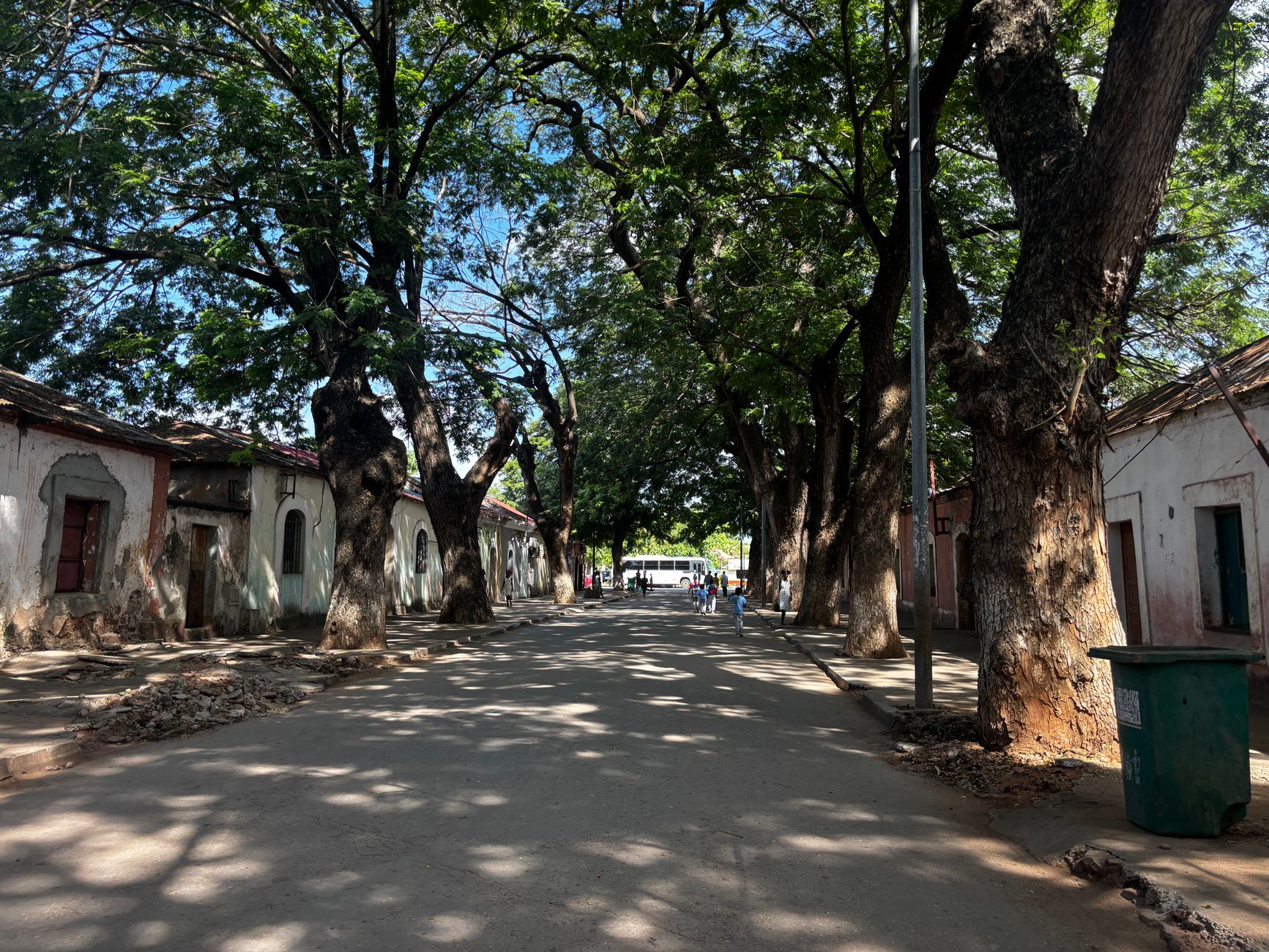
Luanda, Benguela, and Lobito show three versions of Angola's coast: power, faded rail wealth, and working port life. Come for grilled fish, colonial street grids, and the cold Atlantic light that sharpens everything.
Mbanza Kongo carries one of Central Africa's great political stories. This was a royal capital before modern Angola existed, and the city still holds that older scale of memory.
Near Malanje, Kalandula Falls throws the Lucala River over a wall of rock about 105 meters high and roughly 400 meters wide. In full flow, the sound reaches you before the viewpoint does.
Lubango and Namibe give you Angola at its most severe: the Tundavala drop, the Serra da Chela, and the northern edge of the Namib Desert. Few African itineraries shift this hard between cool plateau and arid coast.
Angolan cooking is built on funge, palm oil, grilled fish, cassava leaves, and long lunches that still matter. Start with mufete in Luanda or Benguela, then work outward into calulu, kizaca, and market fruit.
Angola's music is not background color. Semba and kizomba grew out of urban neighborhoods, dance floors, and radio culture, and they still shape how nights move in Luanda and beyond.
12 cities — start with the ones we'd send you to first.
Nine million people pressed between the Atlantic and the musseques, where a grilled fish lunch on the Ilha costs less than the view is worth and the skyline mixes Chinese glass towers with crumbling Portuguese azulejo.
The former capital of the Kongo Kingdom, whose stone ruins and sacred trees earned UNESCO inscription in 2017 and hold more political memory per square metre than most African cities three times its size.
A highland city cool enough for a sweater in July, built around a Christ statue the Portuguese erected in 1957 and overlooking an escarpment that drops a thousand metres to the Namib in a single glance.
Angola's second city sits on the central Bié Plateau at 1,700 metres and still carries the scars of some of the civil war's most sustained urban fighting, visible in buildings that were never fully rebuilt.
A port town older than Luanda's current ambitions, where the colonial-era railway station still anchors a grid of faded pastel houses and the beach empties out by noon because the Benguela Current keeps the water cold.
A desert city where the Namib's oldest dunes meet the South Atlantic and annual rainfall rarely clears 50 millimetres, making it feel less like Angola and more like a Namibian fishing town that crossed the border by acci
The jumping-off point for Kalandula Falls, where the Lucala River drops 105 metres across a 400-metre curtain of water that during the rainy season rivals Victoria Falls in raw volume and sees a fraction of its visitors.
An oil-rich exclave physically separated from Angola by a strip of the Democratic Republic of Congo, with its own forest ecology, its own independence grievances, and a Gulf of Guinea coastline that the rest of the count
A small coastal city in Kwanza Sul province where the road south from Luanda finally relaxes, the Atlantic turns warmer, and the fishing boats pull in catches that end up in pots of calulu before the afternoon is over.
Luanda is where Angola announces itself without softening the edges. The coast gives you old Portuguese masonry, expensive hotel towers, Ilha seafood lunches and a city rhythm that still carries Kimbundu under the Portuguese surface; if you want to understand modern Angola fast, this is where you begin.
The north is less about spectacle than depth. Mbanza Kongo holds the memory of the Kingdom of Kongo, Uíge brings cooler hills and old coffee territory, and the whole region feels tied to Central African history in a way the coastal capital does not.
The plateau is Angola at altitude: milder air, longer distances, rail-era towns and a landscape shaped more by farming than by ports. Huambo is the main hinge, while Kuito gives you a quieter read on the same highland world and a better sense of how the civil war scarred the interior.
Lubango sits high above the heat, and the escarpment around it has real drama rather than brochure drama. Head west and the land falls toward Namibe, where the desert reaches the Atlantic and Angola starts to look stripped down to rock, wind and distance.
Benguela and Lobito make sense together: one older and more provincial, one shaped by the port and rail line. This is a practical coast for travelers who want sea air, colonial street grids, fish on the table and easier onward links inland than the road logic around Luanda usually allows.
Sumbe rarely gets the first chapter, which is part of its appeal. The mid-coast is less polished than Luanda and less historically freighted than the north, but it works well for travelers who want beaches, overland movement and a truer sense of provincial Angola between the capital and the southwest.
From inland kingdoms to postwar reconstruction
According to tradition and later historical reconstruction, the Kongo kingdom takes lasting shape around an inland royal center at Mbanza Kongo. Long before colonial rule, the region already has hierarchy, court ritual and political scale.
Portuguese contact begins at the mouth of the Congo River, opening a new phase of diplomacy, religion and trade. The encounter is not discovery but collision between organized powers.
Kongo's rulers accept baptism, hoping to turn Christianity into an instrument of monarchy and prestige. A church alliance begins, but so do new dependencies and new ambitions.
In letters to Portugal, Afonso I complains that traders are kidnapping his subjects and even nobles. Few documents reveal the moral violence of the Atlantic trade with such cold precision.
Paulo Dias de Novais establishes Luanda as a Portuguese settlement and fortified port. It will become both the colonial hinge of Angola and one of the Atlantic world's major slave-exporting centers.
War with Portugal intensifies, and Kongo's political and religious world grows more unstable. The old diplomatic balance is giving way to open military struggle.
Nzinga takes power in a moment of crisis and proves herself one of central Africa's most formidable political minds. Her career turns negotiation, migration and war into a single art.
King António I of Kongo is killed fighting Portuguese forces. The battle shatters the kingdom's coherence and marks a turning point in the balance of power across the region.
The young prophet is burned after preaching a local, Kongo-centered Christianity and calling for moral renewal. Her death cannot kill the movement's memory.
The formal trade is abolished, but coercion does not end. Forced labor and other exploitative systems continue to shape Angola's economy and society.
European powers redraw Africa on maps, and Portugal presses harder to convert old coastal claims into inland occupation. What had been uneven influence now seeks bureaucratic permanence.
The railway linking Lobito and Benguela to the interior becomes one of the colony's defining infrastructures. It is built for extraction and control, though it also creates towns and movement that outlive empire.
Uprisings and brutal repression mark the opening of the Angolan War of Independence. Colonial rule is no longer sustainable, however loudly Lisbon insists otherwise.
Agostinho Neto declares the independence of Angola in Luanda. The celebration is real, but so is the immediate descent into civil war between rival movements and their foreign backers.
Cuban troops, Soviet aid, South African intervention and American calculations pull Angola deeper into Cold War conflict. The country becomes both a nation and a battlefield for other powers.
Neto's death closes the brief first chapter of independent Angola. José Eduardo dos Santos inherits a state still at war and still defining itself under pressure.
The government and UNITA agree to a ceasefire and a path toward elections. For a moment, Angola seems to glimpse the ordinary future it has been denied.
Disputed elections collapse into renewed fighting, especially devastating for cities like Huambo and Kuito. Hopes of a clean transition vanish almost at once.
After Jonas Savimbi is killed, the conflict finally stops. Peace arrives not with ceremony but with exhaustion, displacement, and the difficult labor of rebuilding.
The old Kongo capital is recognized as a World Heritage Site. The decision matters symbolically because it places an African royal city, not a colonial port, at the center of Angola's global historical image.
Angola marks two decades since the end of the civil war. The anniversary throws a hard light on what has changed: roads, skylines and memory work, but also inequality and unresolved grief.
Kingdoms Before the Atlantic
Lukeni lua Nimi stands at the edge of history like many founders do: partly documented, partly remembered, entirely indispensable to a kingdom's self-image.
Morning mist hangs over the hills of Mbanza Kongo, and the red earth clings to sandals long before one reaches the old royal ground. That matters, because Angola does not begin with a European sail on the horizon. It begins with courts, titles, tribute, and rivalries that were already old when Portuguese captains began taking notes.
According to Kongo tradition, the kingdom took shape under Lukeni lua Nimi, a founder half historical, half dynastic memory, the sort of man who becomes larger each time a court retells his victories. By the fifteenth century, Kongo was no village confederation. It was a structured monarchy with a capital, provincial authority, and enough political weight to command routes stretching deep into the interior.
To the south, Ndongo was forming its own language of power, and one title would echo for centuries: ngola. Ce que l'on ignore souvent, c'est que this title did more than name a ruler; it gave the country its future name. Angola is, in a sense, the fossil of an office.
That older political world still flickers through modern geography. Luanda would come later, Benguela later still, but the first great theater of power stood inland, where kings judged disputes and dynasties measured prestige in lineage, land, and allegiance. Then the Atlantic arrived, and with it came priests, muskets, letters, and bargains no one would fully control.
The country's very name comes from the royal title ngola, a reminder that a political office outlived the court that coined it.
Kings, Crosses and Captives
Afonso I was no passive convert; he was a ruler trying to use the written word, the altar, and the throne to save his kingdom from the very ally he had invited in.
In 1482, Diogo Cão reached the mouth of the Congo River and entered a world that was not waiting to be discovered, only to be negotiated with. A few years later, Kongo's rulers were corresponding with Lisbon, receiving missionaries, and testing whether Christianity could be turned into a tool of monarchy rather than submission. At court, baptismal names and sacred objects arrived beside trade goods and diplomatic promises.
No one embodies that wager more painfully than Mvemba a Nzinga, better known as Afonso I. He wrote as a Christian king, argued as a sovereign, and pleaded like a man watching the floorboards give way beneath his own palace. In letters from the 1520s, he complained that Portuguese traders and their African partners were seizing free subjects and nobles for the slave trade, turning alliance into predation.
Ce que l'on ignore souvent, c'est que the tragedy was not born from misunderstanding but from terrible clarity. Both sides knew perfectly well what was at stake. Kongo wanted prestige, literacy, and controlled exchange; Portugal wanted labor, access, and advantage. The same ships that carried priests also carried chains.
South of Kongo, Ndongo learned the lesson quickly. War hardened around the Kwanza basin, and Portuguese ambitions shifted from diplomacy to territorial grip, especially once Luanda was founded in 1575 as a fortified port for commerce and conquest. The human current flowing out of the region fed Brazil, remade Atlantic wealth, and left scars that still sit beneath family names, church records, and the silences of archives.
The great break came in 1665 at the Battle of Mbwila, when King António I of Kongo was killed fighting the Portuguese. A kingdom survived, but its center of gravity cracked. After that, crowns still glittered, yet the old confidence was gone.
Afonso I's surviving letters are among the most intimate political documents in central African history: a king effectively telling his European counterpart that the alliance had become a kidnapping machine.
Ports, Plantations and Slow Conquest
Nzinga turned statecraft into theater and survival into art, a ruler who understood that dignity itself could be a weapon.
Stand on the waterfront in Luanda or in Benguela and it is easy to see the imperial facade first: churches, administrative buildings, sea light on white walls, the geometry of a colony pretending to permanence. But the Portuguese grip on Angola was uneven for centuries. Coastal enclaves could be governed; vast interiors had to be bargained with, raided, or fought over, again and again.
One woman refused to play the role assigned to her. Nzinga Mbande, later Queen Njinga, negotiated in Luanda, converted when it suited her, broke with the Portuguese when she had to, and moved between diplomacy and war with unnerving fluency. Legend loves the scene in which, denied a chair during negotiations, she ordered a servant to kneel so she could sit at equal height with the governor. Whether embroidered or exact, the image survives because it captures her perfectly.
After the slave trade formally waned, exploitation did not become gentler; it simply changed costume. The nineteenth and early twentieth centuries brought military campaigns, forced labor, plantations, rubber, and an imperial bureaucracy determined to turn paper claims into real occupation. Inland routes toward Malanje, Huambo and Lubango became the corridors through which Portugal tried to bind territory, extract work, and fix borders that had once remained fluid.
The railways made that ambition visible. The Benguela Railway, reaching from Lobito toward the mineral heart of central Africa, was not built for romance. It was built for freight, control, and imperial arithmetic. And yet stations created towns, towns created habits, and colonial infrastructure left behind the skeleton of modern Angola even as it deepened inequality.
By the mid-twentieth century, the colony was presenting itself as eternal. It was anything but. Under the polished rhetoric of empire sat censorship, racial hierarchy, and a labor regime many Angolans experienced as organized theft. The revolt, when it came, would not begin in abstraction. It would begin with names, arrests, gunfire, and poems.
The famous chair episode from Luanda endures because even when historians debate the staging, nobody doubts the political intelligence behind it.
Poets, Guerrillas and a Country Torn in Three
Agostinho Neto carried the strange burden of being both the man of verses and the man of state violence, a liberator who inherited a country already slipping into war.
In 1961, the colonial order began to split open. Uprisings and reprisals shook northern Angola, prisons filled, plantations burned, and Lisbon answered with force. What had long been called a province was now impossible to mistake for anything but a war zone.
This is the era when Angola produces one of history's most elegant paradoxes: a liberation movement led by a poet. Agostinho Neto wrote of dignity and pain, then became the first president when independence was declared on 11 November 1975 in Luanda. But no anthem could still the rival movements circling the capital. The MPLA, FNLA, and UNITA were not simply political parties; they were armed futures, each backed by foreign patrons in the cold fury of the Cold War.
Ce que l'on ignore souvent, c'est how quickly liberation curdled into siege. Luanda celebrated independence while South African forces, Zairian backing, Cuban troops, Soviet aid, and American calculations pushed Angola into an internationalized civil war almost at once. The country became a map on which outsiders drew their own obsessions.
The fighting chewed through the interior for decades. Huambo changed hands and suffered terribly. Kuito became a symbol of endurance and ruin. Cabinda remained strategic because oil kept speaking even when diplomacy failed. Families were broken by conscription, displacement, hunger, and the simple arithmetic of mines left in fields and beside roads.
Neto died in 1979. Jonas Savimbi outlived ceasefires. José Eduardo dos Santos ruled through long attrition and oil money. Only in 2002, after Savimbi was killed, did the war truly end. Peace arrived without grandeur. It arrived like exhaustion.
At independence, Angola was so entangled in global rivalry that Cuban troops were already fighting on its soil before the new nation had time to catch its breath.
Reconstruction, Oil and the Work of Remembering
The emblematic figure of this era may be no ruler at all, but the Angolan returnee and survivor who rebuilt a household before the state rebuilt a monument.
The first postwar image is rarely monumental. It is often a road reopened, a market reassembled, a family discovering who is still alive. After 2002, Angola rebuilt with startling speed in places: towers rose in Luanda, roads were laid, airports expanded, and money from offshore oil gave the state the means to build at a scale the war years had made unthinkable.
But reconstruction has its own court etiquette, and it can be just as merciless as dynastic politics. Wealth concentrated fast. Luanda became one of the world's most expensive cities while many neighborhoods still lacked dependable basics. In the glitter of new construction, old questions remained stubborn: who benefited, who waited, and who paid for development through silence.
Memory returned in another form too. In 2017, Mbanza Kongo was inscribed on the UNESCO World Heritage List, a moment of recognition that mattered far beyond heritage policy. The old Kongo capital was no longer just a place of archaeology or regional pride. It became an international acknowledgment that Angola's history does not begin with colonial masonry on the coast.
Travel through Lubango, Benguela, Malanje or Namibe now and you feel a country rearranging its own narrative. The war is not everywhere visible, yet it remains in the spacing of towns, in the caution of older people, in the empty stretches where nothing was built for years. Angola today is not a neat success story. Better than that, and harder: it is a place still deciding what to do with survival.
And that brings the story full circle. The kingdoms, the ports, the railways, the battlefields, the oil towers, the heritage sites: each era tried to define Angola from above. The country keeps answering from below, in memory, music, and endurance.
Mbanza Kongo's UNESCO inscription in 2017 quietly reversed an old coastal bias by placing an inland African capital, not a colonial port, at the center of Angola's international historical image.
Portuguese runs through Angola like a pressed jacket worn over an older skin. In Luanda you hear the sentence arrive in one empire and land in another: Portuguese vocabulary, Kimbundu pressure, street music in the vowels, respect tucked into the choice between "Senhor" and a first name that must wait its turn.
Greetings do not decorate the day. They authorize it. A rushed question without a greeting sounds like a door struck with the foot, and Angola dislikes bad entrances. In Uíge, in Huambo, in Benguela, the exchange of health, family, sleep, and elders can last longer than the practical business that follows. Good. A country is a table set for strangers.
Then comes the delicious part: the local words that refuse exile. "Cota" does not mean merely an older person; it means age promoted to rank. "Bué" is quantity with swagger. "Musseque" in Luanda is not a neat urban-planning term at all, but a social weather system, a history, a literature, a way the city remembers itself when concrete pretends to be forgetful.
Angolan food begins with texture, not display. Funge arrives pale, elastic, almost severe, and then proves itself to be one of the great instruments of civilization: a starch that receives sauce the way silk receives perfume. You pinch, turn, scoop, and suddenly eating has become syntax.
The coast writes one sentence, the interior another. In Luanda and Lobito, grilled fish comes with onions, beans, sweet potato, cassava, plantain, and the stern little fire of gindungo. In Malanje and farther inland, cassava leaves, peanuts, dried fish, and long-cooked stews speak with older Central African authority. Palm oil stains the plate orange and the fingers honest.
Portugal is present, of course, but not as master. More as a relative who married into a formidable family. Bacalhau appears, bread appears, cabidela appears, and each one is told, calmly, that this is Angola now. Lunch still carries prestige here. It asks for time, for company, for a second beer, for a story that improves in the telling.
If you want to understand Angola, listen before you ask questions. Semba does not simply entertain; it organizes memory. A rhythm can preserve what politics mangles, and in Luanda that fact is not theoretical. It is audible in backyard parties, wedding bands, taxi radios, and the elegant insolence of people who know exactly when to clap.
Kizomba took the export route, but its pulse remains intimate, almost conspiratorial. The dance says what formal speech prefers to postpone. Two bodies negotiate distance, timing, permission, heat. Etiquette with bass.
Music in Angola also performs social cartography. The musseques gave the nation some of its deepest sounds, and those neighborhoods still haunt the polished surfaces of modern Luanda. A city may erect towers of glass and imported ambition; one guitar phrase from the wrong decade and the whole place remembers who taught it to move.
Angola likes form, and form is not the enemy of warmth. It is the proof of it. You greet properly, you acknowledge elders, you use titles before intimacy grants you the right to drop them, and you do not confuse speed with sincerity. The first minutes matter more than many visitors expect.
Clothes participate in the conversation. Luanda in particular has a serious relationship with appearance: church fabrics, sharp shirts, pressed trousers, perfume that arrives half a second before the wearer. People dress as if visibility were a civic duty. They may be right.
This does not mean stiffness. It means sequence. Respect first, ease after. Sit too casually, speak too soon, or joke before the room has adopted you, and you become memorable for the wrong reason. But once the threshold is crossed, generosity comes quickly and with force. Plates refill. Advice multiplies. Somebody's aunt decides your fate.
Religion in Angola is public without always being solemn. Catholicism left cathedrals, feast days, processions, names, saints, and an architecture of habit. Protestant churches left their own disciplines of song, scripture, and moral theater. Independent churches multiplied with urban growth, war displacement, and the old human need for a God who answers in your own cadence.
On Sunday, Luanda changes posture. White shirts emerge. Shoes are polished. Choirs rise behind concrete walls and corrugated roofs, and for a few hours the city sounds less like commerce than petition. In Mbanza Kongo, where royal memory and Christian history have been knotted together for centuries, faith carries an older political charge. A baptism can echo like an annexation. A hymn can sound like survival.
Angola does not keep religion in a sealed compartment. It spills into greetings, mourning, naming, healing, and argument. People will pray before a journey, after an illness, during a meal, over a grief that no administration can process. The modern state may speak in documents. Suffering still prefers liturgy.
Angolan architecture has the nerve to be several centuries at once. Luanda offers Atlantic forts, Portuguese facades with their dignity half-peeled away, towers financed by oil, apartment blocks with the fatigue of tropical weather, and churches that keep insisting on transcendence in traffic. The city is not harmonious. It is frank.
Then Mbanza Kongo changes the scale of the story. Here the old capital of the Kingdom of Kongo turns stone, ruin, slope, and sacred ground into argument: a royal city existed, power had ceremony, and history did not begin with the arrival of Europeans carrying maps and vanity. UNESCO inscription arrived late. The place did not.
Elsewhere the land dictates the form. In Lubango the escarpment sharpens the line of the built world. In Namibe the desert strips architecture down to endurance. In Benguela and Lobito, the coast keeps reminding walls that salt is a patient editor. Angola builds, rebuilds, improvises, and remembers. Sometimes all in one block.
She is the great scene-stealer of Angolan history: diplomat, strategist, convert when useful, enemy when necessary. The famous negotiation in Luanda, where she refused humiliation and matched the governor's theatrics with her own, survives because it tells the truth about her political instinct.
Afonso I wrote letters that still sting to read, because they sound less like protocol than alarm. From Mbanza Kongo he tried to build a Christian monarchy on his own terms, then watched trade in captives swallow the alliance he had helped create.
His death at Mbwila became more than a battlefield loss; it marked the cracking of Kongo's political confidence. In Angolan memory, he stands for the moment when a kingdom discovered that diplomacy with Portugal could end in decapitation and dispersal.
She preached that Christianity belonged in African hands and that Saint Anthony had chosen her as a vessel. Burned at the stake at just about twenty-two, she left behind the kind of story empire fears most: a spiritual revolt with local language, local legitimacy, and mass appeal.
Neto remains one of Angola's strangest and most revealing figures, a doctor who wrote poems and then presided over a state born under fire. In Luanda, his name belongs to avenues and airports, but the man behind the marble was also exhausted, ideological, and governing through emergency almost from the first day.
Savimbi had charisma, tactical cunning, and a gift for surviving long after others thought him finished. Huambo, Kuito and the battered interior know his legacy less as rhetoric than as attrition: years of war stretched by a man who refused to disappear until he finally did.
Dos Santos governed from Luanda with the patience of a court politician and the resources of an oil state. Under him, Angola ended the war and rebuilt visibly, yet he also turned power into a family affair so enduring that postwar prosperity and postwar inequality often seemed to share the same address.
Born in Portugal but remade by Luanda, he wrote the musseques with such force that the city seemed to invent a new literary accent around him. His Angola is not the polished colonial facade but the street, the slang, the pressure of the poor, the place where language itself resists empire.
Bonga carried Angola in his voice long before many outsiders knew how to listen. His songs move with saudade, dissent and semba's pulse, making exile sound less like abstraction than a room you can hear but cannot re-enter.
This is the shortest Angola trip that still shows contrast: Atlantic capital first, then inland green country. Start in Luanda for the country's political and culinary pulse, then push on to Malanje for Kalandula Falls and a sense of how quickly Angola changes once you leave the coast.
Northern Angola carries some of the country's deepest historical weight, and the route feels different from the coast almost immediately. Uíge leads you into coffee country and Bakongo landscapes, then Mbanza Kongo brings the old Kingdom of Kongo into view without needing to oversell the point.
This west-to-interior line follows one of Angola's most coherent travel corridors. Begin with the coast in Lobito and Benguela, then climb into Huambo and continue to Kuito, where the plateau feels cooler, slower and less shaped by the Atlantic glare.
Southern Angola is where the country turns dramatic: escarpment, dry air, long roads and the sense of entering another climate system altogether. Use Lubango as your highland base, continue to Namibe for the desert coast, and finish in Sumbe to reconnect with the Atlantic on a quieter stretch than Luanda.
Weekend table. Ilha de Luanda, family, friends, beer. Hands tear fish, forks chase beans, talk runs longer than the meal.
Lunch ritual. Right hand pinches, rolls, scoops. Palm oil marks fingers, plate, shirt cuff.
Home kitchen, Sunday, patient fire. Spoon lifts greens and fish, rice or funge steadies the sauce.
Cassava leaves, fish, peanuts, long cooking. Family plate, quiet room, serious appetite.
Coast, charcoal, late afternoon. Lemon, chile, cassava, cold Cuca, loud table.
Holiday lunch, older relatives, no hesitation. Spoon and fork work through rice, blood, vinegar, memory.
Morning counter, bakery, office desk. Bread tears, butter melts, coffee orders the day.
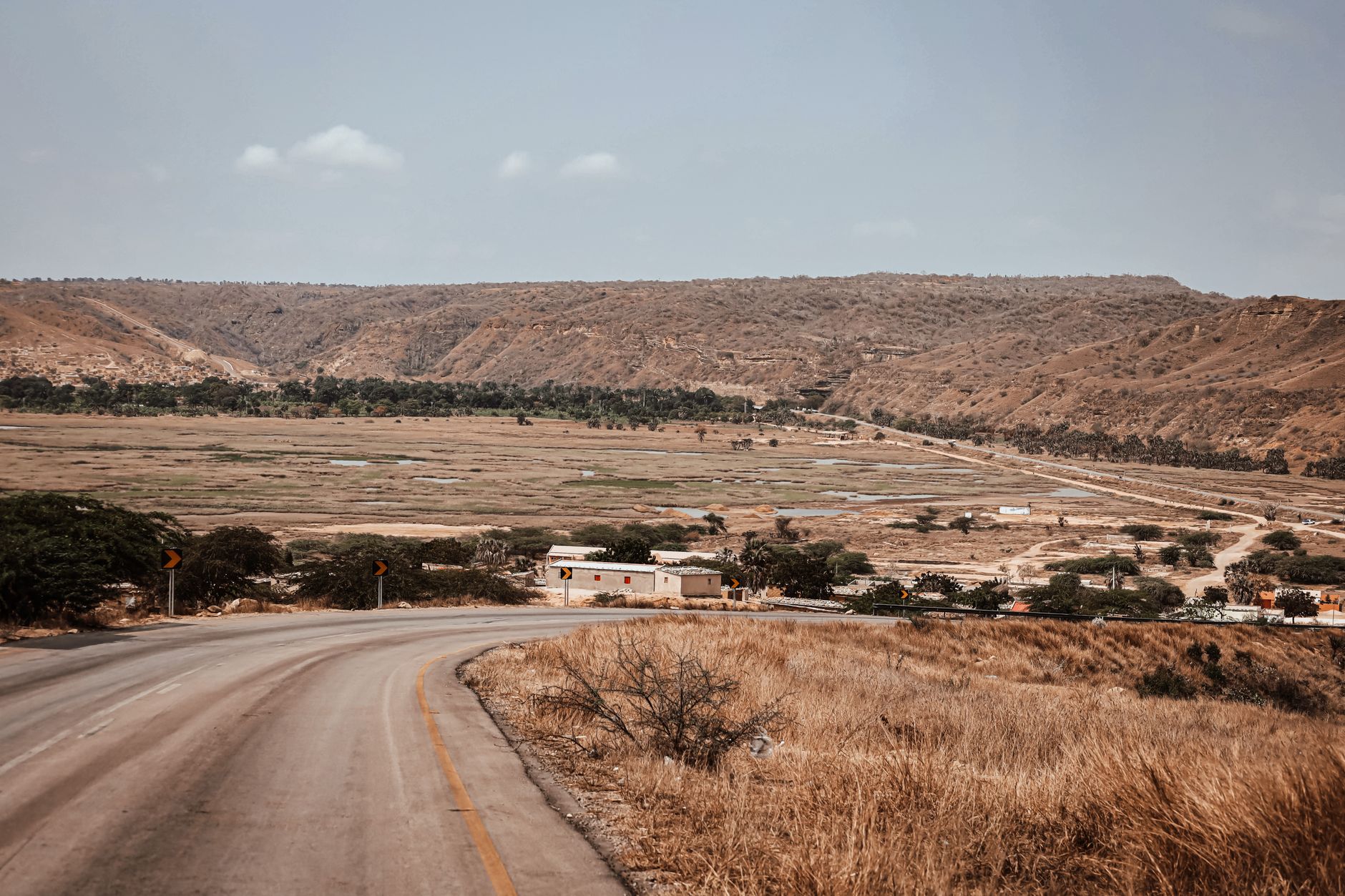


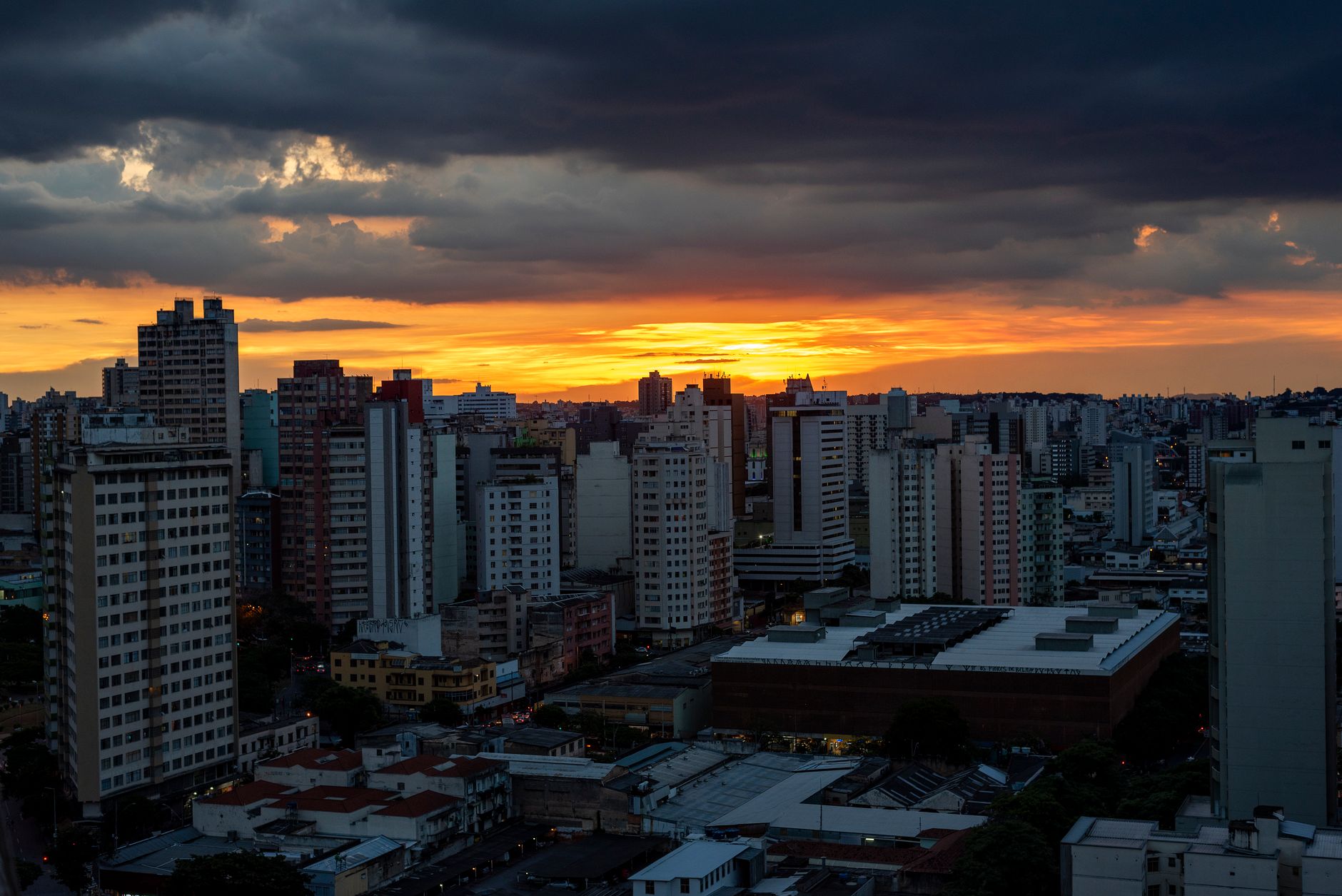
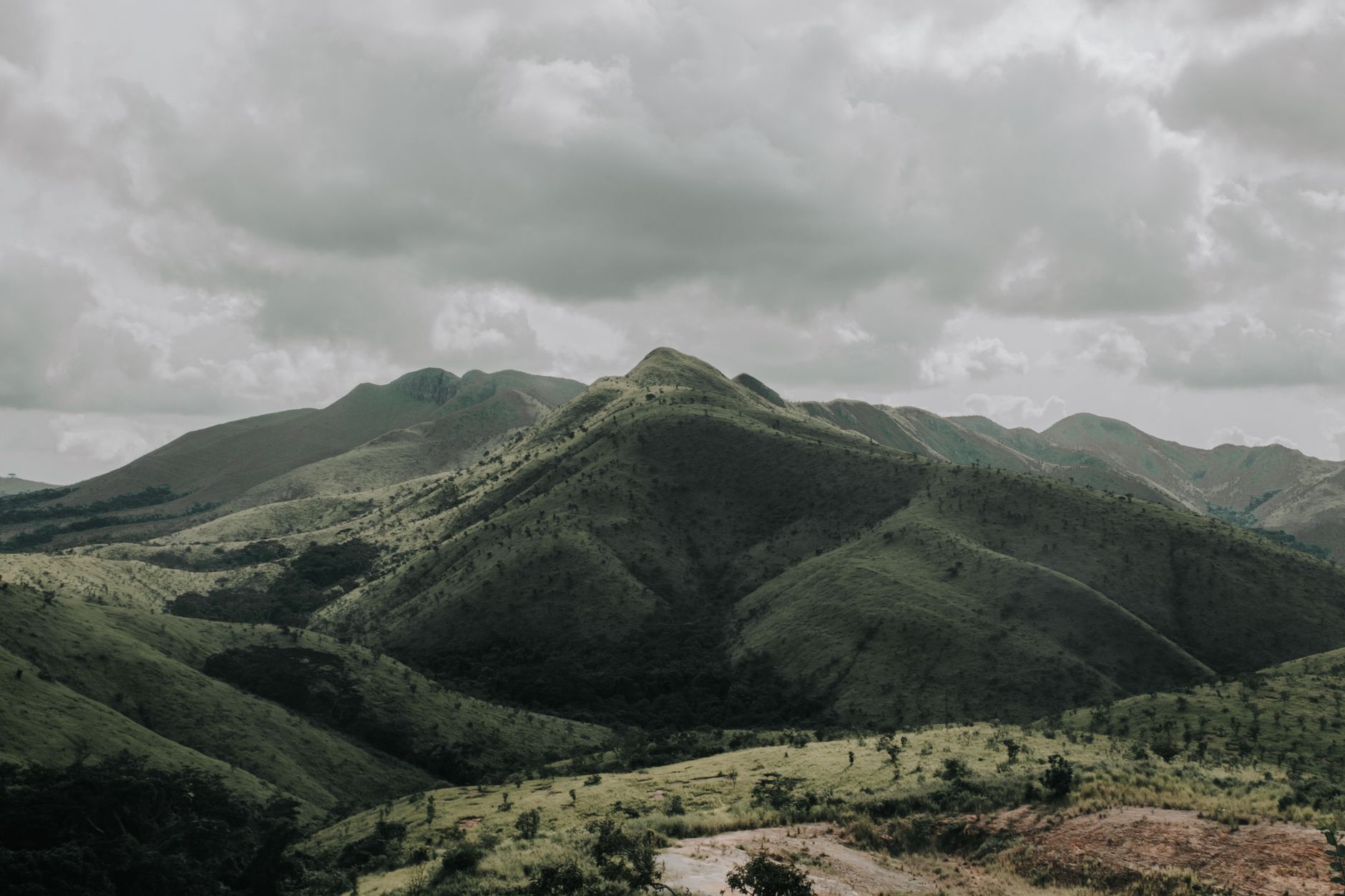






Angola is now visa-free for tourist visits for citizens of the US, UK, Canada, Australia and many European countries, usually for stays of up to 30 days per entry and 90 days per calendar year. Your passport should have at least six months' validity and blank pages, and if you are not entering as a tourist you still need the correct visa in advance.
The local currency is the Angolan kwanza, written as AOA or Kz. Angola is still cash-heavy outside better hotels and restaurants in Luanda, so carry enough kwanza for day-to-day spending and do not count on ATMs or foreign cards working reliably.
Most international arrivals come through Luanda via Dr. António Agostinho Neto International Airport. The simplest long-haul routings are usually via Lisbon, Johannesburg or another major African hub, and TAAG covers the main links into Europe, southern Africa and Brazil.
Distances are big, roads can be slow, and domestic flights save more time than any other transport choice. For travelers linking Luanda with Benguela, Lubango, Namibe, Malanje or Cabinda, the practical move is usually a flight plus pre-booked transfers rather than self-drive or bus travel.
Angola has two broad seasons: wetter months from roughly October to April and a cooler dry season from May to September. The coast around Luanda stays tempered by the cold Benguela Current, the plateau around Huambo and Kuito is milder, and the south near Namibe turns properly arid.
Mobile data is useful in cities but coverage thins out once you leave the main corridors. Keep WhatsApp on your phone, download maps before leaving Luanda or Benguela, and do not assume hotel Wi-Fi will be fast enough for heavy work outside top-end properties.
Angola rewards planning, not improvisation. Use registered drivers, avoid moving around at night on unfamiliar roads, keep valuables out of sight, and carry proof of yellow fever vaccination because entry practice can still vary even when the formal rule looks looser on paper.
Cash solves more problems than cards in Angola. Break larger notes in Luanda before heading to Malanje, Namibe or Uíge, and avoid changing money anywhere unofficial.
Domestic flights are the big time-saver and they do fill up around holidays. If your trip depends on reaching Lubango, Cabinda or Benguela on a fixed date, lock that sector first and build the rest around it.
Angola's railways are useful on certain corridors, especially around Lobito, Benguela and Huambo, but they are not the spine of a tight countrywide trip. Treat rail as a deliberate experience, not as your only plan.
Airport pickups and long overland days are worth arranging in advance. A confirmed driver in Luanda or Lubango saves more stress than chasing last-minute transport after landing.
Signal drops fast outside city centers and hotel Wi-Fi is uneven. Save maps, hotel contacts and ticket screenshots before you leave a strong connection.
Politeness in Angola starts with greeting people properly before asking for help or prices. A measured 'bom dia' goes further than the brisk efficiency many travelers bring from Europe or North America.
Lunch often matters more than dinner, especially for fish on the coast or heavier local dishes inland. Eat the main meal at midday, when kitchens are running fully and markets still shape what lands on the plate.
Explore Angola with a personal guide in your pocket
Audio guides for 1,100+ cities across 96 countries. History, stories, and local insight — offline ready.
Usually no, if you are visiting as a tourist under the current visa-free regime. The standard allowance is up to 30 days per entry, but you still need a passport with enough validity and you should check for any airline or entry-condition updates before departure.
Yes, especially in Luanda. Budget travel exists on paper, but once you add decent hotels, airport transfers, domestic flights and reliable drivers, Angola stops being a cheap destination very quickly.
Sometimes in top-end places, but you should plan as if cash will be necessary. Larger hotels and some restaurants in Luanda may take cards, while ATMs, smaller businesses and provincial towns can be unreliable.
Flights are usually the best answer if time matters. Overland routes exist and can be rewarding, but road conditions, distance and unpredictable delays make domestic air the safer backbone for most short trips.
It can be, but it is not a place for careless logistics. Stay with registered transport, avoid unnecessary night driving, keep documents and cash secure, and do more pre-booking than you might in easier African destinations.
You may still be asked for it, so carry it. The formal rules have loosened in some cases, but border practice and onward travel requirements can differ, which makes the certificate worth having even when you think nobody will ask.
Seven to ten days is a sensible minimum if you want more than Luanda. Three days works for Luanda plus Malanje, but a longer trip gives you enough time to split coast, plateau and south without turning the country into a string of airport lounges.
Luanda is worth at least two days because it explains the rest of the country. The prices can sting, but the city's food, Atlantic setting, colonial layers and postwar ambition make it more than a transit point.
Last reviewed