Introduction
An Afghanistan travel guide starts with a surprise: Buddhist cliff sanctuaries, Timurid tiles, and cardamom-scented rice share one map.
Start in Kabul, where bazaars, gardens, and the capital's fractured modern history sit under the same mountain light. Then read older chapters in Herat, whose Timurid tiles still throw back a hard blue, in Balkh, once called the Mother of Cities, and in Mazar-i-Sharif, where the Blue Mosque turns faith, geometry, and color into one argument. Afghanistan makes more sense when you treat it as a crossroads that kept its own manners.
Bamiyan and Bamyan Valley hold the shock of absence: niches where the giant Buddhas stood, painted caves, and a high valley that still feels monastic in scale. Ghazni carries the memory of Mahmud's court, scholarship, and conquest; Jam rises from a remote river valley with brickwork so exact it still looks measured with a compass. Even the distances teach you something here.
Then come the human details: naan torn by hand, mantu under yogurt and lentils, Qabili Palau with carrots and raisins, greetings that take their time because tea comes before business. Kandahar and Kunduz pull you closer to Pashtun and northern trading worlds, while Nuristan feels cut to a different grain altogether, with forested slopes rare in a country better known for stone and dust. Afghanistan rewards readers who look past headlines and pay attention to form, ritual, and place.
A History Told Through Its Eras
Balkh, where prophecy met empire
Mother of Cities and Conquerors, c. 1500 BCE-300 BCE
Dawn rises over the plain of Balkh with dust in the air and the Oxus not far off, and you begin where Afghanistan itself likes to begin: in a city already old when other capitals were still mud. Ce que l'on ignore souvent, c'est que Balkh was not merely ancient; it was prestigious. Persian memory called it beautiful, Arab geographers later called it the Mother of Cities, and that is not the sort of title one gives lightly.
Tradition places Zarathustra here, somewhere between legend and theology, preaching a moral universe split between truth and the lie. Documented proof is slippery; the claim belongs to the realm of attribution rather than certainty. But the fact that Balkh could host such a tradition tells you what it was: not a frontier, but a center.
Then came the Achaemenids, who folded Bactria into an imperial machine that stretched from the Aegean to the Indus. Gold moved through these roads, ideas moved faster, and one day perhaps a peasant turned up a buried world without knowing it: the treasure later called the Oxus hoard, with fish-shaped armlets and a tiny gold chariot that could sit in your palm. An empire survives in odd ways.
Alexander arrived in 330 BCE and discovered what so many conquerors would learn after him in Afghanistan: entry is easier than mastery. He spent longer fighting in Bactria and Sogdia than he had planned, and the campaign wore through men, horses, and patience. Yet here, amid the strain of war, he also found Roxane, and with that marriage the story of conquest turned abruptly into a family drama. The next age would inherit both the battlefield and the wedding feast.
Roxane, the Bactrian noblewoman who became Alexander's queen, crossed from a fortress banquet into the center of world history and paid for it with exile and murder.
The Oxus treasure included a gold chariot with four horses so small they are scarcely larger than thumbnails.
The cliff at Bamiyan and the empire that gave the Buddha a face
Buddhas, Monks, and Silk Road Splendor, 300 BCE-650 CE
Picture a valley in Bamiyan at first light: apricot-colored cliffs, cave openings cut like dark eyelids, and two colossal Buddhas rising where a mountain seems to have decided to become sculpture. These were not isolated marvels. They belonged to a monastic city, a place of corridors, painted vaults, cells, chapels, and thousands of monks living inside the rock.
Before Bamiyan reached its full grandeur, the Greek world had already left its trace in Afghanistan. Ai Khanoum, near the Oxus, was laid out with a gymnasium, a theatre, and colonnades that would not have looked absurd in the Mediterranean. Greek maxims were copied here at the far end of Asia, as if Delphi had sent an echo all the way east.
Under the Kushan Empire, especially in the age of Kanishka, Afghanistan became a hinge between India, Iran, and Central Asia. Ce que l'on ignore souvent, c'est que Kanishka's coinage showed an almost indecent cultural confidence: Greek script, Iranian gods, Hindu deities, and Buddha himself on imperial money. A ruler secure enough to put many worlds in one hand usually knows he commands the road between them.
The Bamiyan Buddhas, carved between the 3rd and 6th centuries, were the grand public face of that world. Behind the statues lay painted caves whose pigments later revealed something astonishing: early oil-based painting, centuries before Europe claimed the technique as its own. Then came the long Islamization of the region, not as a clean break but as a change in language, patronage, and prayer. The cliff remained. The meaning changed.
Kanishka I ruled like a collector of civilizations, turning Afghanistan from a passageway into a court where religions and scripts stood side by side.
Scientific analysis of the Bamiyan cave paintings showed oil-based binders, making them the oldest known oil paintings yet identified.
Sultans, poets, and a minaret alone in the mountains
Courts of Ghazni and Ghor, 650-1221
Enter Ghazni in the age of Mahmud and you do not enter a provincial stronghold. You enter a court glittering with loot, scholarship, ambition, and vanity. The treasures came from repeated campaigns into the Indian subcontinent; the prestige came from what Mahmud did with them, turning Ghazni into a capital meant to astonish rivals and flatter posterity.
He gathered formidable minds. Al-Biruni observed India with a precision rare in any century, while Ferdowsi's great Persian epic moved through the same world of patronage, resentment, and royal ego. And then there was Ayaz, the beloved court favorite whose closeness to Mahmud slipped from palace rumor into Persian literary myth. In Afghanistan, even power politics tends to acquire poetry.
Further west and south, new dynasties rose. The Ghurids pushed imperial energy out of the mountains and across northern India, while the Minaret of Jam rose in a remote valley with the elegance of a court object misplaced in the wilderness. That is what makes Jam so haunting. It looks less like a monument planted in landscape than like a civilization sending up one last, perfect sentence.
Then the Mongols arrived in the early 13th century and broke the old order with terrifying speed. Cities such as Balkh and Herat, which had lived as storehouses of memory, learned what fire does to libraries and lineage. Yet destruction in Afghanistan is rarely the end of the story. It is usually the hinge. Out of ruin came new courts, and Herat was waiting.
Mahmud of Ghazni could recite piety, count treasure, reward scholars, and still leave behind the uneasy perfume of scandal around his love for Ayaz.
One medieval report says Mahmud, near death, asked to see his jewels spread before him and wept over them before finally letting go of life.
From Gawhar Shad's blue Herat to Ahmad Shah's Afghan kingdom
Herat's Renaissance and the Durrani Crown, 1221-1919
Stand in Herat in the 15th century and imagine the sound before the sight: chisels, horses in courtyards, the murmur of scholars, tiled surfaces catching the hard light. After the Mongol cataclysm, the Timurids rebuilt not just walls but refinement, and no one embodied that better than Gawhar Shad. Queen, patron, political intelligence of the first order, she helped make Herat one of the great cultural capitals of the Persianate world.
Ce que l'on ignore souvent, c'est that courts are often held together by women whose names survive only when the architecture is too beautiful to forget. Gawhar Shad commissioned mosques, madrasas, and a cultural atmosphere in which miniature painting, calligraphy, and poetry thrived. Herat did not merely recover. It became exquisite.
Kabul then entered another chapter of imperial destiny when Babur seized it in 1504 and used it as a beloved base before going on to found the Mughal Empire in India. He wrote of gardens, fruit, air, and mountain views with the tenderness of a man who had seen too many campaigns and still knew the value of a shaded terrace. Kabul in his memoirs feels almost domestic, which is rare praise from a conqueror.
In 1747, near Kandahar, Ahmad Shah Durrani was chosen by tribal leaders and built the polity most Afghans would later recognize as the beginning of the modern state. The kingdom was never simple, never uniform, and never as tightly obedient as maps suggest. But a crown had been named, a center had been claimed, and Kabul and Kandahar would henceforth matter not only as cities but as arguments about legitimacy. The 19th century would bring empires to the door, and Afghanistan would learn the exhausting art of survival between them.
Gawhar Shad was not decoration at a Timurid court; she was one of the chief authors of Herat's brilliance.
Babur, conqueror of north India, never lost his affection for Kabul and asked to be buried there rather than in the empire he won.
Independence, reform, invasion, and the cliff that still remembers
Kingdom, Coups, and the Wound of Memory, 1919-present
In 1919, after the Third Anglo-Afghan War, Afghanistan secured control of its foreign affairs, and Amanullah Khan stepped onto the stage with the impatience of a modernizer. One can almost see the scene: proclamations, uniforms, diplomats, a royal couple determined to drag the country into a new century faster than many of their subjects wished to travel. His queen, Soraya Tarzi, appeared unveiled in public and argued for women's education with a boldness that still startles.
But reform has enemies, and in Afghanistan they are rarely abstract. They are local, armed, proud, and tied to older bargains. Amanullah fell. Later came the long reign of Zahir Shah, decades of relative calm for some urban elites, then the shattering sequence that still defines foreign memory: the 1973 republic, the 1979 Soviet invasion, jihad, civil war, the first Taliban emirate, the 2001 intervention, and the Taliban's return in 2021.
No single monument carries that wound more starkly than the Buddhas of Bamiyan. In 2001, the statues that had watched over the valley for centuries were blown apart, despite international pleas, as if iconoclasm wished to prove itself against stone. Yet Bamiyan did not become empty. The niches remained, the painted caves remained, and absence itself turned into testimony.
Ce que l'on ignore souvent, c'est that ordinary Afghans have spent this entire century and the one before it doing the difficult work of continuity: teaching children, baking bread, mending shrines, carrying family histories through one regime after another. Travel writing can be too enamored of armies. Afghanistan's deeper story belongs also to survivors. And that, perhaps, is the bridge to the next chapter any visitor must understand: this is not only a land of ruins, but a land where memory refuses dismissal.
Amanullah Khan dreamed in decrees, but Queen Soraya gave those reforms a face, a wardrobe, and a public courage that alarmed conservative Afghanistan.
When the Bamiyan Buddhas were destroyed in 2001, fragments blasted from the statues were later gathered and studied like relics from a murdered civilization.
The Cultural Soul
Two Tongues, One Curtain
In Afghanistan, speech enters the room before the speaker. Dari often carries the conversation across provinces, markets, offices, taxis, courtyards; Pashto arrives with another gravity, more flint in the mouth, more oath and memory behind ordinary phrases. A language is never only a language. It is a weather system.
Greetings do the real work. Health first, road second, family after that, and only then the matter that brought you here. A European who rushes to the point reveals a tragic upbringing. Tea corrects the error.
Certain words refuse export. Adab means manners, but also proof that your soul has been ironed and folded properly. Izzat is dignity, family standing, public weight, the invisible fabric that can crease from one foolish gesture. In Pashtun settings, melmastia means hospitality, though that English word sounds decorative and harmless; this is obligation with a pulse.
Listen in Kabul and you hear bridges. Listen in Herat and the Persian inheritance becomes silkier, more architectural. Listen in Mazar-i-Sharif and language feels like a caravan practice that never ended: words crossing, trading, surviving.
The Seat Farthest From the Door
Afghan etiquette begins with placement. The honored guest is often seated farthest from the door, safest from the draft, visible to all, protected by geometry before anyone says a noble word. Furniture can be modest. Symbolism is not.
A host may insist, a guest may refuse, a host may insist again. This little duel is not inefficiency. It is elegance. Acceptance without resistance can look greedy; refusal without end can become theater.
Then comes the great law of the right hand. Bread is torn with it, tea is taken with it, dishes are approached with it. The left hand exists, of course, but social life prefers not to involve it at table. Civilization often hides in these tiny commandments.
Do not ask directly about the women of a household unless intimacy opens that door for you. Kinship titles and honorifics matter more than the Western cult of instant first names. The formal surface is not coldness. It is respect made visible, which is a much rarer luxury.
Rice That Understands Ceremony
Afghan cuisine does not shout. It composes. Rice, lamb, yogurt, onions, carrots, raisins, coriander, cardamom, dried mint: each ingredient keeps its own dignity, and the miracle is that none tries to conquer the others. Empires crossed this country. The pot learned diplomacy.
Qabili palau is the most eloquent argument in favor of contrast. Rice carries lamb; carrots and raisins add sweetness after the savory note has already declared itself; nuts punctuate the mouth like well-timed gossip. In Kabul, the dish can feel ceremonial. In a family home, it feels even more serious.
Mantu and ashak reveal another Afghanistan, the domestic one, the one that respects labor enough to wrap it in dough. The filling must be prepared, the folds must hold, the yogurt must arrive with garlic, mint, and calm authority. You do not eat these dumplings in a hurry unless you have renounced pleasure.
Bread is not accompaniment here. Naan is tool, rhythm, witness. At a sofra or dastarkhan spread on the floor, the bread scoops qorma, receives kebab, tears, dips, disappears. A country can be read through its bread. Afghanistan reads like a long sentence with smoke at the end.
Faith With Dust On Its Hem
Religion in Afghanistan is public, intimate, inherited, argued over, and woven into the timetable of ordinary acts. The call to prayer does not merely mark the hour; it changes the texture of the hour. Conversation pauses. Streets adjust. Even silence seems to stand up straighter.
Yet the religious memory of the land is older and more layered than any single present tense. Balkh is linked by tradition to Zoroaster. Bamiyan still bears the wound of the Buddhas destroyed in 2001, and the wound has not finished speaking. A cliff can become an archive.
In Mazar-i-Sharif, the Blue Mosque gathers devotion, legend, politics, color, and dust in one frame. Pilgrimage is never only theology. It is also movement, commerce, hope, family logistics, fatigue, perfume, and shoes left in rows outside a threshold.
What strikes the outsider is not abstraction but ritual precision. Washing. Greeting. Sitting. Eating. Blessing. The sacred often arrives disguised as habit. That is its cleverness.
Mud Walls, Infinite Interiors
Afghan architecture loves discretion from the street and richness within. A wall may present mud, brick, plain timber, almost nothing; behind it, one finds carpets, carved niches, courtyards, painted ceilings, a room arranged around heat, hospitality, and the management of privacy. Exterior modesty. Interior abundance. A perfect moral system.
The great monuments follow the same logic on a larger scale. The Friday Mosque of Herat builds its authority through tile, geometry, repetition, and that old Persian genius for making mathematics feel devout. In Ghazni, dynastic ambition once translated itself into towers, tombs, and learned courts. Power always wants stone to remember it.
Then Bamiyan changes the scale entirely. The valley once held giant Buddha figures cut into the cliff between the 3rd and 6th centuries, with cave networks and painted surfaces around them; even in absence, the niches still dominate thought. Destruction does not erase form. It turns form into accusation.
Afghanistan builds for climate, family, defense, and ceremony at once. Shade matters. Thickness matters. A courtyard can do the work of a philosophy seminar. One enters and understands that privacy, here, is not withdrawal. It is architecture.
Color That Refuses Modesty
Afghan art has a habit of appearing where the inattentive eye expects utility. A carpet becomes an argument in red, indigo, rust, and cream. Embroidery turns cloth into memory. Tile in Herat insists that geometry can produce tenderness if repeated with enough conviction.
The palette is never timid. A plain room may contain one carpet that behaves like a parliament of colors. Tea glasses catch light. Brass trays hold it. Painted trucks and decorated objects in the wider region share the same instinct: if life has been harsh, ornament is not excess. Ornament is rebuttal.
The manuscripts and poetic traditions tied to Persianate court culture gave Afghanistan another visual education: margins, calligraphy, floral discipline, the pleasure of a line that means and adorns at once. Writing itself becomes image. That is a civilizational achievement.
Even loss enters the aesthetic record. The empty niches of Bamiyan, the damaged surfaces, the objects dispersed from ancient sites near Balkh and beyond, all remind you that Afghan art is not only a story of creation but of survival, theft, mourning, and stubborn continuation. Beauty here is not innocent. It knows what happened.
What Makes Afghanistan Unmissable
Ancient Crossroads
Balkh, Ghazni, and Jam carry the weight of Achaemenid, Greek, Buddhist, and Islamic worlds in the same national frame. Few countries compress so many civilizational layers into one map.
Timurid Blue
Herat and Mazar-i-Sharif show what Afghan architecture can do with tile, geometry, and light. The color is not decorative; it is the point.
Mountain Drama
The Hindu Kush gives Afghanistan its scale, its isolation, and much of its beauty. Bamiyan and Nuristan feel carved by altitude, weather, and long distance.
Food With Memory
Afghan cooking is built on rice, bread, yogurt, lamb, onions, dried mint, and restraint. Qabili Palau, mantu, ashak, and hot naan say more about local life than any slogan could.
Remote By Nature
From the valleys around Bamiyan to the forested slopes of Nuristan, Afghanistan still rewards travelers who care about terrain rather than checklist tourism. Reaching places is part of understanding them.
Cities
Cities in Afghanistan
Kabul District
"Kabul wakes before the sun, prayer calls rolling down the valley like soft thunder, and for a moment the cracked domes and new barbed wire share the same pink light."
Kabul
"A city of 4 million pressed between bare mountains where a 16th-century Mughal garden, Bagh-e Babur, survives intact beside neighbourhoods that have been rebuilt three times in living memory."
Herat
"The westernmost city breathes Persian: its 15th-century Friday Mosque tiles are the deepest cobalt in Central Asia, and its old bazaar still trades in saffron, carpets, and dried mulberries by weight."
Mazar-I-Sharif
"The shrine of Hazrat Ali turns a particular shade of turquoise at dawn, and every March the city floods with pilgrims for Nowruz while thousands of white doves circle the minarets on cue."
Balkh
"Called Umm al-Bilad — Mother of Cities — by Arab geographers, Balkh was already ancient when Alexander camped here in 329 BCE, and its eroded mud ramparts still describe a city that once rivalled Babylon."
Bamiyan
"The two empty niches cut into a sandstone cliff where the giant Buddhas stood until 2001 are more arresting than most monuments that still have their sculptures, framing sky where 6th-century faith once stood."
Kandahar
"Afghanistan's second city and spiritual heartland of the Pashtun south, where the pomegranates are famously the sweetest in the country and the old city grid still follows a logic laid down before the Durrani Empire."
Kunduz
"A flat, agricultural city in the northern plains where Uzbek, Tajik, Pashtun, and Hazara communities have traded and contested the same riverside land for centuries, making it a living register of the country's ethnic fa"
Ghazni
"Between the 10th and 12th centuries Ghazni was the capital of an empire stretching to Delhi, and two solitary Ghaznavid minarets still rise from the plain outside town, decorated with geometric brickwork of extraordinary"
Bamyan Valley
"Beyond the cliff niches, the valley holds the Band-e Amir lakes — six cobalt-and-turquoise crater lakes separated by natural travertine dams, sitting at 2,900 metres with no infrastructure and no crowds."
Jam
"A 65-metre minaret built around 1190 CE stands alone in a river gorge in Ghor province, covered in Kufic inscriptions and glazed tile, a UNESCO World Heritage site so remote that the road to it barely qualifies as a road"
Nuristan
"The forested northeastern province whose people speak a distinct Indo-Aryan language and whose carved wooden architecture — stacked log houses on near-vertical slopes — looks like nothing else between the Hindu Kush and "
Panjshir
"The valley that held out against Soviet armour through nine separate offensives runs north from Kabul along an emerald river, its walls still pocked with the wreckage of tanks that locals have left exactly where they sto"
Regions
Kabul
Kabul Basin and the East
Kabul is where most practical journeys begin, and it sets the tone fast: traffic, checkpoints, tea, bureaucracy, and a city that never quite fits the clichés people bring with them. Move east and northeast from Kabul District and the landscape lifts into tighter valleys and harder roads, where distance is measured less by kilometers than by how long a driver thinks the day will hold.
Herat
The Western Timurid Frontier
Herat feels outward-looking in a way other Afghan cities often do not, shaped by Persianate culture, trade routes, and Timurid ambition. It is the country’s best place for monumental Islamic architecture, and the road toward Jam adds a harsher note: less polished, more haunting, and far more remote.
Mazar-i-Sharif
The Northern Silk Road Plain
Northern Afghanistan opens out after the mountain belts, and with that comes a different rhythm: wider roads, shrine cities, old caravan memory, and the sense that Central Asia is tugging just beyond the horizon. Mazar-i-Sharif gives you color and devotion; Balkh gives you antiquity stripped nearly to the bone; Kunduz brings the harder edge of the contemporary north.
Bamiyan
The Central Highlands
Bamiyan and Bamyan Valley hold the country’s most famous absence: the empty niches where the giant Buddhas stood until 2001. But the place is larger than loss, with high fields, cave cells, severe winter light, and a sense of scale that makes the rest of the country feel briefly compressed.
Kandahar
The Southern Power Belt
Kandahar carries political and symbolic weight well beyond its size, and the atmosphere is usually more conservative, more guarded, and less forgiving of improvisation than in Kabul. Ghazni adds another register entirely, with its medieval Islamic legacy and the ghost of a court that once pulled scholars, poets, and plunder into the same orbit.
Suggested Itineraries
3 days
3 Days: Herat and the Minaret of Jam
This is the shortest route with real historical payoff: Timurid Herat first, then the harder push toward Jam. It suits travelers who want architecture, old trade-road atmosphere, and one of Afghanistan’s most isolated UNESCO sites without pretending the logistics are simple.
Best for: architecture-focused travelers with limited time
7 days
7 Days: Bamiyan to Panjshir
This route stays in Afghanistan’s high country, where the mood shifts from the empty grandeur of Bamiyan and Bamyan Valley to the narrower, greener drama of Panjshir. Go for landscapes, Buddhist history, and mountain roads rather than city-hopping.
Best for: scenery seekers and travelers drawn to mountain history
10 days
10 Days: Mazar-i-Sharif, Balkh, and Kunduz
Northern Afghanistan makes sense as a single arc: the shrine city of Mazar-i-Sharif, the deep antiquity of Balkh, then the road east toward Kunduz. It is the best route for travelers who care more about long historical layers than checklist sightseeing.
Best for: history-first travelers interested in the north
14 days
14 Days: Kandahar to Kabul and Nuristan
This longer route links the south, the old Ghaznavid corridor, and the capital region before climbing toward Nuristan. It covers radically different versions of Afghanistan in one trip, from Kandahar’s political weight to Kabul’s urban sprawl and the remote valleys farther east.
Best for: repeat visitors who want a broader regional sweep
Notable Figures
Zarathustra
traditionally dated c. 1500-1000 BCE · Prophet and religious founderWhether he truly preached in Balkh cannot be proven, but the persistence of the claim matters. It tells you how ancient Afghanistan imagined itself: not as a remote margin, but as a place where a world-changing faith could begin.
Roxane
c. 340-310 BCE · Bactrian noblewoman and queenRoxane entered history at a fortress feast and left it as a widow in exile, after court intrigue turned lethal. Her life gives Afghanistan one of its sharpest royal dramas: love at first sight, imperial marriage, then the murder of both mother and son when power changed hands.
Kanishka I
c. 127-150 CE · Kushan emperorKanishka made Afghanistan the grand salon of the Silk Road. His coins alone tell the story: Greek letters, Iranian gods, Indian divinities, Buddha himself, all struck into metal by a ruler who understood that crossroads can be more powerful than capitals.
Mahmud of Ghazni
971-1030 · SultanMahmud filled Ghazni with scholars and treasure, then made conquest look almost like cultural policy. Yet the man behind the marble was more complicated: devout, ruthless, image-conscious, and remembered as much for Ayaz as for any battlefield triumph.
Al-Biruni
973-1048 · Scholar and scientistAl-Biruni observed India with the curiosity of a man who preferred precision to prejudice, which is rarer than conquerors like to admit. In Ghazni, amid war and patronage, he kept asking better questions than politics deserved.
Gawhar Shad
c. 1378-1457 · Timurid queen and patronGawhar Shad did not simply adorn power; she organized it, financed it, and built it in tile and brick. Much of what makes Herat feel refined rather than merely old owes something to her intelligence and her taste.
Babur
1483-1530 · Timurid prince and Mughal founderBabur conquered much, but he wrote of Kabul with unmistakable affection. In his memoirs the city appears not as a trophy but as a place of gardens, fruit, mountain air, and temporary peace before larger empires called him away.
Ahmad Shah Durrani
c. 1722-1772 · Founder of the Durrani EmpireAhmad Shah gathered tribal consent into something that could be called a kingdom, which is no small trick in Afghanistan. He remains a founding figure not because he solved the country's divisions, but because he gave them a crown and a political center.
Soraya Tarzi
1899-1968 · Queen and reform advocateSoraya Tarzi made modernity visible. She wrote, spoke, appeared unveiled, and insisted that women belonged in the public future of Afghanistan, which made her admired by reformers and deeply alarming to their opponents.
Mohammad Zahir Shah
1914-2007 · King of AfghanistanFor many Afghans of a certain generation, Zahir Shah stands for a lost interval when Kabul felt cosmopolitan and the state seemed less fragile than it really was. Exile turned him into a memory object: the king of the before-times, gentler in recollection than politics ever is in life.
Photo Gallery
Explore Afghanistan in Pictures
Tourists capturing moments at the historic Shah-Do Shamshira Mosque in vibrant Kabul, Afghanistan.
Photo by Qasim Mirzaie on Pexels · Pexels License
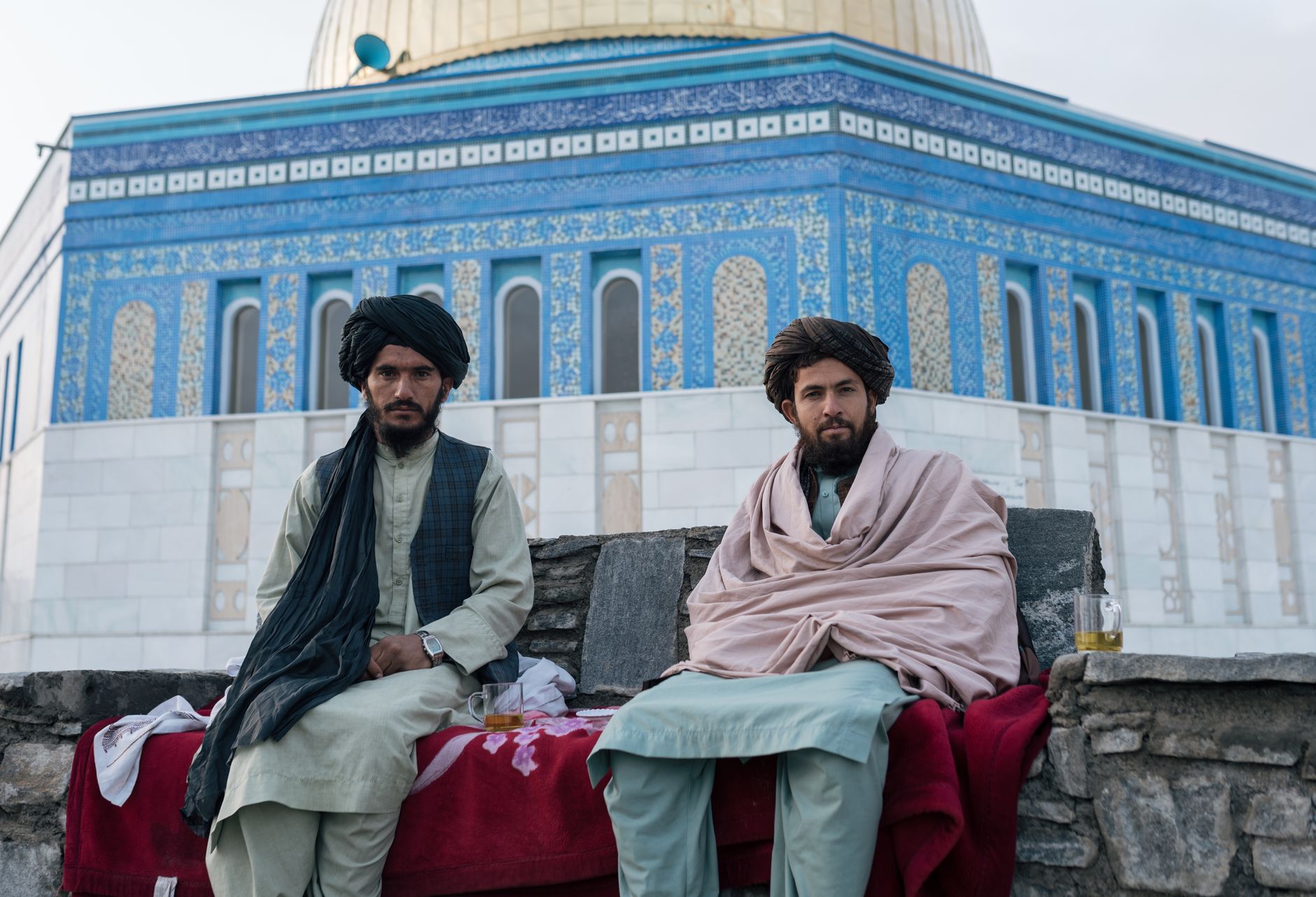
Two Afghan men sit in front of a blue-tiled building, showcasing traditional attire in Afghanistan.
Photo by Faruk Tokluoğlu on Pexels · Pexels License
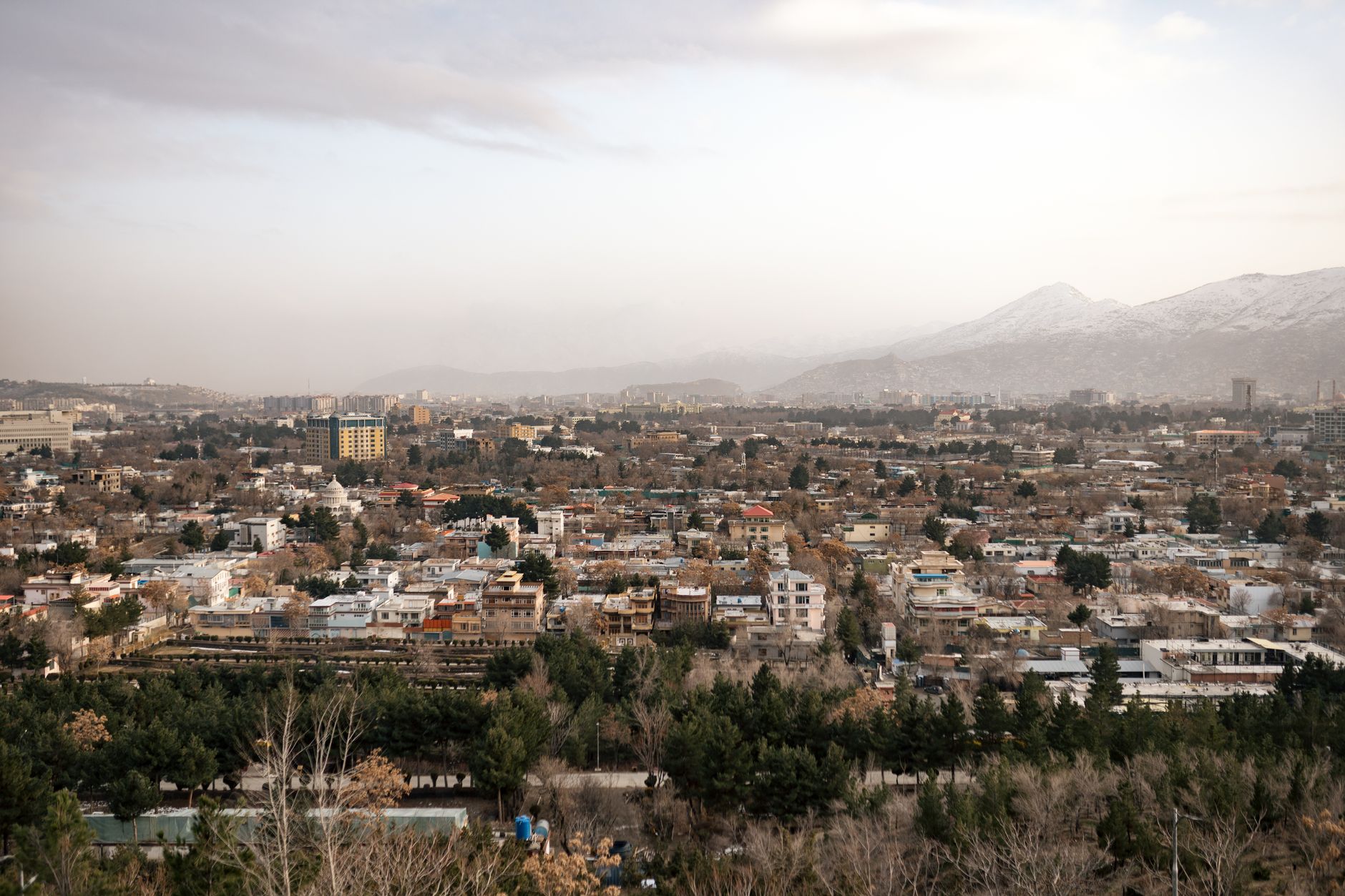
A sweeping aerial view of Kabul, Afghanistan showcasing urban landscape against mountainous backdrop.
Photo by Faruk Tokluoğlu on Pexels · Pexels License
Three Afghan men in traditional attire standing outdoors, showcasing cultural attire and identity.
Photo by Faruk Tokluoğlu on Pexels · Pexels License
A group of women covered in blue burqas walking outdoors in Afghanistan, highlighting cultural attire.
Photo by Faruk Tokluoğlu on Pexels · Pexels License
Expansive aerial view of Kabul city, showcasing urban density and surrounding mountains in Afghanistan.
Photo by Faruk Tokluoğlu on Pexels · Pexels License
Aerial view of Kabul city skyline with traffic at sunset, featuring mountains and urban architecture.
Photo by Mansour Ibrahim on Pexels · Pexels License
Practical Information
Visa
For ordinary tourist travel, assume you need a visa in advance. Afghanistan’s Foreign Ministry lists a tourist visa at US$80, valid for 3 months with a 1-month stay, but embassy practice varies by mission, and some posts still ask for an invitation letter. Check the exact embassy handling your file before you book flights.
Currency
Afghanistan uses the Afghan afghani, abbreviated AFN. A rough mid-April 2026 working rate was US$1 to about 64 AFN, and the country is still heavily cash-based: cards are accepted in very few places, often with high fees, and ATMs are unreliable enough that you should not build a trip around them.
Getting There
Most visitors arrive by air, and schedules can change quickly, so buy only flexible tickets. Border crossings are more volatile than they look on a map, and current foreign-advisory pages flag sudden closures, extra document checks, and security incidents at both airports and land borders.
Getting Around
Inside cities, taxis are the basic tool: in Kabul, the meterless starting fare sits around 135 AFN, while local transport can be as low as 10 AFN. For longer moves between Kabul, Herat, Mazar-i-Sharif, Bamiyan, Kandahar, or Ghazni, many foreign travelers end up relying on pre-arranged drivers, domestic flights where available, and generous buffer time for checkpoints or rerouting.
Climate
Altitude shapes everything here. Bamiyan, Bamyan Valley, Nuristan, and Panjshir run much colder than Kabul or Kandahar, while lower and drier parts of the country can turn harshly hot in summer; spring and autumn are usually the easiest windows for road travel, but local conditions matter more than the calendar.
Connectivity
Do not expect stable, countrywide mobile data. In Kabul and a few major cities you may find workable hotel Wi-Fi and basic mobile coverage, but speeds drop fast once you leave the main urban corridors, and you should assume outages, patchy service, and messaging delays.
Safety
This is a high-risk destination, and the official advice from the US, UK, Canada, and Australia in early 2026 remains the strongest warning level: do not travel or avoid all travel. The stated risks include terrorism, kidnapping, arbitrary detention, armed conflict, volatile borders, and weak medical support, so practical planning starts with whether the trip should happen at all.
Taste the Country
restaurantQabili Palau
Shared platter. Family table, guest night, feast day. Rice, lamb, carrot, raisin, naan, right hand, long talk.
restaurantMantu
Steam, yogurt, garlic, lentil sauce. Lunch, gathering, winter room. Plate, spoon, laughter, stain, surrender.
restaurantAshak
Leek dumplings, yogurt, dried mint, meat sauce. Kabul table, spring meal, cousins, aunts. Fold, cut, mix, eat.
restaurantBolani
Flatbread, potato or pumpkin, tea, street corner. Breakfast, dusk, road pause. Tear, dip, burn fingers, continue.
restaurantChapli Kebab
Naan, onion, herbs, chutney. Market lunch, men, smoke, speed. Tear bread, pinch meat, eat at once.
restaurantNaan and Green Tea
Bakery stop, dawn, host room, waiting room. Bread, tea, silence, greeting. Pour, tear, sip, begin.
restaurantShorba
Broth, meat, vegetables, bread. Evening, cold day, family floor cloth. Sip, soak, chew, rest.
Tips for Visitors
Carry Cash
Bring enough clean US dollars and change part of them into AFN in major cities. Do not count on cards, and keep well below the reported legal cash limits of US$5,000 through airports and US$500 at land borders.
Book Flexible Rooms
Use cancellable rates whenever you can. A decent city hotel may sit around US$57 in Herat or Mazar-i-Sharif, while better Kabul properties can run around US$151 a night, and plans change faster here than booking platforms admit.
Pay for Buffer
The cheap version of a route on paper often becomes the expensive version on the ground. Drivers, rerouting, checkpoint delays, and last-minute overnight stays are what push many foreign travelers from a US$60 day into the US$250-plus range.
Tip Lightly
Tipping is modest, not automatic. In restaurants, 5 to 10 percent is enough if service was good and no charge is listed; in simple tea houses, rounding up is more natural than performing generosity.
Download Offline
Save maps, hotel details, embassy contacts, and translations before you leave Kabul or another major city. Mobile data and hotel Wi-Fi can vanish without warning once you are off the main urban axis.
Respect Gatekeepers
Let your host, driver, fixer, or hotel tell you what is normal that day. In Afghanistan, local judgment on routes, clothing, photography, and timing matters more than any generic travel habit you picked up elsewhere.
Ask Before Photos
Do not photograph checkpoints, security personnel, government sites, or strangers without permission. In conservative settings, asking first is not soft etiquette; it is basic self-preservation and a sign that you understand adab, not just camera settings.
Explore Afghanistan with a personal guide in your pocket
Your Personal Curator, in Your Pocket.
Audio guides for 1,100+ cities across 96 countries. History, stories, and local insight — offline ready.
Audiala App
Available on iOS & Android
Join 50k+ Curators
Frequently Asked
Is it safe to travel to Afghanistan in 2026? add
No, not by the standard used in mainstream travel planning. The US, UK, Canada, and Australia all maintained their strongest warnings in early 2026 because of terrorism, kidnapping, arbitrary detention, armed conflict, unstable borders, and weak medical support.
Do US or UK citizens need a visa for Afghanistan? add
Yes, both do. Afghanistan’s Foreign Ministry lists a tourist visa, but embassy rules differ, some missions ask for extra paperwork such as invitation letters, and the UK notes that the Afghan embassy in London is closed, which makes checking the issuing post even more important.
Can tourists use credit cards in Afghanistan? add
Usually not in any dependable way. Afghanistan is still cash-heavy, ATMs are often broken or expensive, and even places that take cards may add a large extra fee, so most travelers work in AFN and backup US dollars.
How much money do you need per day in Afghanistan? add
A bare-bones city budget starts around US$35 to 60 a day, but that figure can be misleading for foreigners. Once you add a trusted driver, safer hotels, bottled water, flight changes, and schedule padding, many trips land closer to US$250 to 450 a day.
What is the best time to visit Bamiyan or Bamyan Valley? add
Spring and autumn are usually the easiest seasons. Bamiyan sits high enough that winter can be severe and summer road conditions vary, so the real answer depends on altitude, snowfall, and whether your transport is arranged privately or improvised on the spot.
How do you get around between Kabul, Herat, and Mazar-i-Sharif? add
Most foreign travelers use a mix of domestic flights and pre-arranged drivers. Road distances are not the whole story here, because checkpoints, security conditions, and route changes often matter more than the map mileage.
Is Kabul worth visiting, or should you skip it for Bamiyan or Herat? add
Kabul is worth seeing if you need the capital to understand the country, but it is not the easiest place to enjoy in a conventional travel sense. Herat rewards architecture lovers more quickly, while Bamiyan gives you the strongest landscape-and-history combination.
Do you need a fixer or private driver in Afghanistan? add
In practice, many foreign travelers do. Even when a route looks cheap on paper, a trusted driver or local fixer is often what makes the plan workable, safer, and flexible enough to survive delays or sudden changes.
Sources
- verified US Department of State: Afghanistan Travel Advisory — Current US government safety warning and risk profile, reissued 20 February 2026.
- verified UK Foreign, Commonwealth & Development Office: Afghanistan — UK travel advice covering safety, border issues, entry requirements, and cash limits, current April 2026.
- verified Ministry of Foreign Affairs of Afghanistan: Tourist Visa — Official visa page listing tourist visa validity, stay length, and base fee.
- verified US Department of State: Afghanistan Country Information — Primary source for visa cautions, passport validity guidance, and card-versus-cash realities.
- verified UNESCO World Heritage Centre — Authoritative reference for Bamiyan and Jam, used for historical context and site significance.
Last reviewed: