


Place
Warsaw
Poland Aktualizováno Mar 2026
Chopinovo srdce spočívá zazděné v jednom z pilířů kostela Svatého Kříže na Krakowskie Przedmieście, uchované v koňaku od roku 1879 – a právě tento jediný detail vám o Varšavě řekne víc než průvodce o dvou stech stranách. Je to město, které se neoddá zapomnění, i když bylo doslova srovnáno se zemí a postaveno znovu z prachu.
 Foto: Mariusz Zając / Pexels
- Atrakcí
- 35
- Audio
- 53 h
- Délka cesty
- 3–4 dny
- Nejlepší období
- Pozdní jaro až začátek podzimu (květen–září)
Proč Warsaw
Vytvořeno z citovaných zdrojů · podívejte se na metodu · Jak tvoříme naše průvodce →
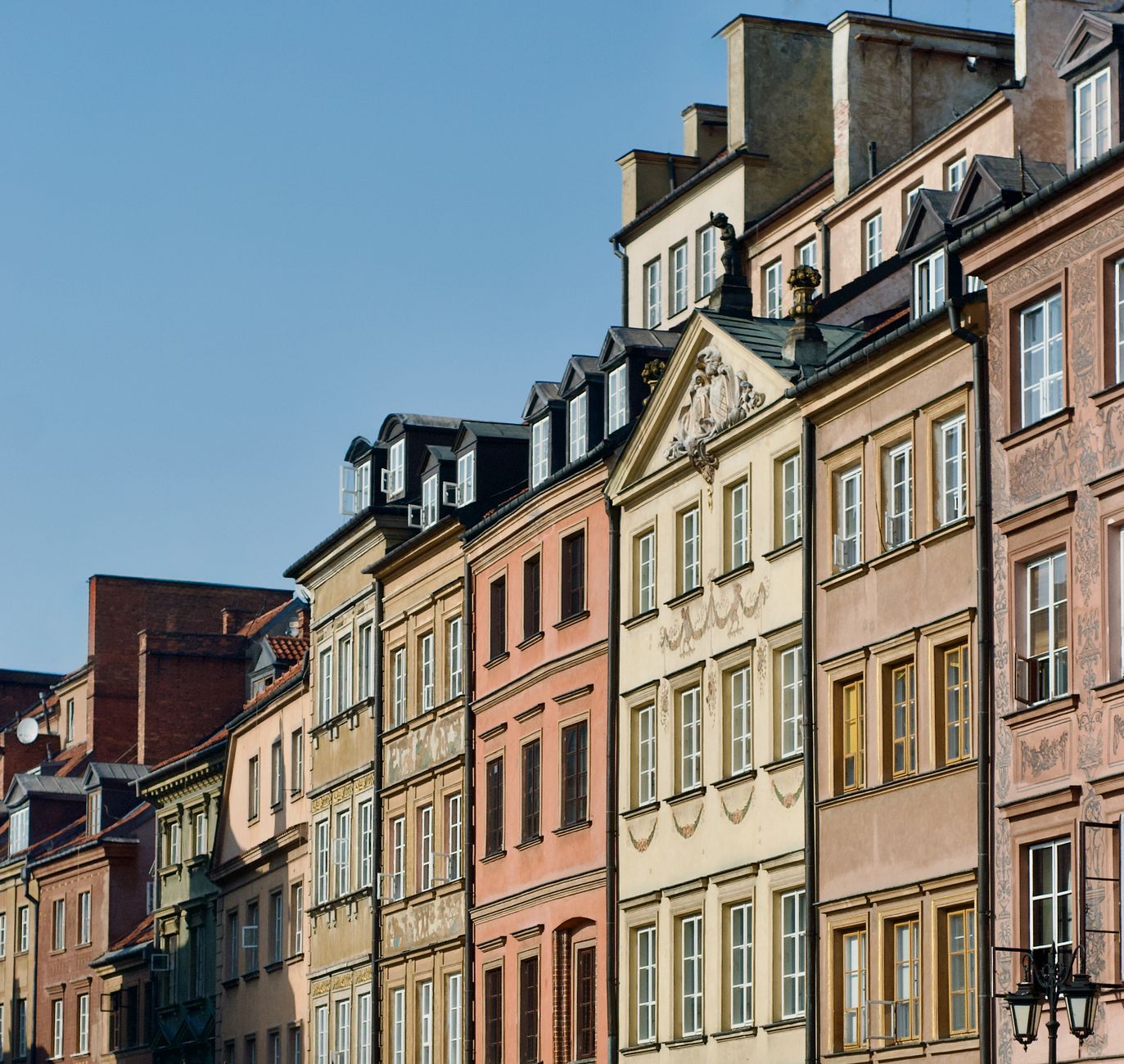
V roce 1944 bylo zničeno pětaosmdesát procent Varšavy. Staré Město, kterým dnes procházíte – pestrobarevné kupecké domy, dlážděné náměstí, středověké hradby – není původní. Je to pečlivá rekonstrukce, tak věrná, že jí UNESCO udělilo statut světového dědictví nikoli navzdory tomu, že jde o kopii, ale právě proto, jak k ní došlo. Obyvatelé během války ukrývali architektonické fragmenty. Za podklady pro obnovu sloužily vedutové malby Canaletta z 18. století, které visely v Královském hradu. Ta rekonstrukce nebyla nostalgií. Byla to vzpoura.
A tato vzpurnost prostupuje vším. Palác kultury a vědy – stalinský mrakodrap vysoký 231 metrů, darovaný SSSR – stále ovládá panorama města. Varšavané ho nestrhli, ale ani si ho nezamilovali; smířili se s jakýmsi nevlídným soužitím, které přesně vystihuje vztah tohoto města k vlastní historii. Na druhém břehu Visly přežila čtvrť Praga válku nedotčena – její předválečné nájemní domy s fasádami posetými stopami po kulkách jsou jediným autentickým fragmentem předválečné Varšavy. A dnes vedle sovětských panelových domů strmí Varso Tower, nejvyšší budova v EU s výškou 310 metrů. Varšava svá protiklady nezhlazuje. Vrství je na sebe.
Živoucí město je stejně mnohovrstevnaté jako jeho architektura. V letních nedělích znějí parkem Łazienki bezplatné Chopinovy recitály. Od června do září se břehy Visly promění v otevřené plážové bary s hudebním programem a zónou volného pití. V Muranówě leží terén o dva až čtyři metry výš než okolní ulice – chodíte po stlačených troskách ghetta, dnes pokrytých trávníkem a bloky bytových domů. Varšava po vás chce, abyste toto všechno dokázali pojmout najednou: krásu, smutek, vzdor i poctivé pierogi.
A City Rebuilt from Memory
Warsaw was 85% destroyed in WWII. Citizens hid fragments of the Royal Castle, then rebuilt the entire Old Town brick by brick — a reconstruction so deliberate it earned UNESCO status not despite being a replica, but because of what the act of rebuilding meant.Chopin's Living Room
Chopin's heart rests in a pillar of the Holy Cross Church, embalmed in cognac since 1879. Every Sunday from May to September, free open-air concerts at the Łazienki Park monument turn the grass into a picnic-blanket concert hall — a Warsaw summer ritual since the 1960s.Skyline of Contradictions
The Stalinist Palace of Culture still dominates the center, loved and loathed in equal measure. A few blocks away, Varso Tower's 310-metre spire makes it the EU's tallest building. Warsaw's skyline reads like a timeline of the ideologies that shaped it.Parks That Tell Stories
Łazienki's 76 hectares shelter a palace floating on water and peacocks that ignore you completely. Across the river, Skaryszewski Park — barely known to tourists — hides Art Nouveau sculptures among willow allées and cascading ponds.
Místa k návštěvě
Ne každá památka, jen ty, kolem kterých bychom vás provedli sami.
- Tipy Pro První Návštěvu Varšavy: Místní Triky a Podvody, Kterým Se Vyhnout Poctivé tipy o Varšavě ze zápisníku místního: letištní taxi past, poplatky bankomatů Euronet, rezervace Muzea povstání, podvody ve Starém Městě, obědy v mléčném baru. Aktualizováno v dubnu 2026.
- Varšavské Passy a Karty, Které Šetří Peníze: Co Se Opravdu Vyplatí Poctivý průvodce varšavskými passy a dopravními kartami: kdy Warsaw Pass šetří peníze, kdy jsou chytřejší koupí jízdenky WTP a kdy vyjde levněji platit zvlášť.
Čtvrti
Kam se vydat na toulky, čtvrť po čtvrti — každá má svůj vlastní rytmus.
Stare Miasto (Staré Město)
Každá budova tady je přízrak vrácený do světa živých. Staré Město zapsané na seznam UNESCO bylo kámen po kameni znovupostaveno po totálním válečném zničení – jako vodítka posloužily ukryté architektonické zlomky a Canalettovy malby. Tržní náměstí žije kavárenskými zahrádkami a bronzovou Varšavskou Mořskou pannou, zatímco Královský hrad ukončuje Hradní náměstí se svým Canalettovým sálem – výhledy 18. století na ty samé ulice, po kterých jste právě šli. Kamenné schody (Kamienne Schodki), úzká ulička klesající dolů z náměstí, jsou každou sobotní dopoledni pevně v rukou varšavských svatebních fotografů.Praga Północ
Jediná čtvrť, kterou Němci nezničili. V Praze – té varšavské – předválečná Varšava skutečně přežila: fasády nájemních domů pokryté stopami po střelbě, sešlé dvory a syrová autentičnost, kterou rekonstruovaný západní břeh nikdy mít nebude. V komplexu Soho Factory sídlí Muzeum neonu, kde v jednom zatemněném sále září šedesátka zachráněných neonových reklam z komunistické éry. Ulice Ząbkowska je hlavní barová tepna: přestavěné nájemní domy s pivovarskými zahradami a živou hudbou v klubu Hydrozagadka, bývalé fabrice přeměněné na alternativní kulturní prostor. Gentrifikace proměňuje Pragu rychleji, než by si mnozí přáli, ale ostrá hrana, o niž Śródmieście přišlo před lety, tu zatím zůstává.Powiśle
Schovaná pod srázem mezi Starým Městem a Vislou je tato čtvrť nejpříjemnějším místem k životu v celé vnitřní Varšavě – klidná, zelená, plná nezávislých restaurací podél ulic Lipowa, Radna a Dobra. Zahradní terasa na střeše Knihovny Varšavské univerzity, jedna z největších v Evropě, nabízí zdarma panoramatický výhled na řeku i střechy města. V létě se vše přesune dolů na Bulwary Wiślane – nábřežní promenádu, kde plážové bary, bárky a volejbalová hřiště promění břeh Visly v největší obývák celé Varšavy.Śródmieście
Varšavskému centru dominuje Palác kultury a vědy, který jedni milují a druzí nesnášejí, ale skutečné dění se odehrává v ulicích pod ním. Pawilony – labyrint skrytých dvorků poblíž Nowego Światu – skrývají tucet malých pavilonových barů, každý s vlastní atmosférou, kde mladí Varšavané v pracovní dny pijí za skoro nic. Hala Koszyki, obnovená secesní tržnice z roku 1906, je v poledne plná úředníků z okolních kanceláří, kteří si vybírají z osmnácti stánků s jídlem. Plac Zbawiciela je společenská kotva čtvrti: terasa baru Plan B bývá od šesti hodin večer obsazena do posledního místa a kdo nepřijde včas, sedí prostě na obrubníku.Muranów
Bývalé varšavské ghetto. Terén je tu měřitelně výš – o dva až čtyři metry nad okolními ulicemi – protože poválečné bytové domy byly postaveny přímo na stlačených troskách. Muzeum POLIN, Evropské muzeum roku 2016, sleduje tisíc let židovského života v Polsku napříč osmi galeriemi. Venku stojí Pomník hrdinů ghetta na místě, odkud odjížděly deportační vlaky z Umschlagplatzu. Na ulici Próżna bylo záměrně ponecháno polorozpadlé celé jedno křídlo předválečných židovských nájemních domů – tiché prázdné místo v jinak přestavěném městě. Nové Muzeum varšavského ghetta se otevře v roce 2026 v obnoveném areálu Dětské nemocnice Bersona a Baumana.Żoliborz
Vesnice uprostřed hlavního města. Tiché ulice lemované předválečnými modernistickými bytovými domy dávají Żoliborzowi náladu maloměsta, které má náhodou stanici metra. Sobotní snídaňový trh Targ Śniadaniowy přitahuje rodiny k organickým a farmářským stánkům – přijďte do deseti dopoledne, pokud nechcete přijít zkrátka. Varšavská citadela z 19. století, ruská pevnost s příkopy a baštami, ukrývá vojenská muzea i místa poprav, kde okupanti vraždili polské povstalce. Park Kępa Potocka s jezerem lemovaným vrbami zůstává turistům téměř neznámý.Wola
Nastupující čtvrť Wola balancuje mezi průmyslovou minulostí a novou energií. Muzeum Varšavského povstání, umístěné v přestavěné elektrárně, patří k nejnavštěvovanějším i nejemotivně náročnějším muzeím celého Polska. Nedaleko se tyčí Pamětní pahorek – navršený ze skutečných válečných trosek a nejvyšší bod ploché Varšavy – který v zimě slouží jako neoficiální lyžařský svah. Nocny Market obsazuje perón zaniklého nádraží: vietnamské bánh mì, polské pouliční jídlo a řemeslné pivo pod neonovými nápisy a železnými klenbami, každý pátek a sobotu do jedné v noci.Mokotów
Aleje plné stromů, meziválečné buržoazní vily a nejlepší tradiční polské restaurace ve Varšavě. Restaurace Różana na ulici Chocimska podává to, co mnozí považují za definitivní žurek – kyselou žitnou polévku s hříbky a zakysanou smetanou – v prostředí, které působí jako dobře střežené tajemství přes desetiletí chvály. Park Morskie Oko, malý a secesního rázu, je zelenou plící celé čtvrti. Mokotów je místo, kde Varšava jí vážně: Przegryź dělá husí pierogi a Puławská ulice nabízí sérii kaváren pro celodenní posezení – bez turistické přirážky.
Naplánujte cestu
Než vyrazíte
- Getting There
- Warsaw Chopin Airport (WAW) sits just 9 km from the centre — bus 175 or SKM train S2/S3 reach downtown in 30 minutes for 4.40 PLN. Budget carriers use Modlin Airport (WMI), 40 km north; FlixBus connects to the city in about 45 minutes for 30 PLN. Warszawa Centralna is the main rail hub, with direct trains to Berlin (5.5 hrs), Kraków (2.5 hrs), and Vilnius (8 hrs).
- Getting Around
- ZTM runs two metro lines (M1 north-south, M2 east-west, interchange at Świętokrzyska), plus an extensive tram and bus network — all on one ticket. A 75-minute ticket costs 4.40 PLN; 24-hour passes are 15 PLN and 72-hour passes 36 PLN, unchanged since 2013. Veturilo bike-share has 3,400 bikes across 300 stations — the first 20 minutes are free every time, making short hops essentially costless.
- Climate & Best Time
- Continental climate: summers reach 23–26°C with July the warmest and wettest month, winters drop to −4°C with occasional snow. May, June, and September are the sweet spot — warm enough for riverside bars and park concerts, without July's crowds or rain. September is particularly underrated: 20°C days, thinning tourist numbers, and lower hotel prices.
- Language & Currency
- Polish złoty (PLN) only — 1 EUR ≈ 4.25 PLN. Cards and contactless payments work nearly everywhere; carry 50–100 PLN cash for market stalls. English is widely spoken under 35, especially in hospitality. One critical tip: don't say 'dziękuję' (thank you) when handing over cash at a restaurant — it signals you're forfeiting the change.
- Safety
- One of Europe's safest capitals — U.S. State Department's lowest advisory level. The Old Town and Śródmieście are well-lit and policed around the clock. Praga Północ (north Praga, across the river) has an edgy reputation that's mostly outdated but still merits nighttime awareness. Use Uber or Bolt from airports — unlicensed taxi drivers at arrivals are the main tourist trap.
Destroyed and Reborn, Again and Again
From a fishing village on the Vistula to the city that refused to die
- c. 1280
A Duke Founds Warsaw
After Jazdów is razed, Prince Bolesław II of Masovia moves two miles north to a fishing village called Warszowa — probably meaning 'belonging to Warsz,' a local landowner whose name no one remembers for anything else. A castle goes up, a market square takes shape, and the Vistula crossing begins to matter. No one imagines this minor ducal seat will become one of Europe's most consequential capitals.
- 1413
Warsaw Becomes Masovian Capital
Prince Janusz II elevates Warsaw above the duchy's other towns. The population is around 4,500, split between the Old Town and a New Town growing to its north, each with its own walls and governance. Italian merchants and German artisans settle alongside Polish traders. The Royal Castle's first stone tower already anchors the skyline.
- 1596
The Capital Moves from Kraków
After a fire damages Wawel Castle, King Sigismund III Vasa transfers the royal court to Warsaw — not for sentiment but for geography. Warsaw sits almost exactly between Kraków and Vilnius, the twin hearts of the Polish-Lithuanian Commonwealth. Italian architects reshape the Royal Castle into a five-wing Baroque complex. Within a generation, the fishing village is hosting parliaments and ambassadors.
- 1644
Sigismund's Column Rises
A bronze statue of Sigismund III Vasa goes up on a tall column in Castle Square — the first secular monument in column form in modern European history. Rome had columns for emperors; Warsaw now has one for a king. The column will be knocked down, rebuilt, knocked down again, and rebuilt again. It still stands today, which is more than you can say for most of the buildings that once surrounded it.
- 1655
The Deluge Empties the City
Swedish, Brandenburgian, and Transylvanian armies crash through Warsaw in rapid succession. The city changes hands three times in three years. Palaces are stripped, churches burned, archives scattered. The population collapses from 20,000 to roughly 2,000. It is the first of Warsaw's great destructions, and no one yet knows it will not be the last.
- 1677
Wilanów Palace Takes Shape
King Jan III Sobieski — fresh from breaking the Ottoman siege of Vienna — commissions a Baroque summer retreat ten kilometers south of the city center. Wilanów becomes Poland's Versailles: formal gardens, fresco ceilings, a lake that mirrors the facade at sunset. Remarkably, it will survive every war that flattens the rest of Warsaw, standing intact into the 21st century.
Zobrazit celou časovou osu (27 okamžiků)
- 1791
Europe's First Modern Constitution
On May 3, 1791, the Four-Year Sejm adopts a constitution that abolishes the liberum veto, grants townspeople rights, and places peasants under state protection. It is the first modern constitution in Europe and the second in the world, after America's. It lasts exactly fourteen months before Russia and Prussia invade to destroy it. May 3 remains Poland's most sacred national holiday.
- 1794
The Slaughter of Praga
Tadeusz Kościuszko's uprising briefly liberates Warsaw, but in November, Russian General Suvorov's forces breach the right-bank suburb of Praga. What follows is not battle but massacre: an estimated 20,000 inhabitants — soldiers and civilians alike — are killed. The next year, Poland vanishes from the map entirely. The Third Partition divides it among Russia, Prussia, and Austria. Warsaw falls to Prussia, and the Załuski Library's 400,000 books are carted off to St. Petersburg.
- 1810
Chopin Is Born Near Warsaw
Frédéric Chopin enters the world in Żelazowa Wola, a village west of the capital, and moves to Warsaw as an infant. He studies at the Warsaw Conservatory, gives his first concerts in the city's salons, and absorbs the mazurkas and polonaises that will define his music. He leaves at twenty and never returns. His dying wish: that his heart be taken back to Warsaw. It rests today inside a pillar of the Holy Cross Church on Krakowskie Przedmieście.
- 1830
The November Uprising Erupts
On the night of November 29, young Polish military cadets storm the Belweder Palace and attack the Russian garrison. The revolt spreads into a full-scale war lasting ten months. When Russia finally storms the city in September 1831, the consequences are brutal: the autonomous Sejm is dissolved, the university is shut, and the Tsar builds a military Citadel on demolished estates north of the New Town — its prison cells a symbol of occupation for the next eighty years.
- 1867
Maria Skłodowska Is Born on Freta Street
At number 16 Freta Street in the New Town, Maria Skłodowska comes into the world. She will grow up under Russian occupation, attend clandestine 'flying university' classes because women are barred from higher education, and leave for Paris to study at the Sorbonne. She returns in name as Marie Curie — the first woman to win a Nobel Prize, the first person to win two. The element she discovers, polonium, she names for the country that wasn't on any map when she was born.
- 1918
Poland Rises Again
On November 10, Józef Piłsudski steps off a train at Warsaw's main station, freshly released from a German prison. The next day, November 11, Poland declares independence for the first time in 123 years. Warsaw is capital again — of a state that had existed only in the imagination of three generations. The city erupts. Church bells ring. Flags appear on buildings that had been forbidden to fly them.
- 1920
The Miracle on the Vistula
In August 1920, the Soviet Red Army reaches Warsaw's outskirts, intent on carrying the Bolshevik revolution westward into Europe. Piłsudski launches a daring counterattack that shatters the Soviet southern flank. The Battle of Warsaw is over in days; the geopolitical consequences last decades. Had the city fallen, Lenin's armies would have linked with revolutionary movements in Germany. Military historians rank it among the most decisive battles of the twentieth century.
- 1939
The Siege Begins
On September 1, Luftwaffe bombers appear over Warsaw. By September 27, after three weeks of relentless bombardment, 25,000 civilians are dead, the Royal Castle is burning, and ten percent of the city lies in ruins. Mayor Stefan Starzyński broadcasts daily from the radio station, steadying the population with his voice until the Germans arrest him. He is shot at Dachau before Christmas. Hitler holds a victory parade on October 5 and approves the Pabst Plan: Warsaw is to be razed and rebuilt as a minor German town of 130,000.
- 1940
The Ghetto Walls Go Up
In October 1940, the Germans seal approximately 460,000 Jews into 2.4 percent of Warsaw's surface area — roughly 2.6 square kilometers behind brick walls topped with broken glass. The daily food ration is 183 calories. By the time mass deportations to Treblinka begin in July 1942, disease and starvation have already killed tens of thousands. Over two months, 300,000 people are transported to the gas chambers.
- 1943
The Ghetto Uprising
On April 19, when SS troops enter the ghetto to begin the final liquidation, they meet armed resistance. Several hundred Jewish fighters — armed with pistols, homemade grenades, and a handful of rifles — hold out for nearly a month against tanks, flamethrowers, and artillery. SS-Gruppenführer Jürgen Stroop systematically burns the ghetto block by block. By May 16, the Great Synagogue on Tłomackie Street is dynamited. The entire district is rubble.
- 1944
63 Days: The Warsaw Uprising
At 5 p.m. on August 1, the Polish Home Army launches Operation Tempest to liberate Warsaw before the Soviets arrive. For 63 days, roughly 40,000 fighters battle the Wehrmacht in the streets while the Red Army watches from the far bank of the Vistula. By October 2, approximately 170,000 people are dead — 154,000 of them civilians. The surviving population of 650,000 is marched to a transit camp at Pruszków. Then Hitler orders total destruction: special demolition squads spend three months dynamiting Warsaw building by building. When the Red Army finally crosses the river on January 17, 1945, eighty-five percent of the city has ceased to exist.
- 1945
Rebuilding from Canaletto's Paintings
Varsovians return to a wasteland and begin the most ambitious urban reconstruction in European history. The Bureau of Capital's Rebuilding consults Bernardo Bellotto's meticulous 18th-century cityscapes — painted under the name Canaletto — to restore the Old Town facade by facade. Citizens donate hidden artworks, furniture fragments, and architectural details they had buried before the uprising. By the early 1950s, the Old Town stands again — not a theme park, but a statement of identity so powerful that UNESCO will later inscribe it as a World Heritage Site for the act of reconstruction itself.
- 1911
Szpilman Plays On
Władysław Szpilman, born in a Warsaw suburb, becomes a pianist for Polish Radio and a fixture of the city's musical life. When the ghetto is liquidated, he is pulled from a deportation line by a Jewish policeman. He survives the war hiding in the ruins of Warsaw, kept alive at one point by a German officer who asks him to play a Chopin nocturne on a piano in a bombed-out apartment. His memoir, published in 1946 and suppressed for decades, becomes the basis for Roman Polański's film The Pianist.
- 1955
Stalin's Gift Towers Over the City
The Palace of Culture and Science rises 231 meters above central Warsaw — a Stalinist wedding cake of a building, a 'gift from the Soviet people' that nobody asked for and nobody can ignore. It houses theatres, cinemas, a science museum, offices, and a 30th-floor terrace from which you can see the only view of Warsaw that doesn't include the Palace of Culture. Varsovians joke darkly about it, but it becomes the city's most recognizable silhouette.
- 1979
A Pope Speaks in Victory Square
Pope John Paul II — Karol Wojtyła, elected the previous year — returns to Poland and celebrates an open-air Mass in Victory Square before hundreds of thousands. When he calls on the Holy Spirit to 'renew the face of this land,' the crowd understands exactly what he means. The thirteen minutes of unbroken applause that follow are not about religion. Within a year, ten million Poles will join the Solidarity trade union.
- 1980
UNESCO Honors the Reconstruction
Warsaw's Historic Centre becomes a UNESCO World Heritage Site — not because it is old, but because it was rebuilt. The inscription recognizes what the committee calls 'an outstanding example of a near-total reconstruction of a span of history covering the 13th to the 20th century.' It is the only site on the list honored primarily for the act of its own restoration, a quiet acknowledgment that sometimes the most important history is what a city refuses to let die.
- 1989
The Round Table Ends an Era
Between February and April, government officials and Solidarity leaders sit across from each other at Namiestnikowski Palace and negotiate the end of communist rule. On June 4, semi-free elections give Solidarity every competitive seat. Within months, the Berlin Wall falls. Within two years, the Soviet Union dissolves. The dominoes start here, in Warsaw, at a round table chosen because it had no head.
- 1745
Kazimierz Pułaski, Born to Fight
Kazimierz Pułaski is born into a Warsaw noble family and grows up amid the political chaos of a weakening Commonwealth. He fights in the Bar Confederation against Russian interference, is exiled, and sails to America on Benjamin Franklin's recommendation. At the Battle of Brandywine he saves George Washington's life; at Savannah he dies leading a cavalry charge. Americans call him 'the father of the American cavalry.' Warsaw remembers him as one of its own who fought for freedom on two continents.
- 1747
Poland's First Public Library Opens
The Załuski brothers open their library to the public — the first institution of its kind in Poland, housing some 200,000 volumes that will grow to 400,000. It is an Enlightenment beacon in a city increasingly overshadowed by foreign powers. When the Third Partition extinguishes Poland in 1795, Russian troops cart the entire collection to St. Petersburg. The books never come back. The gesture of opening knowledge to the public, however, proves harder to confiscate.
- 2004
Poland Joins the European Union
Poland's EU accession unlocks the greatest economic transformation in Warsaw's modern history. GDP growth averages 3.8 percent annually against the EU's 1.8 percent. Glass office towers rise alongside the reconstructed Old Town. Tech companies and financial firms establish regional headquarters. By 2026, Poland's economy surpasses one trillion dollars, making it the world's twentieth largest. Warsaw's skyline — once dominated by Stalin's palace alone — now bristles with skyscrapers that would have been unimaginable a generation ago.
- 2022
A City Opens Its Doors Again
When Russia invades Ukraine, Warsaw absorbs roughly 180,000 refugees — one-tenth of the city's population, the largest single-city concentration of Ukrainian refugees in the world. Ordinary residents offer spare rooms, language lessons, school places. It is not the first time Warsaw has been reshaped by a war it did not start, but it may be the first time the city responds not with resistance but with an open door. The demographic and cultural shift is still unfolding.
Kdo tu žil
-
Skladatel · 1810–1849
Fryderyk Chopin
Vyrůstal a vzdělával se zde v letech 1810–1830
Chopin odehrál svůj první veřejný koncert v osmi letech v Prezidentském paláci a strávil formativních dvacet let nasávající atmosféru varšavských salonů, než odplul do Paříže — již se nikdy nevrátil živý. Jeho srdce — doslova naložené v koňaku — bylo pašováno zpátky do Polska a zazděno do pilíře Svatokřížského kostela, kde dodnes spočívá pod nápisem z Matoušova evangelia. Každou letní neděli Varšavané sedí na trávě v Łazieneckém parku a poslouchají jeho hudbu hranou pod pomníkem — rituál, který přežil každý režim, jenž se ho pokoušel přivlastnit.
-
Fyzička a chemička · 1867–1934
Marie Curie
Narozena zde
Maria Skłodowska se narodila na Freta 16 v Novém Městě, kde je dnes její rodný dům muzeem. Vzdělávala se v tajných hodinách tzv. Létající univerzity, protože ruská správa ženám vysokoškolské vzdělání zakazovala. Ve 24 letech odjela do Paříže s úsporami z let práce vychovatelky. Jako první člověk v historii získala dvě Nobelovy ceny — ale město, ve kterém vyrostla, muselo čekat až do roku 1918, aby vůbec znovu existovalo jako polské hlavní město.
-
Pedagog a průkopník práv dětí · 1878–1942
Janusz Korczak
Žil a pracoval zde
Henryk Goldszmit — literárním jménem Janusz Korczak — vedl sirotčinec ve varšavském ghettu a mnohokrát mu bylo nabídnuto útočiště od kontaktů polského odboje. Každou nabídku odmítl a vyšel se svými 192 dětmi na Umschlagplatz, odkud je odvezli do Treblinky. Bronzová socha na Okopowé ulici u Židovského hřbitova ho zobrazuje obklopeného dětmi — jeden z nejklidnějších a nejzdrcujících pomníků v městě, které jich rozhodně nemá málo.
-
Pianista a skladatel · 1911–2000
Władysław Szpilman
Prožil zde celou druhou světovou válku
Szpilman hrál Chopinovo Nokturno cis moll na Polském rozhlase, když 23. září 1939 zasáhly německé bomby vysílač — poslední živé vysílání před šesti lety ticha. Přežil ghetto, povstání i měsíce ukrývání v troskách, částečně díky německému důstojníkovi, který ho uslyšel hrát. Jeho paměti se staly předlohou pro film Pianista a Varšavův vztah k hudbě se od té doby nikdy nedal oddělit od přežití.
-
Král polský a švédský · 1566–1632
Zikmund III. Vasa
Přesídlil sem hlavní město roku 1596
Když Zikmund roku 1596 přemístil královský dvůr z Krakova do Varšavy, povýšil regionální mazovské městečko na hlavní město Polsko-litevské unie — jednoho z největších státních útvarů tehdejší Evropy. Jeho bronzová postava na sloupu Hradního náměstí, vztyčená roku 1644, byla prvním světským sloupovým pomníkem v novověké evropské historii. Nacisty sražená, Poláky znovu postavená — tento sloup se stal symbolem varšavské houževnatosti.
-
Vojenský velitel · 1746–1817
Tadeusz Kościuszko
Vedl odtud povstání roku 1794
Hrdina jak amerického, tak polského boje za nezávislost, Kościuszko vedl z Varšavy roku 1794 zoufalé národní povstání proti ruskému a pruskému dělení Polska. Povstání město nakrátko osvobodilo, než ruský generál Suvorov prolomil obranu a nechal vykonat masakr Pragy, při němž zahynulo na 20 000 obyvatel. Jeho jméno zní z varšavských ulic a parků dodnes — připomínka, že svoboda Varšavy byla vždy vybojována, nikdy darována.
-
Básnířka a nositelka Nobelovy ceny · 1923–2012
Wisława Szymborska
Studovala na Varšavské univerzitě
Přestože většinu dospělého života strávila v Krakově, Szymborska studovala polskou literaturu a sociologii na Varšavské univerzitě v bezprostředních poválečných letech — chodila ulicemi, jež byly z velké části stále troskami. Její poezie — úsporná, ironická, hluboce lidská — nese citlivost někoho, kdo sledoval, jak se celé hlavní město znovu staví z ničeho, a pochopil, že civilizace je vždy křehčí, než vypadá.
Kde jíst
Kam si na večeři rezervují místní — žádná turistická menu.
Tipy zasvěcených
Maličkosti, které mění, jak se k vám město chová.
Projděte Královskou cestu
Čtyřkilometrová trasa z Královského hradu do Łazieneckého parku vede kolem Chopinova srdce ukrytého ve Svatokřížském kostele, Prezidentského paláce i legendární cukrárny Blikle, která tu stojí od roku 1869. Bez zastávek si naplánujte 90 minut — ale počítejte s půldenním výletem, protože každý roh vás zastaví.Využijte varšavskou MHD
Varšavská MHD je levná a spolehlivá — tramvaje a metro pokryjí většinu pamětihodností. Kupte si 72hodinovou jízdenku, ušetříte si starost s jednotlivými lístky. Linka metra M2 přitom spojí čtvrť Praga s centrem za pár minut.Oběd v tržních halách
Hala Mirowska je opravdový dělnický trh fungující od roku 1901, zatímco sousední Hala Gwardii je hip food hall plný různorodých pouličních stánků. Oba objekty stojí ve stejném bloku u tramvajové zastávky Hala Mirowska — v jednom si dejte oběd, v druhém si prohlédněte nabídku.Nedělní Chopinovy koncerty
Každou neděli od května do září se u Chopinova pomníku v Łazieneckém parku konají bezplatné venkovní recitály — vždy ve 12 a 16 hodin. Vezměte si deku a přijďte s předstihem, místní to berou jako piknikový rituál.Vyhlídka Highline Warsaw
Vyhlídková terasa věže Varso ve výšce 230 metrů je nejvýše položenou v celé EU — otevřela v září 2025. Vstupenku rezervujte online, ušetříte frontu, a 360° výhled vám celé vrstvené dějiny města ukáže najednou.Léto na Visle
Od června do září se východní břeh Visly promění v městskou pláž s bary, DJs, volejbalem a půjčovnou kajaků — vstup zdarma. Přejděte libovolný most na stranu Pragy a vydejte se za davem.POLIN — rezervujte dopředu
Muzeum POLIN mapuje tisíc let židovských dějin v osmi galeriích — počítejte minimálně se třemi hodinami. Vstupenku s časovým slotem rezervujte předem, zvláště o víkendech, a zvažte audioprovodce pro hlavní expozici.Dostupné hlavní město
Varšava zůstává znatelně levnější než západoevropské metropole. Vydatný oběd v baru mlecznym vyjde pod 5 €, vstupné do muzeí se pohybuje kolem 4–7 € a řemeslné pivo ve čtvrti Praga stojí asi 3 €.
Galerie
Město tak, jak doopravdy vypadá.




Sledovat
-
Alina Mcleod WARSAW WAS EVEN BETTER THAN I EXPECTED (especially the food!)
-
Roman Walks Warsaw - Rapidly Growing Capital of Poland 🇵🇱 | Night City Lights & Skyscrapers | 4K Walking Tour
-
4k Explore World Warsaw, Poland 🇵🇱 Capital City In 4K |
-
Deana and Phil Traditional POLISH FOOD TOUR! (First Time in Warsaw, Poland!)
Často kladené dotazy
Stojí Varšava za návštěvu?
Rozhodně ano — Varšava patří k nejpodceňovanějším evropským metropolím. Město, které se vztyčilo z 85% zkázy, dnes nabízí staré město zapsané na seznam UNESCO, světová muzea jako POLIN nebo Muzeum Varšavského povstání, nejvyšší vyhlídku v EU a gastronomickou scénu srovnatelnou s Krakovem — při zlomku turistického ruchu. Napětí mezi zjizvenou historií a výbušnou moderností tu nemá v Evropě obdoby.
Kolik dní ve Varšavě potřebujete?
Ideálně tři až čtyři dny. První den věnujte Starému Městu, Královskému hradu a Královské cestě. Druhý den POLIN, okruhu po židovském dědictví a Muzeu Varšavského povstání. Třetí den Łazieneckému parku, paláci Wilanów a čtvrti Praga. Čtvrtý den vám umožní bez spěchu přidat Kampinoski národní park nebo Centrum vědy Koperník.
Je Varšava bezpečná pro turisty?
Podle evropských standardů ano — násilná kriminalita ani krádeže kapsářů tu nejsou v porovnání s Římem nebo Barcelonou nijak výrazné. Platí obvyklá městská obezřetnost: hlídejte si tašku v přeplněných tramvajích a turistických oblastech. Čtvrť Praga prošla výraznou gentrifikací, i když některé postranní uličky jsou v noci slabě osvětlené.
Kdy je nejlepší čas navštívit Varšavu?
Pozdní jaro (květen–červen) a začátek podzimu (září) nabízejí příjemné počasí, dlouhé dny a méně turistů. Od května do září probíhají bezplatné nedělní Chopinovy koncerty v Łazieneckém parku a na vislském břehu se otevírají letní bary. Zima je chladná, ale atmosférická — illuminační festival ve Wilanówě a svíčkové Dušičky na hřbitově Powązki stojí za mráz.
Jak se dostat z varšavského letiště do centra?
Letiště Varšava Chopin (WAW) leží pouhých 10 km jižně od centra. Příměstská linka SKM/KM vás doveze na stanici Śródmieście za 25 minut za přibližně 1 €. Autobus č. 175 jezdí ke Starému Městu. Letiště Modlin (Ryanair) je 40 km na sever — odtud jeďte shuttlebusem na Warszawa Centralna, cesta trvá asi 50 minut.
Co si ve Varšavě dát k jídlu?
Začněte pierogami — nejklasičtější jsou ruskie s bramborami a tvarohem. Nezapomeňte na žurek (polévka z žitného kvasu podávaná v chlebovém chlebíčku), pączki (polské koblihy, nejlepší z cukrárny Blikle na Novém Světě) a placki ziemniaczane (bramboráky). Na opravdový levný oběd zaskočte do baru mlecznego — tyto komunistické jídelny stále vaří domácí polskou kuchyni za pár eur.
Lze jít ze Starého Města do Łazieneckého parku pěšky?
Ano, a rozhodně to stojí za to — je to vlastně trasa Královské cesty. Od Hradního náměstí k hlavnímu vstupu do Łazienek je to asi 4 km, převážně po rovině přes Krakowskie Przedmieście a Nový Svět, pak kolem alejí lemovaných ambasádami. Bez zastávek počítejte 60–90 minut, ale raději si naplánujte víc, protože kostely, paláce a kavárny na trase jsou samy o sobě půl výletu.
Čemu se věnuje Muzeum Varšavského povstání?
Dokumentuje 63 dní Varšavského povstání z srpna až října 1944, kdy polský odboj bojoval za osvobození města z nacistické okupace dříve, než dorazila sovětská armáda. Muzeum sídlí v přestavěné elektrárně ve čtvrti Wola a jeho multimediální expozice je emocionálně velmi silná — vyhraďte si dvě až tři hodiny. Je to jedno z nejnavštěvovanějších muzeí v Polsku, a právem.
Všechna místa k návštěvě.
2 míst k objevení
Pokračujte, kde jste skončili
Uložená a nedávno čtená místa — jen v tomto zařízení.
Autoři fotografií (11)
- Mariusz Zając — Pexels License (https://www.pexels.com/license/) — Zdroj: https://www.pexels.com/photo/31496354/
- V Marin — Pexels License (https://www.pexels.com/license/) — Zdroj: https://www.pexels.com/photo/26795218/
- Egor Komarov — Pexels License (https://www.pexels.com/license/) — Zdroj: https://www.pexels.com/photo/17076307/
- Przemek Leśniewski — Pexels License (https://www.pexels.com/license/) — Zdroj: https://www.pexels.com/photo/36359241/
- Just a Dream Pictures — Pexels License (https://www.pexels.com/license/) — Zdroj: https://www.pexels.com/photo/17107190/
- Przemysław Lunic — Pexels License (https://www.pexels.com/license/) — Zdroj: https://www.pexels.com/photo/20642043/
- Aleksander Dumała — Pexels License (https://www.pexels.com/license/) — Zdroj: https://www.pexels.com/photo/19957325/
- Aibek Skakov — Pexels License (https://www.pexels.com/license/) — Zdroj: https://www.pexels.com/photo/28292096/
- urtimud.89 — Pexels License (https://www.pexels.com/license/) — Zdroj: https://www.pexels.com/photo/18261869/
- Alexander Ford — Pexels License (https://www.pexels.com/license/) — Zdroj: https://www.pexels.com/photo/31330478/
- Pawel Kalisinski — Pexels License (https://www.pexels.com/license/) — Zdroj: https://www.pexels.com/photo/4662632/
Fotografie mohly být zmenšeny nebo oříznuty.