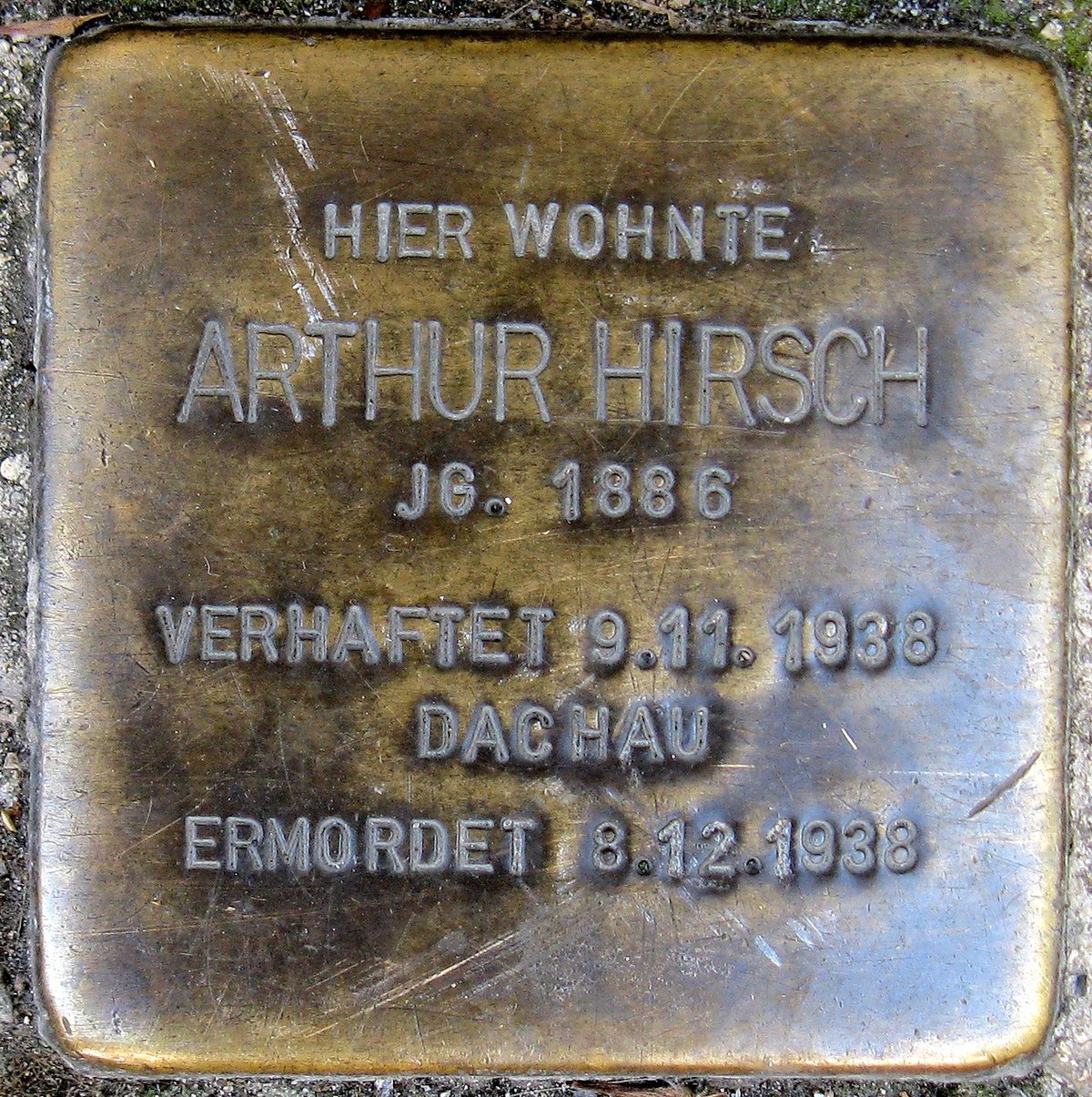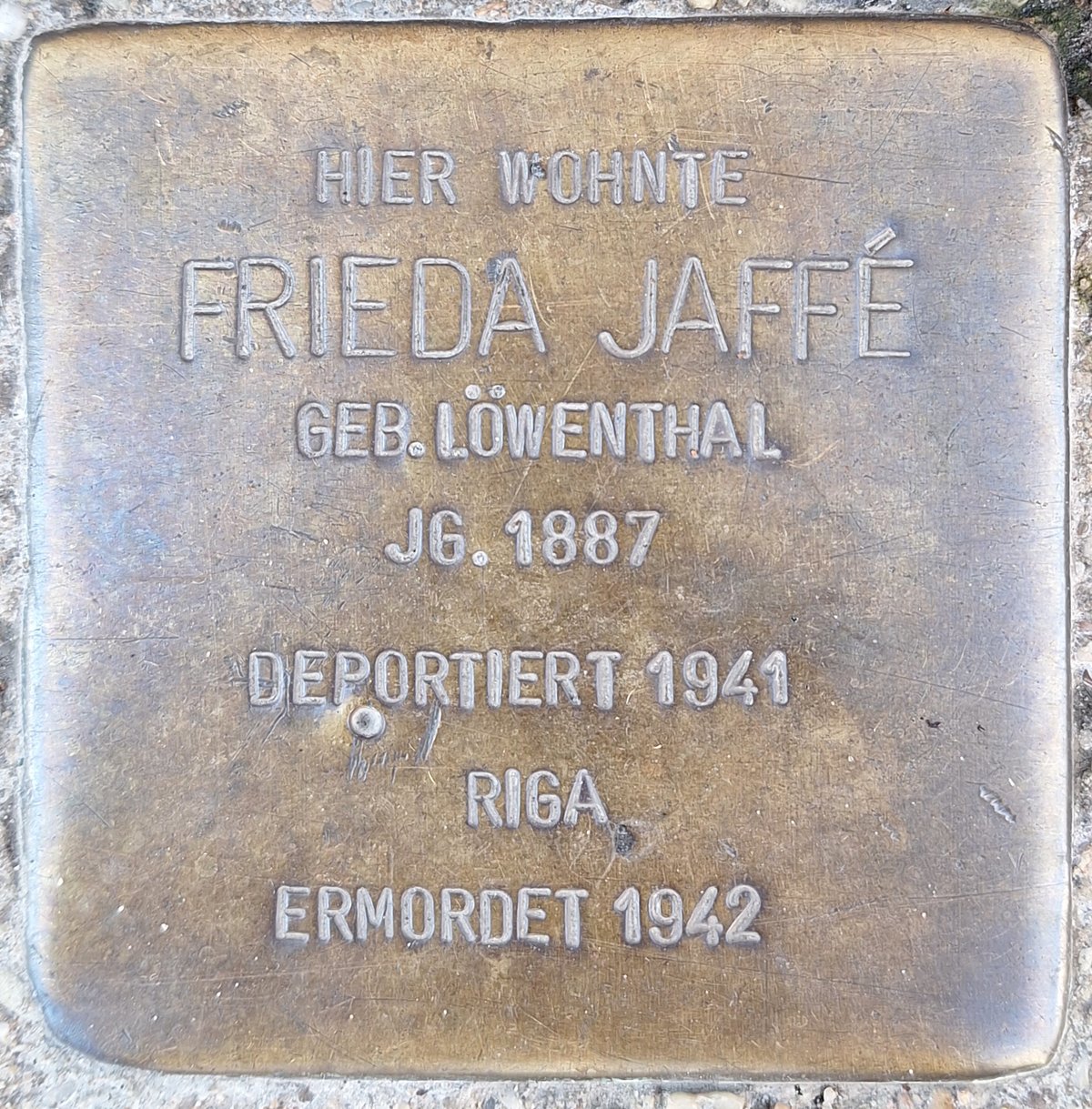

on camp. Tragically, Jakob and Frieda were murdered in the Riga Ghetto in 1942. Their son Hans, initially spared due to forced labor assignments, was later deported to Auschwitz in 1943 and perished (Stolpersteine Stuttgart).
2.2. The Stolpersteine Project: Origins and Purpose
The Stolpersteine (literally "stumbling stones") project was conceived by German artist Gunter Demnig in 1992 as a decentralized memorial to Holocaust victims. Each 10x10 cm brass plaque, embedded in sidewalks outside victims’ last freely chosen residences, bears the inscription: "Here lived [name], born [date], deported [date], murdered [location]." As of 2023, over 100,000 Stolpersteine have been installed across Europe, forming the world’s largest Holocaust memorial (stolpersteine.eu).
The project’s power lies in its intimacy—each stone forces passersby to literally "stumble" upon memory in everyday spaces. Unlike traditional monuments, Stolpersteine personalize loss, with sponsors (often school groups or descendants) funding each €120 plaque through grassroots initiatives (Folklife Magazine).
3. Visiting the Frieda Jaffé Stolperstein
3.1. Location and Accessibility
The Stolperstein for Frieda Jaffé is located at Weimarstraße 31, 70176 Stuttgart-West, embedded in the sidewalk near the building entrance. The site is:
- Accessible 24/7 with no admission fee.
- Wheelchair-friendly, though Stuttgart’s historic sidewalks may have uneven surfaces.
- Reachable via public transport: U-Bahn (U1, U2, U4, U9 to "Berliner Platz") or bus 42 to "Weimarstraße."
3.2. Visitor Etiquette
- Respectful engagement Pause to read the inscription; placing a small stone or flower is a traditional Jewish act of remembrance.
- Photography Permitted but avoid obstructing pedestrians.
- Cleaning Gently polish the brass with a soft cloth if tarnished—a communal act of care.
3.3. Guided Tours and Educational Resources
- Stolperstein-Initiative Stuttgart-West offers tours (contact via their website).
- Audio guides Download the Audiala app for narrated stories of Stuttgart’s Stolpersteine.
- School programs Local students often research victims’ biographies—ask about exhibitions at the nearby Hotel Silber (former Gestapo HQ).
4. Broader Context: Stolpersteine in Stuttgart
Stuttgart has over 1,000 Stolpersteine, maintained through annual cleaning events on International Holocaust Remembrance Day (January 27) and Kristallnacht anniversary (November 9). The city’s proactive remembrance culture includes:
- "StolperKunst" – Artistic reinterpretations of memorials (stolperkunst.de).
- "Gedenkworte" podcast – Oral histories of victims (stolpersteine-stuttgart.de).
Nearby historical sites:
- Jewish Museum Stuttgart (Kleine Königstraße 9) – Exhibits on Swabian Jewish life.
- Hotel Silber (Dorotheenstraße 10) – Nazi-era police headquarters turned memorial.
- Stolpersteine for Hans, Hertha, and Jakob Jaffé – Located nearby (see interactive map).
5. Frequently Asked Questions (FAQ)
Q: Can I sponsor a Stolperstein?
A: Yes – contact local initiatives like Stolpersteine Stuttgart-West. Costs ~€120.
Q: Are there objections to Stolpersteine?
A: Rarely. Some critics argue walking on names is disrespectful, but most view it as an active engagement with memory.
Q: How do I find other Stolpersteine?
A: Use the official map or mobile apps like Audiala.
6. Conclusion
The Stolperstein for Frieda Jaffé transforms a mundane Stuttgart sidewalk into a space of profound reflection. By visiting, you participate in Stuttgart’s living memory—honoring victims not as abstract statistics, but as individuals whose stories resist oblivion. As the city’s Stolperstein motto reminds us: "A person is only forgotten when their name is forgotten."
Plan your visit:
- Download the Audiala app for audio guides.
- Follow @Stolpersteine_STG on social media for commemorative events.
- Share photos with #Stolpersteine to amplify remembrance.