Here is the continuation of the article exactly where it left off, without repetition or additional formatting:
Persecution and Emigration
With the rise of the Nazi regime, Dr. Lehmann, like many German Jews, faced increasing persecution. In 1939, after paying a punitive "Judenvermögensabgabe" (Jewish property tax) of 51,000 Reichsmarks, he was granted permission to emigrate. On March 25, 1939, he left Baden-Baden with his wife Lieselotte, their son, and his in-laws, first to Luxembourg (gedenkbuch.baden-baden.de).
Arrest, Deportation, and Murder
The family’s safety was short-lived. In May 1940, Dr. Lehmann was briefly imprisoned in Belgium, then interned in the St. Cyprien camp in France. On September 7, 1942, he was deported via the Drancy transit camp to Auschwitz, where he was murdered (gedenkbuch.baden-baden.de).
Cultural and Memorial Significance
The Role of Stolpersteine in German Remembrance Culture
The Stolpersteine project represents a grassroots approach to remembrance, decentralizing Holocaust memorials and integrating them into the fabric of daily life. Unlike traditional monuments, which are often grand and detached from the sites of persecution, Stolpersteine force passersby to confront history in mundane settings—sidewalks, residential neighborhoods, and commercial districts. This intimacy makes the victims’ fates impossible to ignore.
Controversies and Interpretations
While widely praised, the project has faced criticism. Some argue that embedding the stones in pavements allows them to be stepped on, symbolically desecrating the dead. Others highlight the logistical challenges of maintenance, as the brass plates require regular polishing to remain legible. Despite these debates, the Stolpersteine have become a cornerstone of European remembrance culture.
Visiting the Stolperstein of Dr. Kurt Lehmann
Location and Accessibility
The Stolperstein for Dr. Kurt Lehmann is located at Schillerstraße 3, Baden-Baden, embedded in the sidewalk near the entrance of his former residence.
Coordinates
- Latitude 48.7615° N
- Longitude 8.2409° E
Public Transport
- Bus Lines 201, 216 (Stop: "Leopoldsplatz")
- Train Baden-Baden Hauptbahnhof (15-minute walk)
What to Expect at the Site
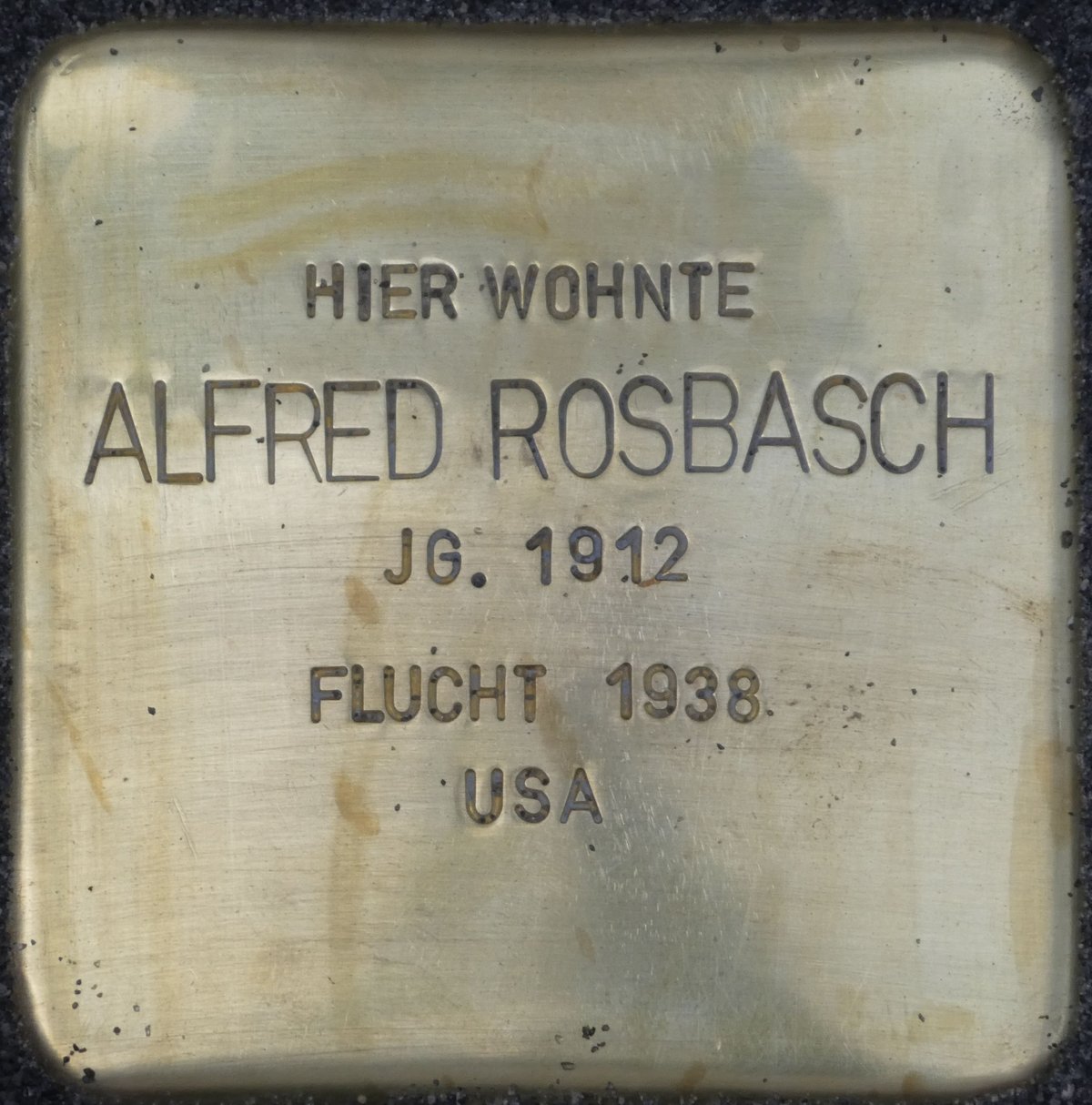
The brass plaque is small (10x10 cm) and inscribed with:
HIER WOHNTE
DR. KURT LEHMANN
JG. 1909
FLUCHT 1939 LUXEMBURG
INTERNIERT DRANCY
DEPORTIERT 1942
AUSCHWITZ
ERMORDET
The surrounding area is residential, with no overt signage or museum-like displays. The power of the memorial lies in its simplicity.
Visitor Etiquette and Tips
- Read the Inscription Aloud—This act of vocalization honors the victim’s memory.
- Polish the Stone—Traditionally, visitors use a cloth to restore the brass’s shine.
- Leave a Small Token—Flowers or pebbles (Jewish custom) are common.
- Photography—Permitted, but avoid blocking pedestrian traffic.
Integrating the Visit: Baden-Baden’s Historical and Cultural Context
Nearby Attractions
| Site | Distance | Description |
|---|---|---|
| Baden-Baden Synagogue | 450 m | A restored 19th-century synagogue with a memorial to deported Jews. |
| Lichtentaler Allee | 800 m | Scenic parkway linking the city’s spa and cultural landmarks. |
| Friedrichsbad | 1.2 km | Historic Roman-Irish bathhouse, juxtaposing leisure and remembrance. |
Guided Tours
-
Stolpersteine Walking Tour (Offered by Baden-Baden Tourist Office)
- Duration: 2 hours
- Languages: German, English
- Book online
-
Jewish Heritage Tour (Includes the Lehmann Stolperstein)
- Highlights: Cemetery, former Jewish quarter, and deportation records.
Conclusion
The Stolperstein for Dr. Kurt Lehmann transforms a quiet Baden-Baden street into a space of reflection. By visiting, you participate in a pan-European act of remembrance—one that rejects abstraction and centers individual lives. Pair this experience with the city’s other historical sites to confront the duality of Baden-Baden: a place of healing and profound loss.
Plan your visit:
- Download the Stolpersteine app for offline access to biographies.
- Support local remembrance initiatives like Baden-Baden Gedenkbuch.